Category Archives: HOME

Who Says Bitcoin Mining Needs To Be Profitable?

Who Says Bitcoin Mining Needs To Be Profitable?

by Mickey Koss


In addition to profits, bitcoin mining can also offer consistent electricity demand and can clean up the air by utilizing electricity made from wasted methane.

This is an opinion editorial by Mickey Koss, a West Point graduate with a degree in economics. He spent four years in the infantry before transitioning to the Finance Corps.

I’ve heard some recycled fear, uncertainty and doubt recently about transaction fees on the Bitcoin network not being able to sustain the miners, and thus maintain security once the block subsidy gets too low and or disappears. This got me thinking about how incentives might play out. 


Besides the obvious observation that they’re assuming no network usage growth and perpetually low fees on the base chain, I believe there are two key underlying assumptions that need to be addressed:

  1. Mining hardware will continue to exist in its current form as standalone, single-use computers.
  2. Mining companies will continue to exist in their current form as large, stand-alone companies that must constantly strive for profitability or go out of business.

Mining Hardware: One Man’s Trash Is Another Man’s Treasure

The name of the game here is utilizing waste. In its current form, electric heating elements create heat through the use of resistors. Resistors resist, changing the “flow” of electricity and dissipating the electrical power in the form of heat. You’re essentially utilizing poor electrical conductors in order to create heat. Seems pretty wasteful to me.

In terms of miners, their main waste product is heat. Imagine the applications you could build utilizing Bitcoin-specific ASIC chips. I see a future when every furnace and water heater produced utilizes ASIC chips as the heating element rather than the traditional electrical resistor types that exist today.

MintGreen in Canada is already doing this at a pretty large scale. They utilize their waste heat from the miners to heat local businesses like breweries, sea salt distilleries and even greenhouses.

This changes the home mining-profitability math completely. When utilizing dual purpose applications and harnessing the heat originally characterized as waste, the applications don’t need to be profitable in the traditional sense anymore.

The use of the newest generation of ASIC chips for heating purposes is not necessarily needed, nor desirable. Bitcoin mining heating applications, especially at the retail level, simply need to use the same amount of electricity or less than their non-mining competitors. The little bitcoin that is mined is simply an added benefit for upgrading your system or an incentive for builders to put into new homes.

Why would you want to buy a home that wastes electricity by simply heating it? That’s old school. I want a home that heats up and pays me when I heat it. I want a Bitcoin smart home.

Electric System Explained

To understand the second assumption, you first need to understand how electricity is generated. Electricity generation capacity consists of three main generating sources: base, peak and intermediate load generation. Base load power generates the minimum amount of electricity in order to satisfy the minimum level of demand in the system. Peak load generation is used to meet peak demand periods when demand spikes. It is ramped up and down, making it less efficient and more expensive. Intermediate load is also a variable source which responds to changes in demand, bridging the gap between base and peak load.

If we have variable capacity on hand, that means that at least some of the time we have unused capacity — valuable capital — that’s not being utilized. What this means is that your electricity costs not only have to cover the cost of production, but also must subsidize the cost of all the unused, but necessary capacity electricity producers have to maintain.

U.S. Energy Information Administration, U.S. Hourly Electric Grid Monitor (source)

Why so much complexity? Because demand is not constant. The above graphic shows the average demand for electricity and just how volatile it is, not only by region, but also by season. If power plants produce too much electricity, it can actually damage the grid, leading to a blackout.

There are a few techniques to store excess energy such as pumped storage hydropower, but they all have limitations such as access to water, space and battery technology. Simply put, once your battery is full, there’s nowhere else for the energy to go which ultimately leads to power curtailment. It’s also why intermittent sources like wind and solar will likely never be a sole source of power for the grid. There’s simply not enough storage capacity to keep the system running when the sun isn’t shining or the wind isn’t blowing.

Bitcoin, of course, fixes this.

Miners Don’t Need To Be Profitable

Right now, we see miners as standalone companies, buying electricity on the markets from electric companies. If the bitcoin price goes down and/or costs go up, miners get squeezed and go out of business. It’s a viciously competitive industry, but what if it wasn’t? What if mining became a service rather than a standalone business?

Service One: Elimination Of Variable Load Energy Sources

In my humble opinion, the only way forward for a truly sustainable energy system is one that is based on nuclear power. Nuclear power, however, is a base load energy generator; you can’t really ramp it up and down. The electricity produced must be consumed or literally wasted by sending it into the ground. So what do we use for variable demand?

My answer is bitcoin.

Instead of building capacity in variable forms — using up a bunch of capital for assets that are only used some of the time — why not build a massive base load of nuclear energy and use bitcoin mining as the variable demand to smooth the electricity demand curve. It flips the paradigm on its head. Not only do we get a massive source of clean and sustainable energy, we also utilize all of our capacity all of the time. The only variable being how much hash rate the power plant produces throughout the day.

In the meantime, bitcoin can be used to utilize all of the grid’s energy producing capacity. It will increase power company revenues, providing them with more capital to invest and build out infrastructure. Through the integration of bitcoin mining and energy production, bitcoin mining no longer has to be profitable in the traditional sense; it simply needs to outweigh the opportunity cost of not producing electricity at all.

Furthermore, the increased utilization means that consumers are no longer subsidizing unused capacity in their monthly bills. Imagine electricity rate-freezes or even cuts. At the very least, power rates wouldn’t need to rise nearly as fast. What’s good for the goose is good for the gander.

If a clean, sustainable, resilient, reliable and affordable electric grid is your goal, bitcoin is the way.

Service Two: Cleaning Up The Air

Waste products like natural gas and methane have been nothing more than an expensive cost of business for some time. All of that is beginning to change at a rapid pace.

Whether the gasses are produced through the breakdown of buried trash at a landfill, the drilling for oil, or the excrement of livestock and people, those gasses can now be harnessed and monetized through the use of generators to mine bitcoin.

It’s already happening.

ExxonMobil is just one of the companies starting to do this. Natural gas is a byproduct of oil drilling and extraction. In many cases, it was simply not economical to bring the gas to market, forcing producers to flare, or even worse, vent the gas directly into the atmosphere. Now the waste gas can be routed into a generator and used for mining bitcoin. It incentivizes companies to be more careful with that waste gas because it has been transformed into an income-producing asset rather than a pesky cost of business.

Landfills are also facing the same incentives. As garbage breaks down under the surface, it produces methane gasses. Those gasses, much like oil producers, were often flared or vented. With bitcoin mining, the methane is now an asset to those companies, incentivizing them to become better stewards, reducing air pollution.

Even human waste can be monetized with bitcoin mining. Wastewater treatment plants typically use anaerobic digesters to break down the solids after separating them from the bulk of the water they process. This process produces, you guessed it, methane.

Much like the power plant examples, bitcoin waste mining creates a situation in which miners no longer need to be profitable. Mining simply needs to outweigh the opportunity cost of not mining. In the situations where the gas cannot be brought to market, anything is better than nothing. I think I see a world where gas flaring and venting is a thing of the past.

No Profits? No Problem

Satoshi Nakamoto had to think differently to bring about the creation of an entirely different network of money and value. We now need to think differently to not only ensure the network survives, but to ensure human flourishing continues into the foreseeable future.

Energy is not scarce, nor should it be. Bitcoin is the incentive that the world needs to become truly innovative to ensure cheap, clean energy is available for all. Bitcoin is human flourishing.

Tim Moseley

Will 1700 become a sustainable support level for gold?

Will $1700 become a sustainable support level for gold?

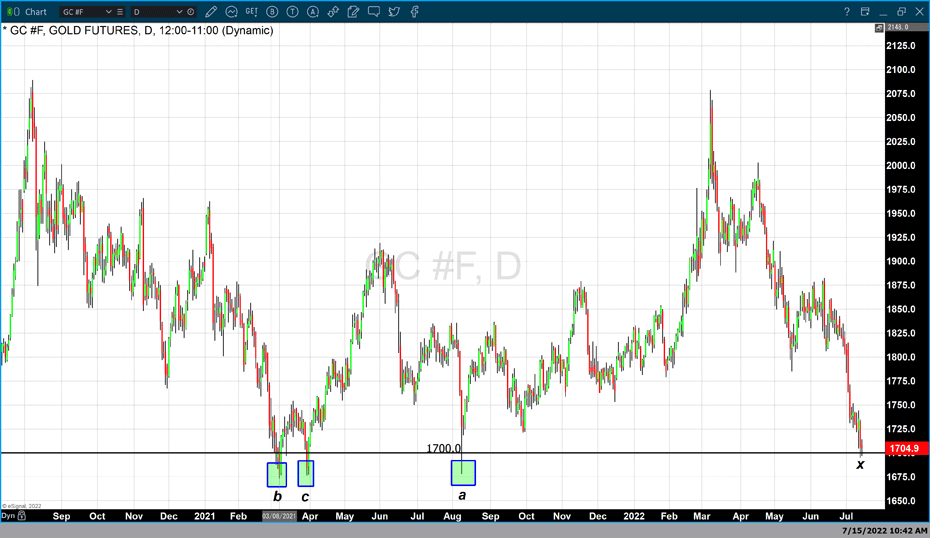
Over the two trading days gold futures have traded below $1700 (marked X) and, on both occasions, recovered closing above that case psychological level. So, it is not illogical to wonder whether or not this price point will become a sustainable level of support or simply a pause before gold heads to lower prices.

Historically speaking the last time gold traded below $1700 occurred on August 9, 2021, the day of the "flash crash”. On Monday, August 9, 2021(marked a) gold opened at $1765 traded to a low of $1678, and closed at $1726. In this instance, $1700 played little technical importance within that one-hundred-dollar trading range. Before that gold traded below $1700 on two occasions in March 2021.

In both instances, gold traded to a low of approximately $1678. At the beginning of March 2021(marked b) gold traded below $1700 for three consecutive days before it moved above that price point. During the second instance that occurred at the end of March (marked c) gold broke below 1700 and then on the following day open below 1700 but closed well above that price point.

While historical studies can reveal many aspects and identify technical support and resistance levels, each identified example was caused by underlying fundamental events based on a unique set of factors and therefore may only offer fractional insight. More so, in each example over the last two years in which gold traded below $1700, it resulted in much lower prices before concluding and trading back above that price point. In fact, in all three examples highlighted on the chart, the price decline resulted in gold quickly moving below $1700 and trading to approximately $1680 before finding support.

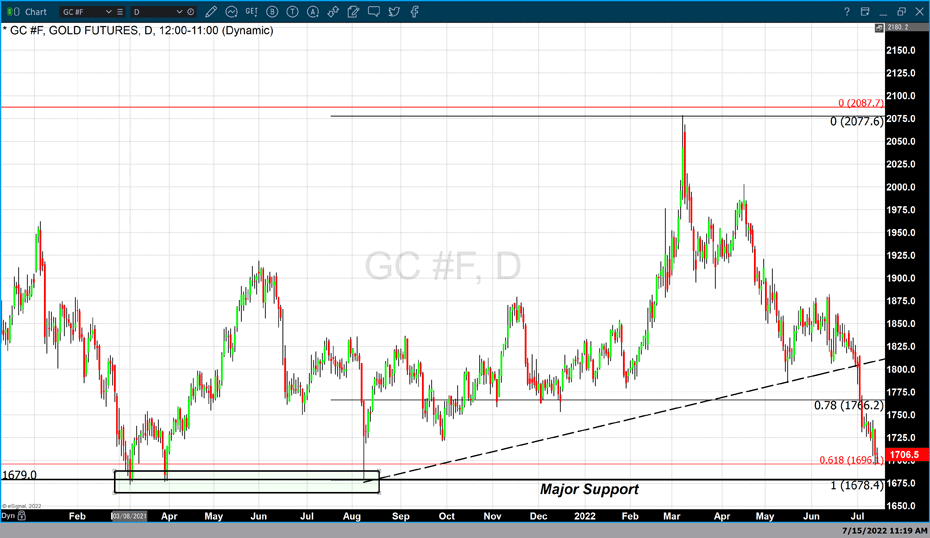
The chart above (chart 2) is also a daily chart of gold futures. It references the same instances when gold broke below $1700 per ounce on three occasions. However, it highlights those lows which indicate that on each occasion gold broke through $1700 and did not find any price support until approximately $1780 per ounce.

Given that during each instance different fundamental events resulted in gold's price decline. However, on each occasion, gold found support technical or otherwise at $1680.

As of 5:23 PM EDT gold futures basis, the most active August contract is currently trading up $0.70 or 0.04% and fixed at $1706.50. Like yesterday gold broke below $1700 and effectively closed above that price point. However, if past studies result in any real insight it seems more likely that gold prices will not hold at $1700 only based on technical indicators. There would have to be a fundamental event that resulted in a dynamic pivot or shift in the current bearish market sentiment that has been prevalent in gold. With the latest CPI and PPI report this week indicating that inflationary pressures have increased since last month and remain persistent, the possibility that the Federal Reserve will raise rates by a full percentage point at this month's FOMC meeting is real. This fact could certainly move gold lower.


By Gary Wagner

Contributing to kitco.com

Time to buy Gold and Silver on the dips


Tim Moseley

British Royal Mint sees gold bullion sales increase 8 in Q2 silver sales jump 47

British Royal Mint sees gold bullion sales increase 8% in Q2, silver sales jump 47%

The paper gold market has struggled to find consistent bullish momentum as prices dropped nearly 7% between April and June. However, the physical market saw solid growth, according to the latest report from the Royal Mint.

Thursday, the British mint said that sales of its gold bullion coins increased by 8% quarter-over-quarter. At the same time, silver bullion sales increased 47% compared to the sales in the first three months of 2022.

The mint added that it continues to see strong international sales, with specific demand growing among American consumers.

"Internationally, growth has also been seen in all three metals, with a 52% increase in the amount of gold ounces being sold, a 58% increase in silver ounces sold, and a 67% increase in platinum," the Royal Mint said in a statement.

"We are famous in the U.K. for making coins and bars from precious metals and have developed a strong international base of investors. It's encouraging to see such strong international sales, particularly from the U.S. and we look forward to expanding globally, providing a range of products to appeal to investors," added Andrew Dickey, director of precious metals at The Royal Mint.

The latest report from the British mint appears to be bucking the trend of slowing sales among significant mints. The U.S. Mint sold 315,000 ounces of gold during the second quarter, down 26% from the first quarter.

This is why gold is below $1,800 even as U.S. inflation hits a 40-year high at 9.1%
The U.S. Mint saw a demand drop sharply in June as it sold 52,000 ounces, according to the mint's revised data.

Meanwhile, the Perth Mint sold 244,737 ounces of gold in the second quarter, down 6% from 261,357 ounces sold in the first quarter.

Some analysts have said that the drop in bullion demand reflects nuances in the marketplace as higher premiums are pricing consumers out of the market. Premiums are high because of a supply and demand imbalance as bullion investors are holding on to the physical metal.

At the same time, analysts have said that the sharp drop in gold prices is expected to lead to an increase in physical demand. Thursday, gold prices dropped below $1,700 an ounce, hitting a nearly one-year low.

By Neils Christensen

For Kitco News

Time to buy Gold and Silver on the dips


Tim Moseley

Gold’s year-end target is 2050 and here’s why 17 price surge still possible Wells Fargo

Gold's year-end target is $2,050 and here's why 17% price surge still possible – Wells Fargo

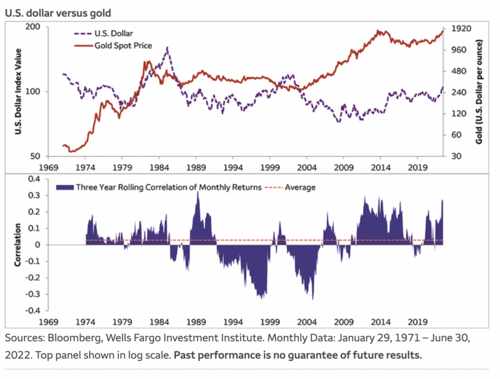
The strong U.S. dollar has been hurting gold's price, dragging the precious metal down to 8.5-month lows as it steals its safe-haven appeal. But this is not a game-changer for gold, which can still end the year above $2,000 an ounce, according to Wells Fargo.

The U.S. dollar index rose to another 20-year high Tuesday, while the U.S. 10-year Treasury yield was at 2.921%. August gold futures were flat on the day, last trading at $1,731.60 an ounce after dropping below $1,725 overnight.

"The U.S. dollar has risen 12% since the start of the year. Almost half of that gain has come in the last month. Such big moves are quite rare, but when they do happen, commodity prices typically suffer. The reason is that most commodities are priced in U.S. dollars," Wells Fargo's real asset strategy head John LaForge said on Monday.

The broader commodities index has also suffered due to higher U.S. dollar and rising recession fears, hurting the demand outlook for industrial metals.

As the U.S. dollar gains, emerging market currencies drop, giving these countries less buying power.

"This loss of buying power can often negatively influence commodity demand and commodity prices," added LaForge. "Considering the strength in the U.S. dollar over the past month, it is not surprising that most commodity prices have been falling, gold especially."

Gold retreated 6% in June, primarily because of the U.S. dollar strength. The precious metal is one of the most sensitive commodities to the U.S. dollar price moves, according to LaForge.

Going forward, Wells Fargo is not expecting another significant move higher by the greenback, seeing it near its peak. However, for gold to move higher, it must create its own momentum.

LaForge's year-end gold price target is still at $2,050 an ounce, which he sees as reasonably achievable due to the recession narrative. He added that he would review his year-end targets soon if there is no movement.

"Gold needs its own surge of sorts — about 17% now — to hit our 2022 year-end target of $2,050 per ounce. For now, our year-end 2022 target remains unchanged, as 17% is doable. With recession around the corner, and gold being quite cheap versus most other commodities, investors may begin to buy. That said, we understand that time is running out, so we are reviewing our targets," he said.

By Anna Golubova

For Kitco News

Time to buy Gold and Silver on the dips


Tim Moseley

Question Everything

Question Everything

by Jeff Thomas, editor, International Man Communique


Question Everything


The average person in the First World receives more information than he would if he lived in a Second or Third World country. In many countries of the world, the very idea of twenty-four hour television news coverage would be unthinkable, yet many Westerners feel that, without this constant input, they would be woefully uninformed.

Not surprising, then, that the average First Worlder feels that he understands current events better than those elsewhere in the world. But, as in other things, quality and quantity are not the same.

The average news programme features a commentator who provides "the news," or at least that portion of events that the network deems worthy to be presented. In addition, it is presented from the political slant of the controllers of the network. But we are reassured that the reporting is "balanced," in a portion of the programme that features a panel of "experts."

Customarily, the panel consists of the moderator plus two pundits who share his political slant and a pundit who has an opposing slant. All are paid by the network for their contributions. The moderator will ask a question on a current issue, and an argument will ensue for a few minutes. Generally, no real conclusion is reached—neither side accedes to the other. The moderator then moves on to another question.

So, the network has aired the issues of the day, and we have received a balanced view that may inform our own opinions. Or have we?

Shortcomings

In actual fact, there are significant shortcomings in this type of presentation:

1. The scope of coverage is extremely narrow. Only select facets of each issue are discussed.

2. Generally, the discussion reveals precious little actual insight and, in fact, only the standard opposing liberal and conservative positions are discussed, implying that the viewer must choose one or the other to adopt as his own opinion.

3. On a programme that is liberally-oriented, the one conservative pundit on the panel is made to look foolish by the three liberal pundits, ensuring that the liberal viewer’s beliefs are reaffirmed. (The reverse is true on a conservative news programme.)2Each issue facet that is addressed is repeated many times in the course of the day, then extended for as many days, weeks, or months as the issue remains current. The "message," therefore, is repeated virtually as often as an advert for a brand of laundry powder.

So, what is the net effect of such news reportage? Has the viewer become well-informed? In actual fact, not at all.

What he has become is well-indoctrinated

A liberal will be inclined to regularly watch a liberal news channel, which will result in the continual reaffirmation of his liberal views. A conservative will, in turn, regularly watch a conservative news channel, which will result in the continual reaffirmation of his conservative views.

Many viewers will agree that this is so, yet not recognise that, essentially, they are being programmed to simply absorb information. Along the way, their inclination to actually question and think for themselves is being eroded.

Alternate Possibilities

The proof of this is that those who have been programmed, tend to react with anger when they encounter a Nigel Farage or a Ron Paul, who might well challenge them to consider a third option—an interpretation beyond the narrow conservative and liberal views of events. In truth, on any issue, there exists a wide field of alternate possibilities.

By contrast, it is not uncommon for people outside the First World to have better instincts when encountering a news item. If they do not receive the BBC, Fox News, or CNN, they are likely, when learning of a political event, to think through, on their own, what the event means to them.

As they are not pre-programmed to follow one narrow line of reasoning or another, they are open to a broad range of possibilities. Each individual, based upon his personal experience, is likely to draw a different conclusion and, thorough discourse with others, is likely to continue to update his opinion each time he receives a new viewpoint.

As a result, it is not uncommon for those who are not "plugged-in" to be not only more open-minded, but more imaginative in their considerations, even when they are less educated and less "informed" than those in the First World.

Whilst those who do not receive the regular barrage that is the norm in the First World are no more intelligent than their European or American counterparts, their views are more often the result of personal objective reasoning and common sense and are often more insightful.

Those in First World countries often point with pride at the advanced technology that allows them a greater volume of news than the rest of the world customarily receives.

Further, they are likely to take pride in their belief that the two opposing views that are presented indicate that they live in a "free" country, where dissent is encouraged.

Unfortunately, what is encouraged is one of two views—either the liberal view or the conservative view. Other views are discouraged.

The liberal view espouses that a powerful liberal government is necessary to control the greed of capitalists, taxing and regulating them as much as possible to limit their ability to victimise the poorer classes.

The conservative view espouses that a powerful conservative government is needed to control the liberals, who threaten to create chaos and moral collapse through such efforts as gay rights, legalised abortion, etc.

What these two dogmatic concepts have in common is that a powerful government is needed.

Each group, therefore, seeks the increase in the power of its group of legislators to overpower the opposing group. This ensures that, regardless of whether the present government is dominated by liberals of conservatives, the one certainty will be that the government will be powerful.

When seen in this light, if the television viewer were to click the remote back and forth regularly from the liberal channel to the conservative channel, he would begin to see a strong similarity between the two.

It’s easy for any viewer to question the opposition group, to consider them disingenuous—the bearers of false information. It is far more difficult to question the pundits who are on our own "team," to ask ourselves if they, also, are disingenuous.

This is especially difficult when it’s three to one—when three commentators share our political view and all say the same thing to the odd-man-out on the panel. In such a situation, the hardest task is to question our own team, who are clearly succeeding at beating down the odd-man-out.

Evolution of Indoctrination

In bygone eras, the kings of old would tell their minions what to believe and the minions would then either accept or reject the information received. They would rely on their own experience and reasoning powers to inform them.

Later, a better method evolved: the use of media to indoctrinate the populace with government-generated propaganda (think: Josef Goebbels or Uncle Joe Stalin).

Today, a far more effective method exists—one that retains the repetition of the latter method but helps to eliminate the open-ended field of alternate points of view. It does so by providing a choice between "View A" and "View B."

In a democracy, there is always an "A" and a "B." This illusion of choice is infinitely more effective in helping the populace to believe that they have been able to choose their leaders and their points of view.

In the modern method, when voting, regardless of what choice the individual makes, he is voting for an all-powerful government. (Whether it calls itself a conservative one or a liberal one is incidental.)

Likewise, through the modern media, when the viewer absorbs what is presented as discourse, regardless of whether he chooses View A or View B, he is endorsing an all-powerful government.

Two Solutions

One solution to avoid being brainwashed by the dogmatic messaging of the media is to simply avoid watching the news. But this is difficult to do, as our associates and neighbours are watching it every day and will want to discuss with us what they have been taught.

The other choice is to question everything.

To consider that the event that is being discussed may not only be being falsely reported, but that the message being provided by the pundits may be consciously planned for our consumption.

This is difficult to do at first but can eventually become habit. If so, the likelihood of being led down the garden path by the powers-that-be may be greatly diminished. In truth, on any issue, there exists a wide field of alternate possibilities.

Developing your own view may, in the coming years, be vital to your well-being.


New Opportunities Are Emerging For Citizens of The World.

Freedom and democracy may appear to be struggling to stay alive in America, but there may be a knock-out punch ready to be released. The evolution of the blockchain-enabled metaverse is going to enable the 'Citizens of the World' to gain their own Freedom by democratizing power and creating a new world with new rules, new players, and new opportunities. For 99.99% of us, the metaverse will improve our real-world lives through the democratization of power and opportunity.

Along with the major long-term trend of society towards decentralization and smaller-scale organizations, there are new opportunities developing to help 'Preparers' in the cryptocurrency sector. Businesses are beginning to issue their own Crypto Coins that can be traded on Cryptocoin Exchanges.

Markethive.com for example will be releasing its HiveCoin (HIV) in the coming weeks. It has tremendous upside potential that is outlined in a Video by Founder Tom Prendergast, "Entrepreneur Advantage…".

Not only that, if you go to their website and register as a FREE Member, you will be given 500 HiveCoins for "FREE" along with access to several Earning Opportunities and online tools to increase your HiveCoin balance.

Be sure to check it out today – Markethive.com

Markethive

Tim Moseley

Is gold about to go mainstream?

Is gold about to go mainstream?

Every week Merrill Lynch publishes a Capital Market Outlook Letter. The letters provide market commentary, research and analysis, and the occasional investment idea. Merrill Lynch (together with parent Bank of America) is the third largest brokerage firm, managing over $3 Trillion in client assets. When a firm of that size speaks up, you should listen.

Starting around March of this year, they disclosed an investment thesis called FAANG 2.0. It's a fascinating idea and gold plays a prominent role. Let's unpack it.

Transitioning from FAANG 1.0 to FAANG 2.0

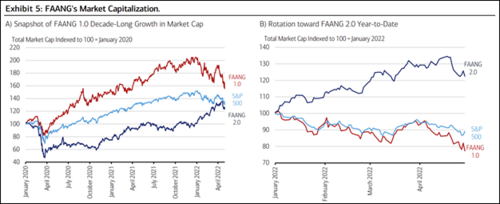
The original FAANG acronym described the high-growth, tech-centric companies that accounted for an outsized portion of returns over the last decade, and then catapulted even higher once the pandemic hit. FAANG 1.0 included:

Facebook – Apple – Amazon – Netflix – Google

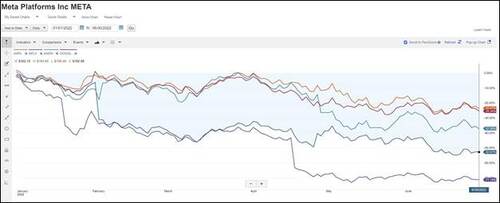
And yet, these companies have experienced meaningful price declines year-to-date.

Merrill has been chronicling the "great rotation" out of FAANG 1.0 and into FAANG 2.0.

What's FAANG 2.0?

If FAANG 1.0 are the new kids on the block, then FAANG 2.0 is the old guard. They include:

Fuels – Aerospace – Agriculture – Nuclear/Renewables – Gold and Metals/Minerals

The reasons to favor FAANG 2.0 in today's market are intuitive. Let's explore a few of the salient points.

Why FAANG 2.0?

Geopolitical tensions

The ongoing war between Russia and Ukraine will drive demand for fuels, agriculture, energy and other "hard assets" such as gold and metals/minerals. It remains unclear how the conflict will resolve and whether it will escalate further. Merrill notes that "gold is now the preferred asset of central banks" in the face of such uncertainty.

Inflationary pressures

They're likely to persist longer than previously thought. And while the focus is typically on what you pay at the pump, world food prices are at all time record highs. For anyone following Keith's work on inflation, it's unlikely the items he highlights (trade war, tariffs, lockdown whiplash, regulatory compliance, and green energy policy) are going to be resolved any time soon.

Supply and Demand Imbalance

There seems to be two primary reasons behind the supply/demand imbalance driving FAANG 2.0. One is the leftover supply chain disruptions from the pandemic. Equipment shortages, labor dislocations, logistics bottlenecks, and higher input costs arestill keeping products from getting to market. Two is simply greater demand than supply for these materials. For example, increased defense spending is driving greater demand for fuels and aerospace. Germany is doubling its annual budget. NATO is requiring all participating countries to devote at least 2% of GDP to defense spending by 2024. Likewise demand for energy alternatives (nuclear and renewables), and EV's is exploding, creating intense demand for the metals/minerals needed to scale production.

This paragraph from the May 2 letter sums up the case for FAANG 2.0 nicely.

In a matter of months, we have gone from a pandemic to Putin; infections to inflation; Big Data to Big Oil; zoom to zinc; masks to mascara; E-commerce to electric vehicles; jabs to javelins; swabs to sanctions; Webex to weddings; boosters to bombs; Non-fungible tokens (NFTs) to liquefied natural gas (LNG); Centers for Disease Control (CDC) to North Atlantic Treaty Organization (NATO); work-from home to work-from-office; the cloud to cobalt; and lite assets to hard assets.

Gold's Role in FAANG 2.0

Gold plays a prominent role in Merrill's FAANG 2.0 investing framework. Specifically, they cite investor concerns over inflation and war as reasons for why the "safe-haven" asset should enjoy consistent demand over 2022. Gold has posted strong YTD performance relative to other assets (gold is up about 1% compared to an average of -41% for the FAANG 1.0 crowd).

Why is gold considered a safe-haven asset?

The answer is simple but profound.

Gold is solvency you can hold in your hand.

In a world that poses significant risks of default, whether from inflationary pressures on businesses, aggravated by higher interest rates, or an escalation between Russia and NATO, gold is the asset you own when you don't want to take that risk.

Merrill's endorsement of gold as a major part of its FAANG 2.0 investment thesis could be a significant driver for gold going more mainstream. Despite many large asset managers paying lip service to the importance of owning gold in a diversified portfolio, and the fact that the benefits of owning gold have been well documented, it still remains one of the most under-owned assets.

There's another way gold could go mainstream though; it's called gold 2.0.

Transitioning from Gold 1.0 to Gold 2.0
 

What's gold 2.0?

It's gold with yield, specifically a Yield in Gold, Paid in Gold®. We've said it over and over again, everyone should own some physical gold as an insurance against the solvency risks outlined above. But insurance only protects wealth, it cannot grow your wealth. Monetary Metals offers gold with yield—gold 2.0—which protects and grows your wealth.

You can own physical gold, in secure vaults, outside the financial system, with the option of earning 2% to 3% interest, paid in more gold (silver too).

Whether from increased safe-haven demand, or greater demand for gold with yield, the 2020's could be the decade that gold breaks back into the mainstream in a big way.

By Keith Weiner

Contributing to kitco.com

Time to buy Gold and Silver on the dips

Tim Moseley

Supervising Crypto In Europe

Supervising Crypto In Europe


End of June 2022, Cointelegraph.com published an article on the new agreement reached by the European Council to form an Anti-Money Laundering (AML) body that will have the authority to supervise certain crypto-asset services providers (CASPs).

But let's start with a summary first. The first flurry of regulation of crypto-assets appeared in Europe even before the pandemic in December 2019. Debugging took place throughout the first half of the following year, and in September 2020, the European Commission adopted it under the legislative designation draft regulation on markets in crypto-assets (MiCA for short).

A definite topic in the world of finance is currently the government regulation of cryptocurrencies, which is taking place across the globe. The approach in different states is diversified –  some states give cryptocurrencies a clear green light, others treat them more cautiously and introduce many regulatory regulations, and finally, there are states that have said a clear “no” to cryptocurrencies and banned them on their territory. 

The market segment with cryptocurrencies, estimated at $2.1 billion, is still subject to inconsistent regulation, which prevents the creation of legislative regulations that should prevent money laundering while protecting investors and creditors. 

However, increasing regulatory pressure is preventing crypto companies from innovating their products. For example, the cryptocurrency exchange Coinbase global warned that over-regulation would hamper innovation.

Image Source: Cointelegraph

Wild West Of Crypto Is Nigh

We are putting an end to the wild west of unregulated crypto, closing major loopholes in the European anti-money laundering rules,” said European Parliament member Ernest Urtasun.

The European Council said it had agreed on a partial position of a proposal to launch a dedicated Anti-Money Laundering Authority or AMLA. According to the regulatory body, the AML body will have the authority to supervise “high-risk and cross-border financial entities,” including crypto firms — “if they are considered risky.”

First proposed in July 2021, the AMLA should be operational in 2024 and “start the work of direct supervision slightly later,” according to the European Commission. 

It is evident that the taming of cryptocurrencies in the EU is imminent. By regulators who don't understand it much.

Europen Central Bank, Frankfurt,  Germany

The European Central Bank (ECB) is calling for decisive regulation of cryptocurrencies. People are speculating on life savings because of them, which is not to the liking of the head of the bank, Christine Lagarde. Its approach does not seem to many analysts, according to which most regulators propose measures that are not really applicable in practice.

The first application of the new regulatory conditions around cryptocurrencies could come in the next few months. The European Commission has already presented such measures, and the European Parliament should finalize them soon.

This is MiCA regulation and, therefore, regulation aimed explicitly at crypto-assets. But analysts recall that most regulators do not understand cryptocurrencies at all and are therefore rather skeptical about the proposals.

In addition to Christine Lagarde, other ECB officials have previously expressed concerns about cryptocurrencies. One of them is executive board member Fabio Panetta, who said in April that crypto assets are creating a new wild west and compared them to the subprime mortgage crisis of 2008. 

On the other hand, European monetary policymakers have confidence in their new digital euro project, which could take place as early as the next four years.

"Basically, almost all traditional institutions view cryptocurrencies as something dangerous and potentially exploitable or as a tool for money laundering and unfair activities. In doing so, these fears are completely odd and senseless. Regulators mainly want to achieve the greatest possible monitoring of financial movements, " said Czech analyst Martin Kysela.

Cryptocurrencies And Crime

The suppression of illegal cryptocurrency trading is taking place on more fronts than it might seem at first glance. The fight against money laundering has already moved to Europe. 

German authorities announced a raid on the world's largest darknet market, in which they seized bitcoins worth 25 million euros. This raid was carried out in cooperation with the German cybercrime centre and the federal criminal police office (BKA). For what reason did the raid occur, and what was its result?

In a raid on the world's largest darknet network called Hydra market, 543 bitcoins were seized. This illegal network has reportedly been operating since 2015 and has read an incredible 17 million customers. 

In the Hydra market, more than 19 000 sellers were registered who focused on the sale of illegal narcotics. According to the press release, other items were seized during the raid, which brought profits to the sellers.


Nanny Mentality Undermines Freedom Of Choice

On Dutch television, the president of the European Central Bank (ECB), Christine Lagarde, said this in May.

Cryptocurrencies are based on nothing and should be regulated so that people avoid speculating with their life savings.” 

She is afraid that people who do not understand the risk can lose everything and be very disappointed. Therefore, she believes that cryptocurrencies should be regulated.

First of all – if Ch. Lagarde and others believe that cryptocurrencies are worthless, they would not be so afraid of them, which leads them to the regulations to which the cryptocurrency market is already subject today. 

Many people see cryptocurrencies as a sign of freedom (and it doesn't matter what anyone thinks about it), and the EU obviously doesn't like that. It seems the representatives of the EU think people are unruly and should be regulated. 🙂

In the black scenario, some crypto specialists think that regulation could significantly damage crypto services in the EU. It may trample on user privacy and expose users to the risk of personal information being hacked. As a result, it may have a minimal impact on the fight against money laundering, which the EU seeks with this law.

Cryptocurrency exchange Coinbase stressed that it is cash that continues to be a popular means of money laundering. Blockchain technology, unlike cash, has allowed authorities to track suspicious transactions using advanced analytical tools.

Cryptocurrencies are highly speculative investments (and therefore attractive). The principle of any highly speculative investment is that money moves from those who lose a lot of money on the speculation to those who make a lot of money on it. It is difficult to regulate anything on this.

It’s All About Control

Crypto is unwanted by the top politicians because it gives the owner immense freedom to dispose of their finances in their own way and store them wherever they want – without the need for control by any regulator.

By the way, this control requirement is fully in line with the current direction of EU policy. Therefore, it is undesirable for someone to have access to finances that can not be regulated. The regulation or abolition of bitcoin and other cryptocurrencies would bring us a step nearer to totality.


Source:

cointelegraph.com

Idnes.cz

Cryptosvet.cz

Forbes.cz


Tim Moseley

June headline inflation to exceed 86 the annual inflation rate in May

June headline inflation to exceed 8.6%, the annual inflation rate in May

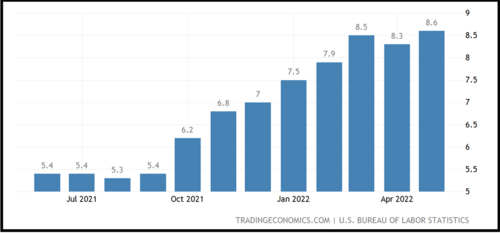
Economists, analysts, and market participants are laser-focused on the Labor Department's CPI (Consumer Price Index) report for June which will be released on Wednesday, July 13. The advanced forecasts released have a common theme or consensus and that is that inflation will continue to run exceedingly hot. Expectations are that headline inflation which includes changes in food and energy costs rose 1.4% compared to the previous month and come in at 8.7% YoY.

"The strong price increase of this year accelerated further in June 2022 and is expected to have climbed to 8.7 %. This is shown by an advanced estimate of Statistics Austria. This means that the inflation rate has risen to its highest level since September 1975. In the meantime, inflation has picked up speed in almost all areas. In addition to recent increases in fuel and heating oil prices, we also see significant increases in restaurant and food prices", according to Statistics Austria Director-General Tobias Thomas.

U.S. News today reported, "On Wednesday, the Labor Department will report the consumer price index for June, with forecasts that it will top the 8.6% rate for annual inflation recorded in May. A run-up in energy prices last month that has since abated is likely to make for an ugly headline number."

CNBC also reported, "The June consumer price index on Wednesday is expected to show headline inflation, including food and energy, rising above May's 8.6% level."

The consensus among different new services is overwhelmingly anticipating that inflation will continue to grow. The CPI report on Wednesday coupled with last week's jobs report will almost certainly result in another aggressive rate hike of 75 basis points at the July FOMC meeting which will convene at the end of this month.

The overwhelming majority of economists and analysts are anticipating that the Federal Reserve will announce and enact the fourth rate hike this year with consecutive interest rate hikes that began in March.

The Federal Reserve raised interest rates for the first time since 2018 in March. Before the first-rate hike, the fed funds rate was at ¼%. The Fed raised interest rates by 25 basis points at the March FOMC meeting, 50 basis points in May, and 75 basis points in June. It is now expected that they will raise interest rates by 75 basis points in July. The July FOMC meeting will begin on the 26th and conclude on the 27th of this month.

This matches the probability forecast by CME's FedWatch tool, this probability gauge is indicating that there is a 93% probability that the Federal Reserve will raise rates once again by 75 basis points this month.

The net result of the current inflation outlook has pressured U.S. equities lower, taking the U.S. dollar index higher and continuing to pressure gold prices lower on the first trading day of this week.

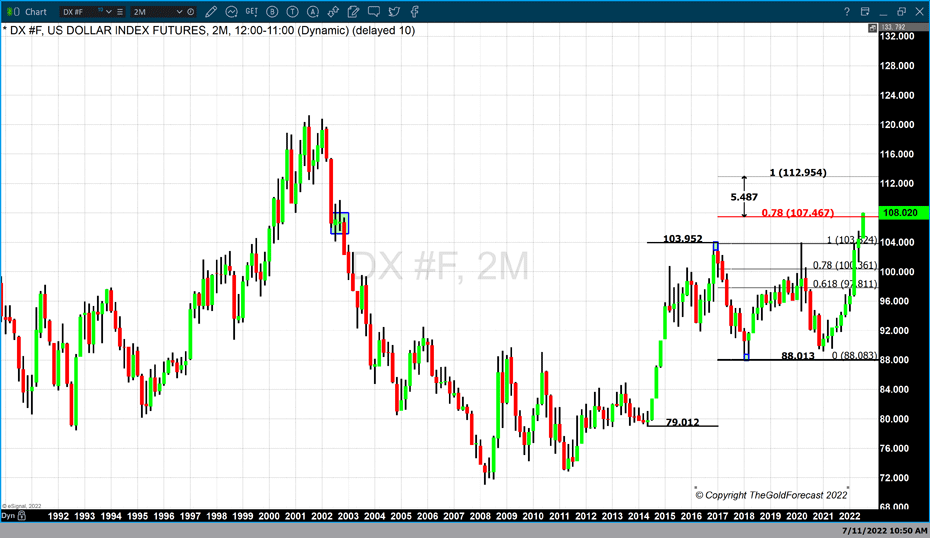
As of 4:45 PM EDT, the dollar has gained 1.11% or a total of 1.184 points, and is fixed at 108.005. Our studies indicate that there is no major technical resistance until the dollar index reaches 113. This assessment was created by using a Fibonacci extension from the lows of 79.012 in May 2014 up to the high of 103.952 during the first quarter of 2017.

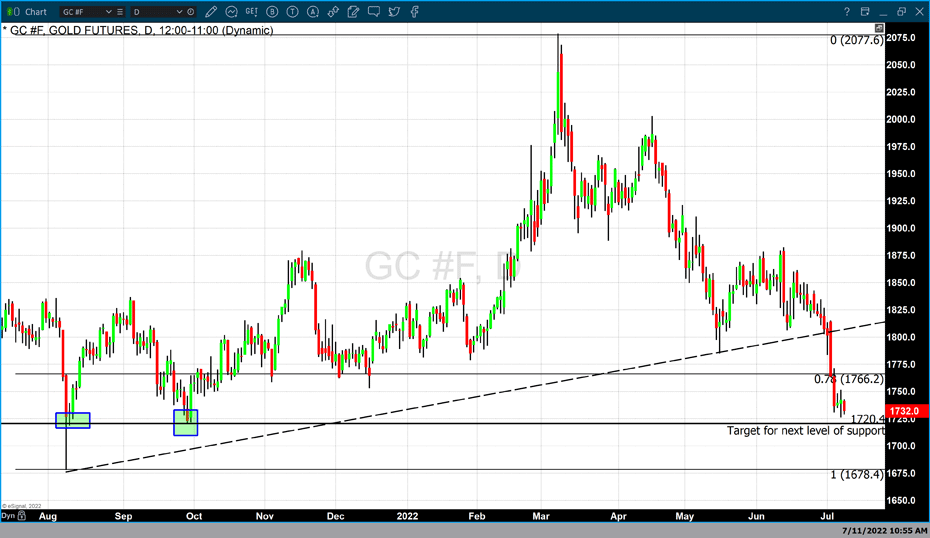
The widely anticipated 75 basis points rate hike by the Federal Reserve has continued to pressure gold pricing lower. The most active August 2022 futures contract is currently fixed at $1731.90 after factoring in today's decline of $10.40. Based on our technical studies the first level of potential support comes in at $1720 with major support at $1680.
 

By Gary Wagner

Contributing to kitco.com

Time to buy Gold and Silver on the dips


Tim Moseley

An Introduction To Cryptocurrency

An Introduction To Cryptocurrency


If you are relatively new to cryptocurrency and have been wanting to learn more and get started here is a brief quick start guide.  Let’s start with some context.

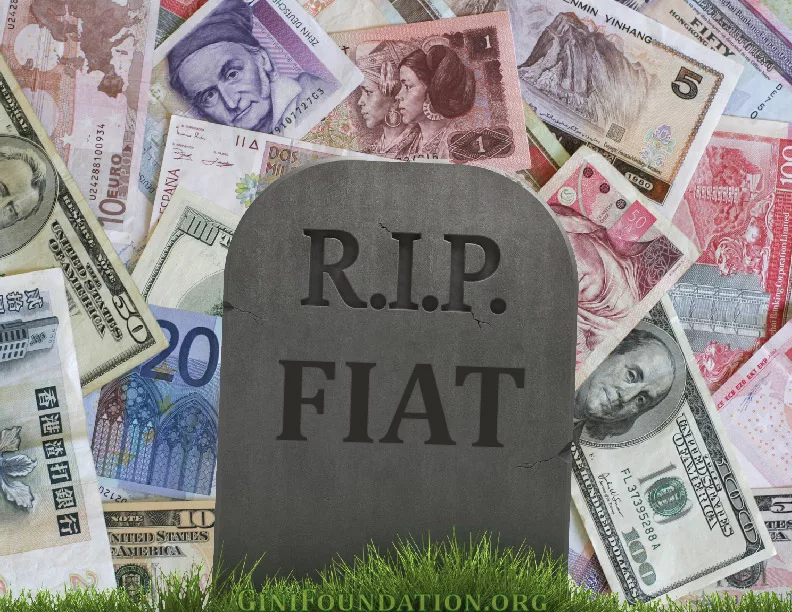
R.I.P. Fiat Money

The word FIAT derives from latin, meaning a determination by authority. Our money is controlled by the central banks and the system is broken. It has been for a long time, only now the house of cards appears to be collapsing fast. 

Last year Turkey reported that its Lira has lost approximately 40% of its value over the last two years alone, but in truth we have been in a state of hyperinflation for way beyond that time. 

Something had to give, and you know that’s true when the World Economic Forum comes out and says that it is time for a reset. They want to bring in a Central Bank Digital Currency, which basically means they will control your money, albeit in a different form. That does not solve anything.

I recall here in the UK the last recession, when we experienced a bank run after the collapse of Northern Rock bank back in 2008. People could not get access to their money. It underlined that the current banking system controls your money and can freeze your account at will. 

What’s more, the bailouts and bail-ins of the big banks are effectively funded by you! Not to mention how that this same money can also be forged easily


Source image: ginifoundation.org

What is Cryptocurrency?

It is out of the rubble and backdrop of that recession that cryptocurrency emerged in the form of bitcoin. May 22nd 2021 marked the 11th anniversary of bitcoin, and you may be aware of the famous story of two men who sold two pizzas for 10,000 bitcoin, which was next to nothing back then. 

Cryptocurrency is a form of digital cash which is secured by something called cryptography so that it cannot be duplicated. It is decentralized meaning that you own it when stored in your own private wallet. It effectively allows you to become your own bank. As it gets widespread adoption you can use it in the same way you use traditional money.

Already you can use cryptocurrency to send digital cash to friends irrespective of where they live in the world. You can trade with it. You can pay for business services with it. You can also get cash backs in the form of cryptocurrency at certain shopping outlets. The list goes on.

Bitcoin

There are so many different cryptocurrencies arising right now. The most well known cryptocurrency is bitcoin, reportedly created by someone called Satoshi Nakamoto. Depending on who you talk to there are various interpretations as to who this person is or was – an individual, team, or maybe a covert government set up.

It has a total supply of 21 million and a current circulating supply of just over 19 million. Over 15,000 businesses accept bitcoin including paypal, microsoft, home depot and starbucks to name but a few. On the downside bitcoin is having to deal with congestion and latency problems which may reflect in its transaction fees.

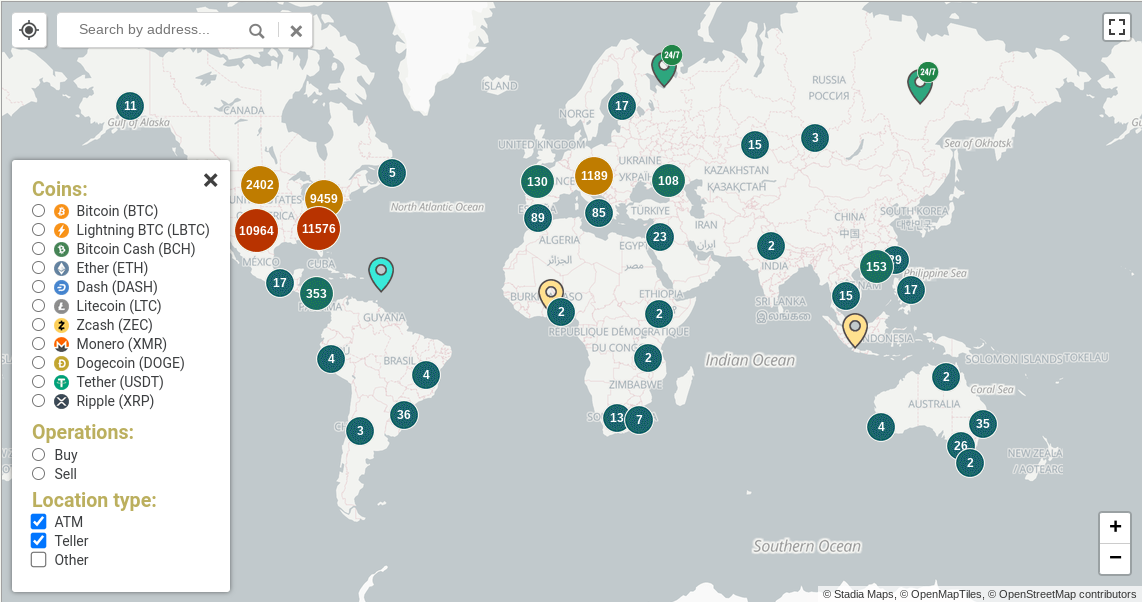
Bitcoin ATMs are springing up and becoming more ubiquitous, with the USA and Canada leading the way. You can find out where they are via this map.


Source: https://coinatmradar.com

What is The Blockchain

All transactions take place on something called the blockchain. The blockchain is like a  digital ledger system which records all transactions in a way that cannot be removed or altered, making for greater transparency. There are different blockchains for different cryptocurrencies. When you perform a transaction you can check its status from start to finish on the blockchain. The blockchain is a trustless system bringing transparency to the financial world.

Become Your Own Bank

Before buying bitcoin or any other cryptocurrency it is important to grasp the concept of being your own bank. This comes with a responsibility to manage your security and privacy.

You need somewhere safe to store your bitcoin for peace of mind. When you use an exchange to buy cryptocurrency it is important not to leave it there as exchanges can be hacked.

There are various types of wallet which can be created seamlessly and quickly. They fall into two broad categories. Hot wallets and cold wallets. A hot wallet is a wallet that remains connected to the internet. 

Exodus would be a common example. Exodus is a wallet you can download to your computer and also has an inbuilt swap feature for several cryptocurrencies, which is very useful. I have this on my computer.

A cold wallet on the other hand is not connected to the internet, a bit like a flash drive. These types of wallets cannot be compromised, and I strongly recommend you buy one and store it in a fireproof safe for obvious reasons. 

The three common cold wallets are ledger, trezor and yubikey. I have the ledger nano S

The other important aspect of opening a wallet is that you will be given private keys in the form of seed words which need to be stored offline ideally in a fireproof safe. They act like unique passwords, with the important exception that if you lose them they are not recoverable like passwords are. Be warned, and store them safely on paper.

How To Buy Cryptocurrency

I will use bitcoin as an example. You can buy bitcoin at an exchange like coinbase, and coinbase also has tutorials to aid your learning. Other popular exchanges are binance and kucoin. You do need to check if the exchange operates in your country as there are variations.

You will usually need to attach bank details or a debit card in order to make a purchase, and if it is a first time, just be aware that your bank may reject the transaction, so you may need to liaise with them to prevent it repeating.

If you want to acquire bitcoin without payment or risk, you can use faucets such as cointiply to get your feet wet, so to speak without risk. This is just one of many faucets. You can also use mining sites such as nicehash but I would be cautious due to the energy it might consume in electricity given the rise in energy prices. 

There are social media sites you can join that give you cryptocurrency for engaging on their site. For example Steemit, and our own Markethive Ecosystem.

In Markethive you can pay for membership in bitcoin, and you can also acquire their own markethive coin just by engaging in the platform through various marketing activities. That could be reading someone else's blog, adding content or referring friends. They have some fun gamification like the wheel of fortune too.

These are just a few simple and safe ways you can get started with cryptocurrency that are low cost or no cost. Welcome to the cryptocurrency world.


Tim Moseley

This Emerging Tech Is the Inflation Killer

This Emerging Tech Is the “Inflation Killer”

by Luke Lango, EditorHypergrowth Investing


This Emerging Tech Is the “Inflation Killer”


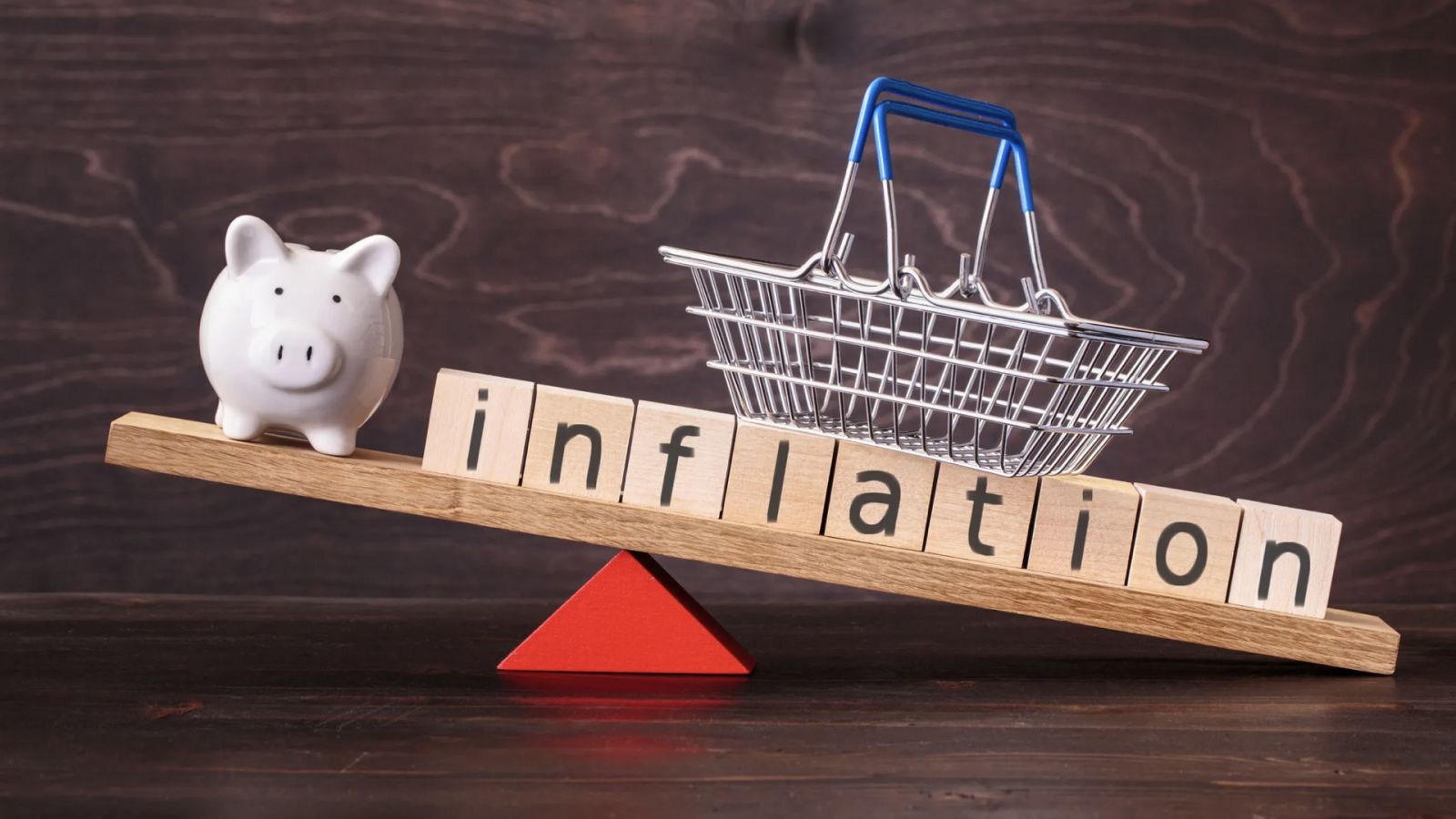
I don’t know about you, but I think it’s about time we kill inflation. I’m tired of $5 gas, $100-plus grocery trips, and $500 flights. It’s time we bid farewell to these sky-high prices.

Easier said than done, you say? Well… not really. Unbeknownst to most of the public, there is actually a single emerging technology out there today that is ready to kill inflation right away. It’s arguably the most complex technology to have ever existed. Engineers and scientists have been working on it for years. And it’s now ready to be unleashed to the world.

The timing couldn’t be more perfect. You see, this technology is the ultimate deflationary tool, and will serve as humanity’s greatest weapon in fighting inflation. Indeed, corporate America is already adopting this technology in bulk to dramatically reduce its costs – and the trend is just beginning.

Over the next few months and years, companies across the globe are going to adopt this tech faster than they’ve adopted anything before.

The result? Inflation will get fixed. And today, folks, you have an opportunity to invest in this breakthrough technology that’s going to – in some ways – save the world. It’s the opportunity of a lifetime, and one I wouldn’t pass up anytime soon.


So… what breakthrough tech am I talking about?

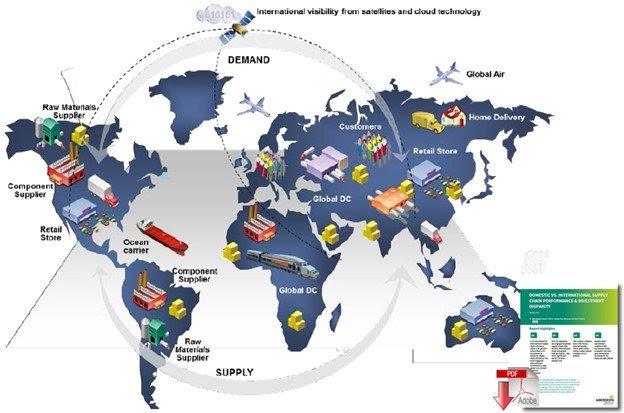
The Shift to De-Globalization. Before we talk about this breakthrough technology that represents the investment opportunity of a lifetime, we need to first understand why today’s inflation is so bad. The simple explanation is globalization – or, more specifically, the reversal of globalization. Specifically, over the past 40 years, the global economy has morphed into a web of interconnected dependencies. Everything affects everything.

Russia invades Ukraine. Consequently, Ukraine can’t produce chicken because all the farmers are fighting a war. Ukrainian exports of chicken drop tremendously. They’re the world’s sixth largest chicken exporter. Global chicken supply drops meaningfully. Global chicken prices rise everywhere, even 5,000 miles away in the United States.

By the same token, Russia invades Ukraine, and the Western World throws sanctions against Russian oil to cut off the Russian economy. Global oil supply drops meaningfully. Global oil prices rise everywhere. Your gas prices in America – 5,000 miles away from the fighting in Kyiv – rise 50%.

It’s all connected.


International satellite visibility


Therefore, one might easily say that the fix to today’s inflation problem is to “de-connect” everything. Down with globalization. Hello to localization. Theoretically, that sounds great. In a de-globalized world, a Russian invasion of Ukraine shouldn’t impact energy or food prices in the U.S. But, in practice, localization without technological innovation will only worsen today’s inflation problem.


Why did we globalize in the first place?

Ironically, we globalized to beat inflation. Specifically, to optimize the cost efficiencies of various economies, leveraging what in economics is known as “comparative advantages.” Sure, the U.S. has some oil. But Russia has way more oil, and they can extract that oil at a much lower cost because it is so abundant. Therefore, we built a dependency on Russian oil, because Russian oil is inherently cheaper than U.S. oil.

Same story with all those factories in China. Why did U.S. companies start outsourcing manufacturing to China? Cheaper labor. Cheaper labor leads to lower manufacturing costs, which leads to lower final product prices, and lower inflation.

For decades, globalization has actually been a huge deflationary force. To that end, we cannot simply reverse the wheels on the globalization trend and not expect it to cause inflation. Simple localization of supply chains will make today’s inflation problem infinitely worse. Just building out a bunch of oil refineries and vertical farms in the U.S. to establish energy and food independence would cost a fortune – and only exacerbate inflation.

But… advanced localization of supply chains using the breakthrough technology I mentioned earlier, won’t make today’s inflation problem worse. Instead, it’ll fix today’s inflation problem – and maybe forever!


The Fix Is Automation

In order to fix today’s inflation problem, America needs to localize its supply chains using automation technologiesThat’s right. I’m talking machines, robots, and software programs. Those technologies, working together, are the solution for today’s inflation problem. They are the inflation killer.  

If companies simultaneously localize and automate their supply chains, then they will destroy this unreliable web of global economic dependencies while keeping manufacturing costs low – and, indeed, they’ll even be able to dramatically reduce their manufacturing costs.

For example, let’s say I’m a company that has built a manufacturing facility in China because of the cheap labor. Currently, that facility is likely running at ~80% capacity due to continued COVID-19 lockdowns over there, and therefore, I don’t have enough product to fulfill demand. Neither do any of my competitors. So, we’re all bidding for whatever product does come across the Pacific Ocean, driving my input prices way higher, and resulting in both lower revenues and lower margins for me, and higher prices and longer lead-times for my customers.

It's a lose-lose situation

But… imagine I rebuild that same manufacturing facility in America, and use a bunch of robots to build, sort, and package my products, thereby eliminating labor costs associated with warehouse workers, and improving throughput via 24-hour work shifts. Even further, imagine those robots load all those packages into electric autonomous trucks, that then drive themselves to my customers’ front doors and deliver the product, thereby eliminating logistics-related fuel and labor costs and shortening lead times via constant uptime.

And, even further, imagine that entire process is controlled autonomously via a cloud software platform that connects all the moving parts, thereby eliminating labor costs associated with managers and enhancing operational efficiency via constant and dynamic data-driven decision-making.

In that world, I have 100% control over my supply chain. It’s always up and running. I never have a product shortage. I don’t have to pay high labor costs associated with warehouses. I don’t have to pay UPS (UPS), or USPS, or FedEx (FDX) for transportation fees. I can make more product, at lower prices, resulting in higher revenues and profit margins for me, and lower prices and wait-times for my customers.


That’s a win-win situation

In other words, advanced supply chain localization via automation technologies has the potential to turn today’s situation of lose-lose inflation into a win-win for businesses and consumers.


Welcome, folks, to the Automation Economy.


The Automation Economy


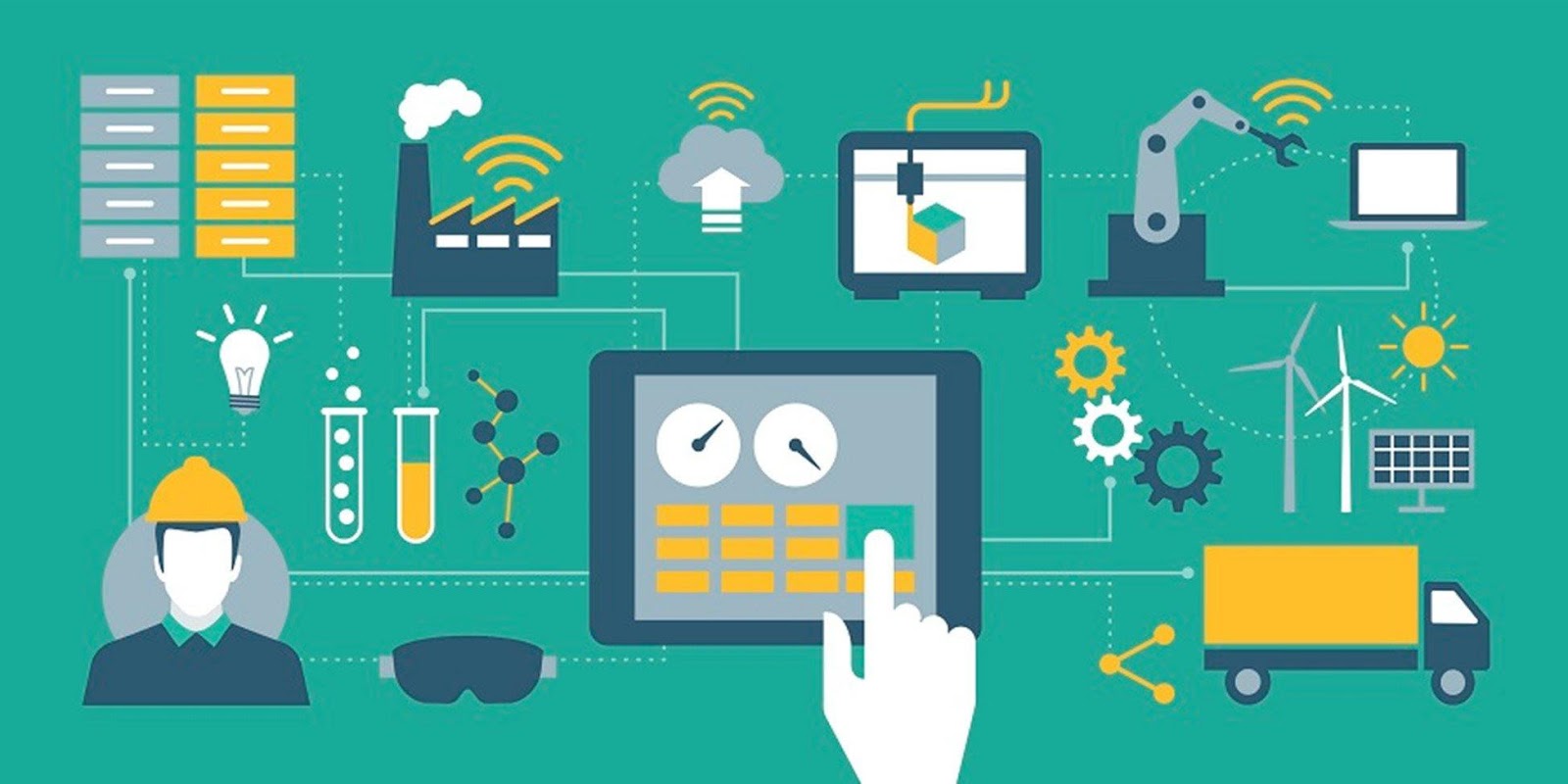
The Automation Economy is simply the integration of automated technologies into today’s business operations to reduce costs, increase efficiency, and maximize throughput. That includes the usage of automated machinery to mine raw resources. It includes the usage of autonomous trucks, ships, planes, and trains to transport those raw resources to production facilities. It includes the usage of robotics and software to turn those raw resources into usable products, package them, and ship them to their final retail destinations. It includes the usage of machine vision and RFID technologies to enable person-less store checkouts.

It includes everything. Make no mistake. The Automation Economy is the future, because society is constantly evolving toward lower-cost, higher-efficiency solutions, and automation enables a lower-cost, higher-efficiency future of business.


It is the future – and the future is now


The Dawn of the Automation Economy

Up until recently, the Automation Economy has been the stuff of science-fiction movies and books. But recent advancements in artificial intelligence, edge computing, machine learning and vision, and more have enabled these science-fiction projects to become real-world realities.

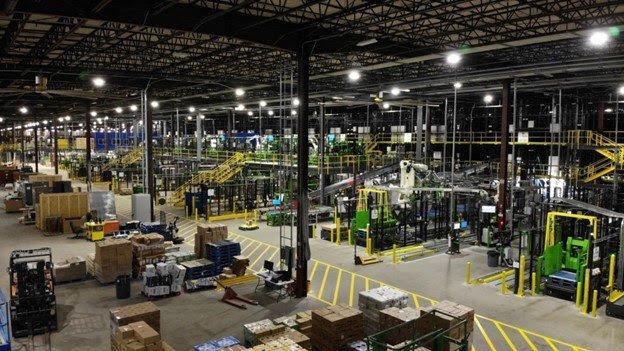
Just last month, Walmart (WMT) announced that it will be integrating a full-suite, end-to-end automation system from Symbotic (SYM ) into its 42 regional distribution centers. This system combines giant robot arms with a fleet of mini “Symbots” – or mobile, multi-purpose robotic machines that look like a hybrid of a forklift and a go-kart – to fully automate essentially all processes in a warehouse or a distribution center. It’s really awesome technology, and for those interested, I’d suggest you watch this video demonstration of Symbotic’s tech.


Warehouse automation


Walmart first launched the tech in a few warehouses last year. The company has since achieved industry-leading throughput at those warehouses with Symbotic’s technology. That early data has been so promising that Walmart – just a year later – decided to adopt Symbotic tech everywhere. By 2028, every Walmart distribution center in America will be fully automated. 

Walmart isn’t alone in the rapid and sudden uptake of automation technologies. Across the restaurant industry, companies are turning toward automation technologies to help with staffing shortages. Chipotle (CMG) is using robots to make tortilla chips at certain locations, while White Castle is using a different version of the same robot to make burgers. Chili’s has its own robot servers – Rita the Robot – which are in-use at more than 50 locations nationwide. Domino’s (DPZ) is delivering pizzas using autonomous cars in Houston.


Restaurant automation has arrived

So has retail automation, where Sam’s Club is using robots to clean floors and take stock of inventory on a daily basis. Kroger (KR) is using robots to prepare grocery delivery and pick-up orders. Amazon (AMZN) has built entire cashier-less and checkout-free retail stores using a combination of hardware and software automation technologies where you simply walk in, pick up items, and walk out, with your purchases charged to your Prime account.


We presently sit at the dawn of the Automation Economy

Things are only going to accelerate from here. Research firm ABB recently released the results of a survey of 1,610 executives in the U.S. and Europe. An astounding 62% of them plan to invest heavily into robotics and automation over the next three years. According to ABB:

“Business leaders are responding to unprecedented supply chain disruptions by putting into place measures to make operations more resilient and adaptable.

All told, the Automation Economy is expected to grow by more than 25% per year over the next five to 10 years, according to every major research firm that covers the space. We truly stand at the base of a Mt. Everest-sized economic opportunity – but only those who invest in this emerging technology today will make fortunes in the long run.


New Opportunities Are Emerging For Citizens of The World.

Freedom and democracy may appear to be struggling to stay alive in America, but there may be a knock-out punch ready to be released. The evolution of the blockchain-enabled metaverse is going to enable the 'Citizens of the World' to gain their own Freedom by democratizing power and creating a new world with new rules, new players, and new opportunities. For 99.99% of us, the metaverse will improve our real-world lives through the democratization of power and opportunity.

Along with the major long-term trend of society towards decentralization and smaller-scale organizations, there are new opportunities developing to help 'Preparers' in the cryptocurrency sector. Businesses are beginning to issue their own Crypto Coins that can be traded on Cryptocoin Exchanges.

Markethive.com for example will be releasing its HiveCoin (HIV) in the coming weeks. It has tremendous upside potential that is outlined in a Video by Founder Tom Prendergast, "Entrepreneur Advantage…".

Not only that, if you go to their website and register as a FREE Member, you will be given 500 HiveCoins for "FREE" along with access to several Earning Opportunities and online tools to increase your HiveCoin balance.

Be sure to check it out today – Markethive.com

Markethive

Tim Moseley