Tag Archives: markethive

Does OFAC Really Know What They’re Doing? A War On Crypto And Privacy

Does OFAC Really Know What They’re Doing? A War On Crypto And Privacy

This month, we witnessed one of the most significant attacks on crypto privacy in the form of the US Treasury’s Office of Foreign Assets Control (OFAC) sanctioning Tornado Cash. This led to protocols blocking addresses, funds being seized, and one of the Tornado Cash developers being arrested. The action was unprecedented, given that it was the first time we have effectively had sanctions placed on a piece of open-source software – essentially, restrictions on lines of code. 

For those unfamiliar with Tornado Cash, it has long been one of the most well-known mixing protocols on Ethereum. What it would essentially do is obfuscate or camouflage transaction history. This means it would anonymize transactions and remove all traces of where funds originated. Thousands of people used this privacy tool in the Defi space.

Unfortunately, it was also used for laundering the proceeds of cybercrime, which is the use case the Treasury focused on, stating that Tornado was a favorite tool of North Korean hackers and had been used to launder more than $7 billion. 

The moment Tornado was sanctioned, its website was taken down, and the code disappeared from GitHub. Not only that, but one of the contributors had his GitHub account banned. Circle blacklisted any USDC in the affected wallets, and RPC providers such as Infuror and Alchemy started blocking requests to Tornado Cash Smart contracts. 

Additionally, some decentralized applications also began to restrict access to their front ends for wallets that had interacted with the Tornado Cash Smart contract. For example, both Aave and dYdx reported blocking access from wallets that had interacted with Tornado Cash and even those that had received funds from it. Regarding dYdx, users who had insignificant amounts but were associated with Tornado Cash in the past were also blocked.

Dusting Celebrity Wallets Gag

Things were further complicated because someone in the community started dusting several public ETH addresses of celebrities in the space. In other words, they sent many small transactions to hundreds of known wallets associated with ETH addresses and their .ens official addresses. 

The likes of Brian Armstrong, Jimmy Fallon, and Steve Aoki were potentially committing sanctions violations by appearing to be doing business with a sanctioned protocol. What's even crazier than that is that some of those users who were subjected to the dusting found that they could not interact with Aave’s front end. These included the likes of Anthony Cesano and Justin Sun. 

The gag effectively points out the absurdity of such sanctions for users receiving funds from blacklisted addresses that they have no power to decline. The open nature of crypto is designed to cut out intermediaries, unlike the traditional financial sector that would use banks and other financial institutions to act as gatekeepers against such transactions.


Image source: eff.org

Is Code Fundamentally Free Speech? 

Perhaps the most chilling development, at least so far, was the arrest by Dutch police of one of Tornado Cash’s developers. Alexey Pertsev was picked up by the Dutch Fiscal Information and Investigation Service (FIOD) two days after Tornado Cash was sanctioned. The Dutch police have yet to clarify which exact rules Pertsev broke, but if it's just because he wrote some code, this is a dangerous precedent for several reasons. Furthermore, he is still detained and forbidden from communicating with his wife.  

The first thing we need to ask ourselves, however, is whether these actions by the treasury were legal. It is the first time that the treasury has effectively sanctioned a tool, a piece of Open Source Code that exists on the Ethereum Blockchain and which can be used by anyone for any purpose, albeit good or bad. Given that it is open source, that means it is akin to the likes of a public good. 

So that could be comparable to a road or a park; it would be as if OFAC were to sanction the use of an interstate highway because drug dealers drive on it. Or a more relevant example would be the treasury sanctioning the TCP IP protocol because hackers use the internet for hacking: It's impractical.

Moreover, just because a tool is sanctioned does not mean that the criminals will not use it. That's because criminals, by definition, have zero consideration for the law; they're likely to continue using the Smart contract as they see fit. Then there is the fundamental question of whether sanctioning a piece of code violates the First Amendment. 

To put it in perspective, thanks to a 1996 case Bernstein versus the DOJ, it's been established that code should be considered as speech, and if it is indeed speech, then it should be protected by the First Amendment. By sanctioning this tool, the treasury effectively says that speech itself is illegal. 

Now there is a real possibility that should someone want to challenge these sanctions, they could have a strong case in court. The Coin Center lobbying group is doing just that and believes the Treasury has overstepped its legal authority. The group wants to engage with OFAC to share their thoughts and will be exploring with counsel a court challenge. Additionally, they have had inquiries from members of Congress about the situation and are keeping the interested parties briefed on the matter. 

Furthermore, if, indeed, the only thing the developer did was write code, then that could also be seen as a violation of free speech. But if any legal challenges are mounted, they will take a long time to settle. Until then, the sanctions will have to be enforced, which means that specific Defi projects and protocols will continue blacklisting the Smart contract for fear of arrest. 
 

What Are The Practical Issues? 

Apart from the legal aspect, there is a practical consideration for how this will be enforced.  Remember, criminals will be criminals, and they will continue to use it. The code is open source and free to fork. Should that happen, the treasury will ultimately be playing whack-a-mole with a bunch of newly deployed Smart contracts. 

Not only that but those other crypto projects and protocols will also have to monitor not only the funds coming from the original Tornado Cash Smart contract but also from all the forked ones. This could quickly become a logistical impossibility, and projects will always have to worry whether any ETH they handle has gone through a forked version of the original Tornado Cash.

And speaking of which, there's also the broader question around who could technically find themselves violating OFAC rules due to these sanctions. 

If someone sends ETH from the Tornado contract to you, does that mean you are in violation? I mean, it's not like you can refuse to receive it. As we saw with those dusting attacks, protocols themselves have started blocking some of these dusted addresses. Could the Feds start going after any of those wallets that have received Tornado-tainted ETH? Could we soon see Jimmy Fallon dragged away in handcuffs? 

It's not even about addresses that have received funds. What about liquidity providers on a DEX? What happens if they unknowingly convert ETH that has been through Tornado Cash into some other cryptocurrency? Are they thus engaging with sanctioned entities? 

What about Ethereum miners? What liability did they have if they were to propagate a block that included a Tornado Cash transaction? Does that mean that they could also be flirting with illegality? Or how about that ETH that is sent to the ETH2.0 staking contract? What would that mean for Ethereum’s Proof-of-Stake? 

What happens once the transition to proof of stake is complete? Will validators have to decide to censor certain transactions that their jurisdiction deems illegal? Could they get censored? So you can see how quickly this grows out of control. The crypto space has just seen a massive can of worms open up right in front of it. 

Now, of course, there will be some who claim that these actions are justified. Swiped funds from some of the most high-profile crypto hacks of the past two years have gone through Tornado. This was seen in the wake of the $100 million Harmony hack a few weeks ago. 

Why Do We Want Privacy?

Many people have been asking whether there are any legitimate use cases for Tornado Cash, a tool designed specifically for privacy. Essentially this all comes down to the broader question of why someone would want to have financial privacy in the first place. As the old saying goes, “why do you worry if you have nothing to hide?” 

Well, for plenty of reasons; firstly, because blockchains are public and transparent, everyone can see exactly what your wallets are doing and what you could be buying or investing. This is not the case with traditional finance, where your bank account balances and spending habits aren't public. The moment they are public, and someone can attach them to your IRL identity, it opens you up to potential physical harm if criminals ever want access to your crypto. 

Or perhaps you wanted to donate crypto to a cause that may get you into serious trouble in your country. For example, what happens if you were a citizen of Iran or Venezuela who wanted to donate to a journalist or newspaper that the government didn't like? Blockchain is immutable; you’d live in constant fear of being placed on a list of some kind. 

Or how about if you were a Russian who wanted to donate to Ukraine, not something you would like the FSB to know about? On the flip side, you could be a Ukrainian refugee wishing to hide where you are getting your donations from. This is something that Vitalik Buterin himself highlighted earlier this year when he donated to the country. 

Beyond such high stakes implications, it could also just be a situation where you don't want people you interact with on-chain to know what you do with your money. For example, let's assume that you get paid in crypto. That means your employer can see exactly what you do with that money and what you're buying. 

Or perhaps you're buying something from an online Merchant, and you don't want them to know what else you've been spending the money on or how much you have; just imagine the targeted advertising coming your way. Ironically this would be much easier to achieve when paying with a wholly open and permissionless form of money. 

These are reasons why someone would want to anonymize their transaction history. Some might say you could just use a centralized exchange; however, the whole point of the decentralized and censorship-resistant currency is that you don't have to rely on a centralized gatekeeper. Moreover, some people are just not comfortable having others holding their private keys, and can you blame them? 

OFAC’s False Press Release

In its press release, it was also pretty disingenuous for the Treasury to claim that $7 billion was laundered through Tornado Cash. That was the total volume of transactions, many of which would have been for such perfectly legitimate reasons. 

In fact, according to stats from Chain Analysis, only about 17% of the funds that flow through the protocol were tied to sanctioned activity. The vast majority, 50%, was related to DefI activities. That means that these users were thrown into the laundering bucket by the Treasury when all they were really doing was trying to anonymize their funds. 
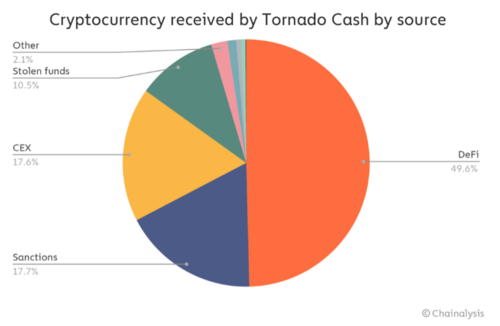

Image Source: Chain Analysis

First Crypto War Had Net Positive Result

So this raises the question of what all this means for crypto privacy and also privacy in general. It's pretty clear that privacy is under attack, albeit this move by the treasury was prompted by concerns around the North Korean hacking. Still, this radical approach by the Treasury is so nonspecific for what it's trying to achieve that you have to wonder whether the folks at OFAC gave any thought to collateral damage. 

Many have drawn parallels with the early Crypto Wars, for example. For unfamiliar people, this was when the US government arrested Phil Zimmerman, a developer who distributed PGP cryptography online. They accused him of “munitions export, without a license.” 

They contended that his PGP encryption system was a weapon that adversaries could use. Really? It would seem they don’t consider that any citizen wants and has a right to privacy. Only criminals and enemy governments would want to encrypt their communications. 

Well, it turned out that there were many practical uses for encryption online, and various encryption standards have helped power the multibillion-dollar e-commerce revolution we've experienced over the last 20 years. What was initially considered a way to hide state secrets has allowed legal commerce to thrive. 

Many have also wondered why Tornado Cash got hit and not other well-known crypto projects, like Monero. Virtual mixers seem to be viewed with much more suspicion than privacy-by-default currencies. People could see on-chain how the Lazarus group was laundering its funds through the tool. This isn't something that you can easily observe with Monero. 

Moreover, the sheer volume of funds running through Tornado Cash made it a prime target, but this doesn't mean Monero isn't being studied and tracked. There may well be a robust state-backed effort to crack the ring signature technology for which Monero is famous. This is perhaps one of the reasons why the Monero developers pushed through some new upgrades to the protocol only recently. 

Crypto And Congress Take A Stand

There has been a genuine outcry from the crypto industry arguing that the Treasury Department’s actions to shut the Tornado Cash could be “unconstitutional” as people have a right to privacy. 

Abraham Piha, co-founder, and CEO of Web3-focused firm Tomi, told Cointelegraph

“Tornado existed only because most blockchains were not private enough. If successive updates of Ethereum or Bitcoin include protocol integrations like Mimblewimble, will the next step be to block them as well? This act is yet another reason to push for Web3, a free web, controlled by users and not by some big brother governments.”

Kenny Li, co-founder and core developer for Manta Network, a privacy-preservation protocol, said that the Treasury’s decision to sanction Tornado Cash is far-fetched and extreme, even though, in the past, specific individual crypto wallet addresses have been subject to the same treatment. But in most cases, he said, there was a clear case of fraud, hacks, or a Ponzi scheme:

“In this case, smart contract addresses are being blacklisted. Smart contracts aren’t people. Not only that, but people forget that Tornado Cash is a protocol, not a person or an entity, which means it will continue to run regardless of the sanctions. It is time that we realize privacy and anonymity aren’t the same, and Web3 is all about privacy.”

Additionally, some Congress members are standing up, demanding an explanation from OFAC. Specifically, United States Congressman Tom Emmer sent a four-page letter to Treasury Secretary Janet Yellen regarding the unprecedented sanctioning of Tornado Cash. 

He posed a series of questions that sought to clarify the position of the Treasury Department’s OFAC. They were practical questions noting that Tornado Cash is a collection of several Ethereum Smart contract addresses that are not controlled by an individual or entity. 

Emmer asked what persons could be associated with those addresses and:

“Given that the Tornado Cash back-end will operate unchanged […] as long as the Ethereum network continues to operate, who or what entity did OFAC believe was reasonably responsible for imposing controls on the Tornado Cash blockchain contracts?”

Emmer posted the full letter on Twitter, stating that the growing adoption of decentralized technology would certainly raise new challenges for OFAC. Nonetheless, technology is neutral, and the expectation of privacy is normal.

Closing Thoughts

Firstly, I dare say we can all agree that those who engage in criminality should be brought down. The laundering of ill-gotten gains, be it through a bank account or a Defi protocol, should be prosecuted to the full extent of the law. 

Those wallets linked to criminal activity should also be sanctioned and flagged. This is precisely what the treasury did before the Tornado Cash sanctions were imposed. And it's not as though this approach wasn't enjoying some success. Thanks to some pretty advanced tools and tracking services, law enforcement can catch such miscreants more effectively than they could in the past. 

They also have the power of subpoenas and search warrants. They simply didn't need to take this action against Tornado Cash. The collateral damage resulted in a loss of privacy for some and a massive disruption for all in the Defi space. 

As for those North Korean hackers, they'll switch to one of the other 100 or so laundering techniques they were using long before Tornado started operating. Moreover, given that tornado cash is nothing but code, it'll be hard to outlaw permanently; it'll be a game of whack-a-mole. It won't have the desired effect. And the collateral damage is already permeating the crypto industry. 

These actions also raise legal questions. Is this a breach of the First Amendment, and what happens to any citizens who have used it in the past? Or anyone that interacts with it? It's a legal quandary, to say the least. 

With legal challenges brewing, this could turn into a new crypto war. One, with a positive long-term impact, as we saw with the first crypto war. Or maybe the large centralized institutions will conform, and we’ll have a more amenable but less free crypto space. It does demonstrate how some developers will continue to embrace decentralization, and many of us as individuals will fight for our right to freedom and privacy. 

Reference:
Coin Bureau
Cointelegraph


Editor and Chief Markethive: Deb Williams. (Australia) I thrive on progress and champion freedom of speech. I embrace "Change" with a passion, and my purpose in life is to enlighten people to accept and move forward with enthusiasm. Find me at my Markethive Profile Page | My Twitter Account | and my LinkedIn Profile.


Also published @ BeforeIt’sNews.com; Steemit.com


Tim Moseley

Hidden in Plain View

Hidden In Plain View

by Jeff Thomas, editor, International Man Communique

Hidden In Plain View

In 1796, the US issued its first quarter dollar.

On the obverse, it displayed the image of Lady Liberty, and above the image (in case there was any doubt about the message), the word "LIBERTY" was prominently displayed. The coin was minted from silver (90%) and copper (10%).

Over the years, the design of the US quarter changed repeatedly. Then, in 1932, a new quarter (image #1, above) was issued that featured the image of American Founding Father George Washington. As before, the word "LIBERTY" appeared above his image—a continuing reminder of the primary principle upon which the US was founded. And as before, the coin was minted from silver (90%) and copper (10%).

So far, so good.

The quarter remained unchanged until 1965. The new quarter (image #2) was the same in every way, except that it contained no silver whatsoever. It now contained only copper and nickel. (At today’s metals prices, the intrinsic value of the quarter dropped suddenly to 1% of its previous value.)

Conceptually, the American people should have been outraged, as they had effectively lost the ability to hold real, redeemable wealth. The coin they would hold in the future would not have the value of silver; it would be a mere token. The new coin represented no more than a "promise of value" on the part of the US government.

However, there was almost no outcry. The reason? Because the new quarter still retained the same purchasing power it had when it was made of silver. As long as the quarter was perceived by all and sundry as having value for the purpose of payment, most Americans were content to accept the switch.

In 1999, the quarter’s design did change (image #3). The word "LIBERTY" was removed from above the head of Washington and in its place were the words, "UNITED STATES OF AMERICA." It might have been argued at the time that those words needed to be on the quarter to remind holders of the coin what nation had issued it. However, those words had always appeared on the reverse of the Washington quarter, and I recently saw a 1999 quarter that had those words on both sides—a very odd redundancy for a coin, which, by its very size, has little space to spare, even for essential information.

The word "LIBERTY" was still in evidence on the new coin, but it had been moved lower down, beneath Washington’s chin, and was now much smaller.

It would seem one reason for the change in design had been to diminish the importance of Liberty as an American concept. (Later, when the "states" quarters were issued, the Mint dropped the "UNITED STATES OF AMERICA" on the reverse and retained it on the obverse.)

In any case, as in 1965, there was no outcry from the American people—again, for the same reason as before. The coin retained the same purchasing power, so the change in design was simply not an issue.

Some citizens may have a different slant on the subject. It may be argued that the two changes in the American quarter reflect the changes in the US as a nation. There can be no doubt that the value of US currency, in general, has been dramatically reduced in purchasing value since 1932. It is also true that none of the US currencies (whether paper notes or metal coins) have any true, redeemable value. They have only perceived value, which is subject to dramatic change, depending on economic conditions. (In the last century, the un-backed currencies of some twenty nations have been rendered valueless, as a result of hyperinflations.)

In 1796, when the quarter was first minted, the quarter was in itself wealth. The paper banknotes that came later (beginning in 1861) were initially fiat (during the war) but were quickly replaced by notes backed by, and redeemable for, silver. The redemption of US banknotes for silver bullion ended in 1968.

Today, if a US citizen seeks to build up his wealth, he cannot do so by holding the currency of his country. All US currency, whether paper or metal, only represents his faith in the currency to retain its value, which it is unquestionably losing. Therefore, merely by dealing every day in US currency, the holder is paying a hidden tax, and his wealth is diminished accordingly.

As to US Liberty, many would agree that that, too, has been devalued, particularly after 1999. Laws such as the Patriot Act of 2001, its expansion in 2011, and the National Defense Authorization Act of 2011 have stripped Americans of their constitutional rights on a wholesale basis.

There is an old saying that, "The best place to hide something is in plain view." If true, a reminder of what the US citizen has lost may be found in plain view, merely by reaching into his pocket and examining his change.

Unfortunately, there's little any individual can practically do to change the trajectory of these trends in motion.

The best you can and should do is to stay informed so that you can protect yourself in the best way possible, and even profit from the situation. We think everyone should own some physical gold.

Gold is the ultimate form of wealth insurance. It has preserved wealth through every kind of crisis imaginable. It will preserve wealth during the next crisis, too.


New Opportunities Are Emerging For Citizens of The World.

Freedom and democracy may appear to be struggling to stay alive in America, but there may be a knock-out punch ready to be released. The evolution of the blockchain-enabled metaverse is going to enable the 'Citizens of the World' to gain their own Freedom by democratizing power and creating a new world with new rules, new players, and new opportunities. For 99.99% of us, the metaverse will improve our real-world lives by democratizing power and opportunity.

Along with the major long-term trend of society towards decentralization and smaller-scale organizations, there are new opportunities developing to help 'Preparers' in the cryptocurrency sector. Businesses are beginning to issue their own Crypto Coins that can be traded on Cryptocoin Exchanges.

Markethive.com will release its HiveCoin (HIV) in the coming weeks. It has tremendous upside potential that is outlined in a Video by Founder Tom Prendergast, "Entrepreneur Advantage…".

Not only that, if you go to their website and register as a FREE Member, you will be given 500 HiveCoins for "FREE" along with access to several Earning Opportunities and online tools to increase your HiveCoin balance.

Be sure to check it out today – Markethive.com

Markethive

Tim Moseley

2022 Q1 Survey Reveals Over Half of South Africans Know Little or Nothing About Cryptocurrency

2022 Q1 Survey Reveals Over Half of South Africans Know Little or Nothing About Cryptocurrency

In many countries, years of ultralow interest rates coupled with the government stimulus unleashed during the pandemic sent cash flows into riskier investments, like tech stocks and crypto. Now some of those initiatives are winding down, and the potential for inflation to weigh on economic growth has many exploring safer investments than they'd gone for in the past.

Over the years, cryptocurrencies have become a viable way of conducting transactions anytime and anywhere. This is possible through users' ability to transact with each other directly without any intermediaries. Based on the value of their virtual money, cryptocurrencies are also referred to as money. South Africans use cryptocurrencies, but many still don't know much about them. The cryptocurrency space has been left to develop organically in South Africa, with no clear-cut awareness to encourage maximum adoption.

The Merchant Consumer Survey revealed that 53% of South African participants knew little about cryptocurrencies. Interestingly, nearly half of respondents said they would be more open to the cryptocurrency space if local banks offered such services. The report noted a considerable growth opportunity for crypto trading platforms on the African Continent. In South Africa, local exchanges lead the way, in stark contrast to the rest of the continent, where global exchanges lead in market share.

According to the report from Merchant, a global telemarketing firm:

  • Only 14% of South Africans have any significant knowledge of the cryptocurrency industry.
  • 23% of participants remained neutral.
  • The vast majority (53%) said they had limited or no knowledge of the matter.
  • 18-24-year-olds have higher literacy rates than any other demographic group, including 25-42-year-olds.

The survey also noted that cryptocurrency adoption in South Africa could be boosted if domestic banks embrace the asset class and offer educational programs to users.

Due to technological advancement, cryptocurrency is being used to a certain extent in South Africa. Businesses can accept and pay their employees using cryptocurrency without affecting their current cash flow. Additionally, some South Africans use cryptocurrency as a hedge against inflation. By purchasing cryptocurrencies when prices are low and selling them when prices rise, users earn more money than they spent on their investments. Through this strategy, they become financially independent from traditional banks that charge high-interest rates on loans.

“There is a real opportunity for banks to get involved in cryptocurrency as it begins to really take off on the continent, rather than waiting until it is more established – by when consumers are likely to have a preferred platform or partner who they have built that trust with.”

– Group CRO, Merchants

Another recent report by Bitget Exchange, Boston Consulting Group, and Foresight Ventures found that South Africa has the continent’s most significant cryptocurrency market, as evidenced by its more advanced financial infrastructure and fiat-to-crypto payment rails.


Source: BCG, Bitget and Foresight Ventures Report File

The report noted a considerable growth opportunity for crypto trading platforms on the African Continent.

On-platform exchange services, such as Coinbase and Gemini, have been less competitive in the African market. However, with few existing exchanges offering access to fiat currencies or local payment methods, it might be challenging for them to thrive in that market.

In Summary 

Despite the benefits that cryptocurrencies offer users, including lower transaction fees, increased financial security, and uncomplicated business operations, few people know much about them in South Africa at present. As awareness rises among local users, more will start investing in cryptocurrency and allowing themselves greater economic freedom over time.

Cryptocurrency transactions help to remove the procedural bottlenecks that plague traditional banking and financial services. Fearing a collapse of the banking industry or arbitrary appropriation of money by the government, Africans who live in politically unstable countries could be attracted to cryptocurrency.

Generally, it is expected that there will be an increase in cryptocurrency awareness amongst users in Sub-Saharan Africa over the coming years. This would drive the adoption of cryptocurrencies within the region.


About: Prince Chinwendu. (Nigeria) Rapid and sustainable human growth is my passion, and getting a life-changing opportunity into the hands of people is my calling. Empowering entrepreneurs provides me with enormous gratification. Find me at my Markethive Profile Page | My Twitter Account | and my LinkedIn Profile.


Tim Moseley

The Truth About Climate Change: There Is NO Climate Emergency

The Truth About Climate Change: 
There Is NO Climate Emergency

Large frameworks of science that don’t fit the narrative on climate change or global warming have been ignored by the Intergovernmental Panel on Climate Change (IPCC), the Conference of the Parties (COP), and self-interested scientists paid by taxpayers. A formidable industry has been subsidized, creating intermittent, unreliable wind and solar electricity based on unsubstantiated science. 

The same charlatans now want subsidized hydrogen, costly inefficient electric vehicles, subsidized mega-batteries, and other appallingly expensive tried and failed schemes that impoverish people, create unemployment, transfer wealth and enrich China. Many parts of the world like Germany, Texas, California, and the UK have already had a glimpse of the Net-Zero CO2 by 2050 policy with blackouts, astronomically high electricity costs, and hundreds of deaths. 

The sentiments above are from Professor Ian Plimer, a geologist and author in earth science who edifies his thoughts in his latest book, “Green Murder.” He’s part of the global network Climate Intelligence (CLINTEL), an independent foundation that operates in the fields of climate change and climate policy. It consists of over 1100 scientists and professionals that want to get the message out that there is no climate emergency. 

Furthermore, in 2019, the unelected, unaccountable, transnational World Economic Forum (WEF), which is also the main driver behind The Great Reset,  gave 16-year-old student Greta Thunberg a public stage, rendering her a poster child for climate change. Greta’s comments such as “I want you to panic”… “Our house is on fire,” terrified millions of children and adults worldwide. 

But in a testimony to the US Congress on April 21, 2021, Greta stated that there is “no science” behind her comment; it was just a metaphor. At no point has WEF or its media-mogul trustees apologized for foisting fear on world citizens. 

“Crickets” From WEF

CLINTEL, the climate intelligence think tank based in The Netherlands, sent a letter to Borge Brende, President of the WEF, in January 2020, calling for engagement on the issue of the claimed “climate emergency,” writing:

“Despite heated political rhetoric, we urge all world leaders to accept the reality that there is no climate emergency. There is ample time to use scientific advances to continue improving our society. Meanwhile, we should go for adaptation; it works whatever the causes [of climate change] are.”

“We also invite you to organize with us a constructive, open meeting between world-class scientists on both sides of the climate debate. Such an event complies with the sound and ancient principle that all pertinent parties should be fully heard.”

There has been no response from the WEF to date. The WEF’s unwillingness to engage with CLINTEL in an open scientific debate on climate change suggests the WEF is not acting with “moral and intellectual integrity is at the heart of everything it does,” as it claims.

On Dec. 24, 2021, CLINTEL also issued a letter to the President of Switzerland, concerned about the ‘host state’ status that Switzerland had bestowed on the World Economic Forum in January 2015. The Paris Agreement was signed that year, and it appears that WEF has adopted the mission to push the Club of Rome’s Planetary Emergency agenda.

The WEF’s 2006 Global Risks report.pdf featured oil price shock and pandemic as two severe global risks. However, by the 2020 report, WEF had removed both from the list of risks and replaced them with climate change.

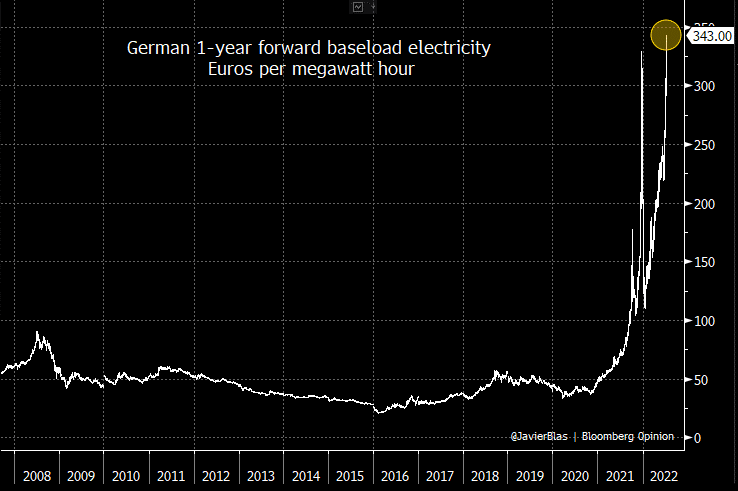
Now the world is experiencing a global oil price shock, an energy crisis, and is struggling to recover from a pandemic. Millions of people face energy poverty and famine due to skewed energy investment markets, much of it driven by WEF trustees like Mark Carney demonizing vital energy.

Good vs. Evil

According to CLINTEL, climate science should be less political, while climate policies should be more scientific. In particular, scientists should emphasize that their modeling output is not the result of magic: computer models are human-made. What comes out depends entirely on what theoreticians and programmers have put in: hypotheses, assumptions, relationships, parameterizations, stability constraints, etc. Unfortunately, in mainstream climate science, most of this input is undeclared.

To believe the outcome of a climate model is to believe what the model makers have put in.  This is precisely the problem of today’s climate discussion to which climate models are central. Climate science has degenerated into a discussion based on beliefs, not on sound self-critical science. We should free ourselves from the naïve belief in immature climate models. In the future, climate research must give significantly more emphasis to empirical science.  

Below is the World Climate Declaration (WCD) CLINTEL has published that fall on deaf ears as far as the bureaucrats are concerned. This declaration is based on scientific fact and must be disseminated worldwide so that people are aware and not deceived by evil rhetoric, trickery, alarmist literature, and the greedy agenda of the elite few. 

There Is No Climate Emergency

A global network of over 1100 scientists and professionals has prepared this urgent message. Climate science should be less political, while climate policies should be more scientific. Scientists should openly address uncertainties and exaggerations in their predictions of global warming, while politicians should dispassionately count the real costs as well as the imagined benefits of their policy measures.

Natural as well as anthropogenic factors cause warming
The geological archive reveals that Earth’s climate has varied as long as the planet has existed, with natural cold and warm phases. The Little Ice Age ended as recently as 1850. Therefore, it is no surprise that we are now experiencing a period of warming.

Warming is far slower than predicted
The world has warmed significantly less than predicted by IPCC on the basis of modeled anthropogenic forcing. The gap between the real world and the modeled world tells us that we are far from understanding climate change.

Climate policy relies on inadequate models
Climate models have many shortcomings and are not remotely plausible as global policy tools. They blow up the effect of greenhouse gases such as CO2. In addition, they ignore the fact that enriching the atmosphere with CO2 is beneficial.

CO2 is plant food, the basis of all life on Earth
CO2 is not a pollutant. It is essential to all life on Earth. Photosynthesis is a blessing. More CO2 is beneficial for nature, greening the Earth: additional CO2 in the air has promoted growth in global plant biomass. It is also good for agriculture, increasing the yields of crops worldwide.

Global warming has not increased natural disasters
There is no statistical evidence that global warming is intensifying hurricanes, floods, droughts, and suchlike natural disasters or making them more frequent. However, there is ample evidence that CO2-mitigation measures are as damaging as they are costly.

Climate policy must respect scientific and economic realities
There is no climate emergency. Therefore, there is no cause for panic and alarm. We strongly oppose the harmful and unrealistic net-zero CO2 policy proposed for 2050. If better approaches emerge, and they certainly will, we have ample time to reflect and re-adapt. The aim of global policy should be “prosperity for all” by providing reliable and affordable energy at all times. In a prosperous society, men and women are well educated, birth rates are low, and people care about their environment.

Epilogue
The World Climate Declaration (WCD) has brought a large variety of competent scientists together from all over the world*. The considerable knowledge and experience of this group are indispensable in reaching a balanced, dispassionate, and competent view of climate change.

From now onward, the group is going to function as the “Global Climate Intelligence Group.” The CLINTEL Group will give solicited and unsolicited advice on climate change and energy transition to governments and companies worldwide.

* It is not the number of experts but the quality of arguments that counts.

World Climate Declaration plus all signatories in pdf

World Climate Declaration AMBASSADORS
NOBEL LAUREATE PROFESSOR IVAR GIAEVER NORWAY/USA
PROFESSOR GUUS BERKHOUT / THE NETHERLANDS
DR. CORNELIS LE PAIR / THE NETHERLANDS
PROFESSOR REYNALD DU BERGER / FRENCH-SPEAKING CANADA
BARRY BRILL / NEW ZEALAND
VIV FORBES / AUSTRALIA
PROFESSOR JEFFREY FOSS † / ENGLISH SPEAKING CANADA
JENS MORTON HANSEN / DENMARK
PROFESSOR LÁSZIÓ SZARKA / HUNGARY
PROFESSOR SEOK SOON PARK / SOUTH KOREA
PROFESSOR JAN-ERIK SOLHEIM / NORWAY
SOTIRIS KAMENOPOULOS / GREECE
FERDINAND MEEUS / DUTCH-SPEAKING BELGIUM
PROFESSOR RICHARD LINDZEN / USA
HENRI A. MASSON / FRENCH-SPEAKING BELGIUM
PROFESSOR INGEMAR NORDIN / SWEDEN
JIM O’BRIEN / REPUBLIC OF IRELAND
PROFESSOR IAN PLIMER / AUSTRALIA
DOUGLAS POLLOCK / CHILE
DR. BLANCA PARGA LANDA / SPAIN
PROFESSOR ALBERTO PRESTININZI / ITALY
PROFESSOR BENOÎT RITTAUD / FRANCE
DR. THIAGO MAIA / BRAZIL
PROFESSOR FRITZ VAHRENHOLT / GERMANY
THE VISCOUNT MONCKTON OF BRENCHLEY / UNITED KINGDOM
DUŠAN BIŽIĆ / CROATIA, BOSNIA AND HERZEGOVINA, SERBIA, AND MONTE NEGRO


Source and Research: 
https://clintel.org/world-climate-declaration/ 
https://clintel.org/
https://friendsofscience.org/


Editor and Chief Markethive: Deb Williams. (Australia) I thrive on progress and champion freedom of speech. I embrace "Change" with a passion, and my purpose in life is to enlighten people to accept and move forward with enthusiasm. Find me at my Markethive Profile Page | My Twitter Account | and my LinkedIn Profile.


Also published @ BeforeIt’sNews.com


Tim Moseley

The Darker Side of Amazon’s Acquisitions

The Darker Side of Amazon’s Acquisitions

By Jason Bodner, EditorOutlier Insights


The Darker Side of Amazon's Acquisitions


Amazon recently announced it’s acquiring iRobot (IRBT) in an all-cash deal for $1.7 billion. The company is best known for its robot vacuum cleaners – namely, its flagship product the “Roomba.”

Amazon execs say the deal is a natural extension as part of its mission to move further into robotics and smart home technology.

But there’s a darker side to this deal than Amazon would care to admit.

As of 2020, Amazon’s Alexa devices were already in 25% of U.S. homes. They sit on the shelf, tracking, listening, and mining data from our daily lives.

And it’s estimated that the company has hundreds of millions of Ring doorbell security cameras active by our front doors.

Now the company will have up to 40 million Roomba’s zipping around the inside of our homes. Some of these automated vacuums even use advanced LIDAR (laser mapping technology) and cameras.

These technologies enable our Roombas to map out our homes to better see, understand, and avoid obstacles.

And with Amazon behind them, these devices are capable of monetizing our homes in a whole new way.


The Monetization of Our Private Spaces

A report from this past April revealed what most of us have guessed –our conversations with Alexa provide data for the ads we’re served by the company.

And Ring doorbells can watch and listen to us and our neighbors over 50 feet away from our doors, gaining more data on our lives.

But Amazon knows there’s still more data to be obtained inside our houses.

Bloomberg reported that the data Amazon will soon collect from Roombas could be used to determine the value of your home based on how big it is and what you have around the house. It could then combine that data with our Amazon shopping habits.

All this can create an even more advanced customer profile about us. With Roomba’s help, Amazon will know exactly what kind of throw pillows would look great on our couch.

And in the very near future, we may see it start to show us ads that pertain to what is or is not inside our homes.


Big Tech Won’t Stop

If any of us feel uncomfortable with a company gaining so much information about us, that’s completely understandable.

Big tech has a dark side – it’s as plain and simple as that.

If something as mundane as cleaning dog hair off the floor can be monetized, then big tech is going to find a way. And there’s no better example of an amazing monetizer than Amazon.

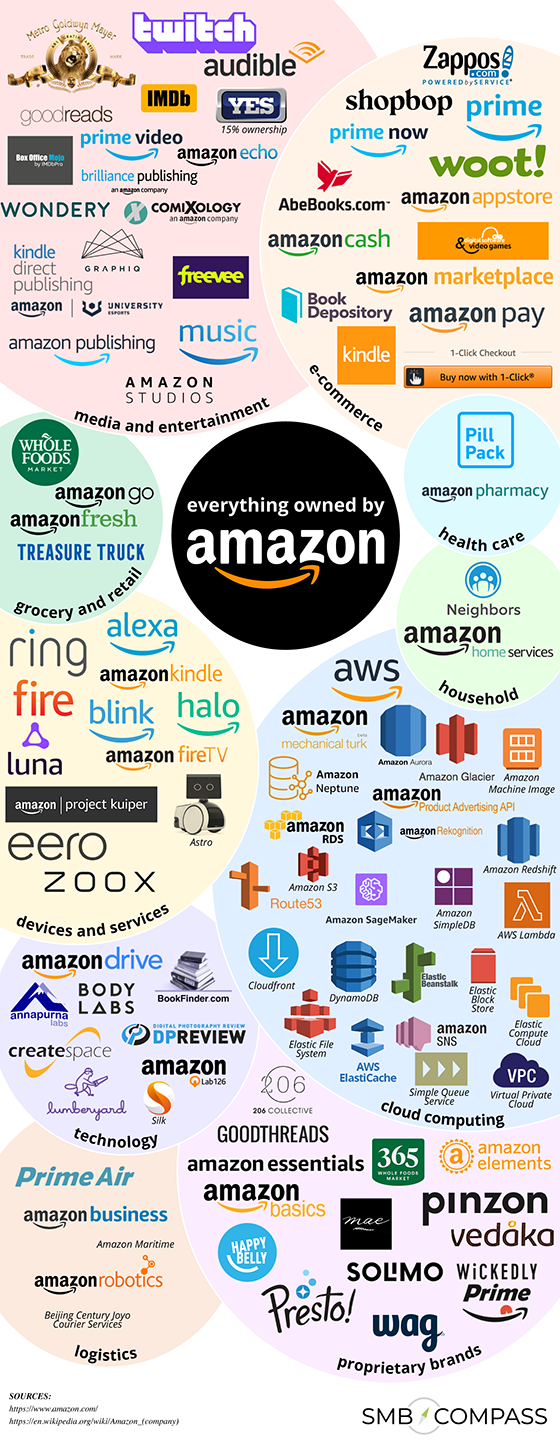
It has a history of buying up other companies like this:


Companies That Amazon Owns

Source: SMB Compass


It owns streaming hubs, Hollywood production studios, robotics companies, pharmacies, news agencies, grocery stores, and the list goes on.

It’s safe to say Amazon is immersed in nearly every major industry in our lives today – and it is constantly working on ways to monetize it all.

So it makes sense why Amazon has fought to integrate with so many areas of our lives. The more data Amazon has, the more it can market and sell to us.

And Amazon isn’t going to stop its acquisitions anytime soon.


It simply makes too much sense for Amazon to continue buying companies. When you play in the league Amazon is in, it’s cheaper to buy a business than to build your own.

This strategy has allowed Amazon to become the marketplace for basically everything.

And even with the huge anti-trust cases we’ve seen, the federal government has failed to rein in the Big Tech space, including Amazon.

So it’s hard to imagine anything can stop this giant.


If You Can’t Beat Them, Join Them

“If you can’t beat them, join them” may be a cliché, but this is certainly a true statement with Amazon. Amazon is a giant, and as investors, there’s no way around that fact.

Amazon’s revenue in 2021 grew 21.7% year-over-year to over $469 billion. The company is expecting to see that number grow to over $522 billion this year and over $604 billion in 2023.

And with the recent stock split making share prices more affordable and attractive for everyday investors to buy, now is a fantastic time to buy shares of Amazon (AMZN).

Right now, investors can even get into Amazon while it’s trading at a discount.


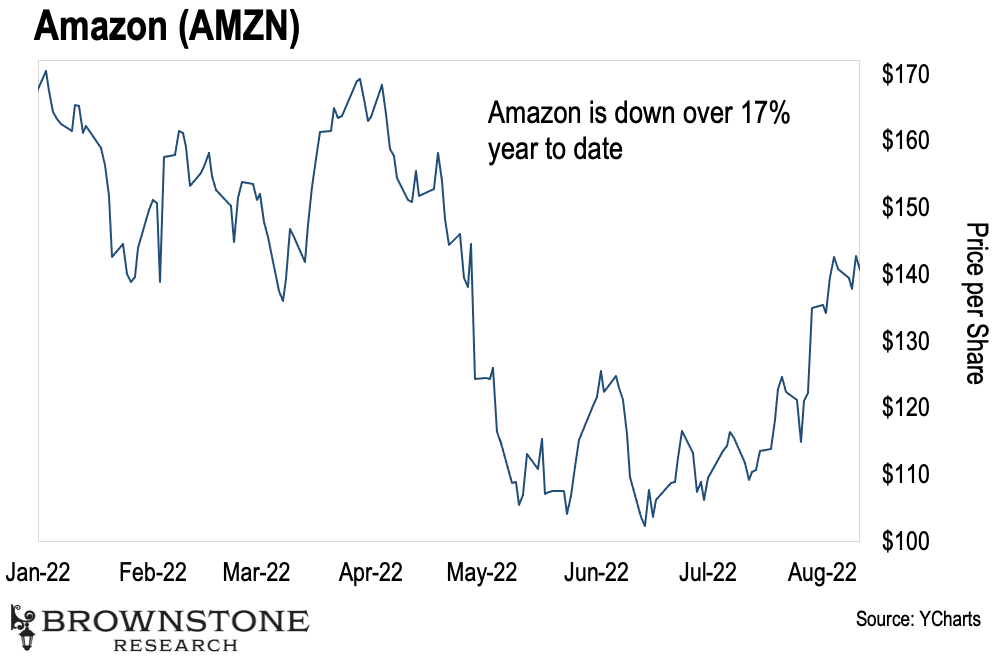
Amazon is still down 17% since the beginning of the year.

But in the past month shares have climbed 25% – which is consistent with the forecast of a continued rally into the fall. Amazon’s current price and upward trend reflect a great opportunity to hitch ourselves to a stock with some serious momentum.


New Opportunities Are Emerging For Citizens of The World.

Freedom and democracy may appear to be struggling to stay alive in America, but there may be a knock-out punch ready to be released. The evolution of the blockchain-enabled metaverse is going to enable the 'Citizens of the World' to gain their own Freedom by democratizing power and creating a new world with new rules, new players, and new opportunities. For 99.99% of us, the metaverse will improve our real-world lives by democratizing power and opportunity.

Along with the major long-term trend of society towards decentralization and smaller-scale organizations, there are new opportunities developing to help 'Preparers' in the cryptocurrency sector. Businesses are beginning to issue their own Crypto Coins that can be traded on Cryptocoin Exchanges.

Markethive.com will release its HiveCoin (HIV) in the coming weeks. It has tremendous upside potential that is outlined in a Video by Founder Tom Prendergast, "Entrepreneur Advantage…".

Not only that, if you go to their website and register as a FREE Member, you will be given 500 HiveCoins for "FREE" along with access to several Earning Opportunities and online tools to increase your HiveCoin balance.

Be sure to check it out today – Markethive.com

Markethive

Tim Moseley

Why Liz Cheney Lost

Why Liz Cheney Lost

by Dana Loesch, Chapter and Verse

Why Liz Cheney Lost


Mean tweets don’t derail a republic but a weak economy will.


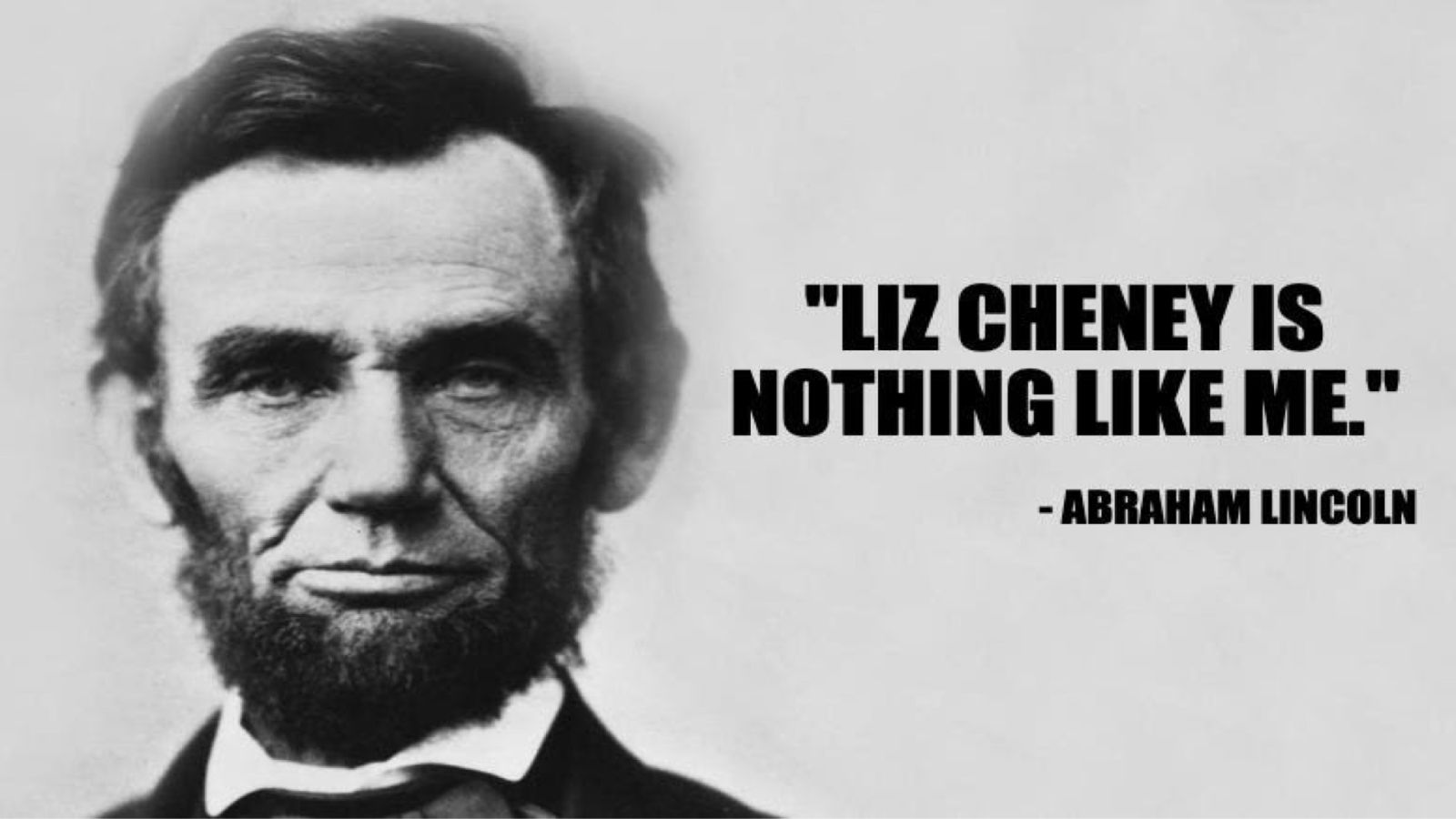
Liz Cheney lost in devastating fashion last night, 66-28% against Harriet Hageman. It was a loss of her own making. She doesn’t see it that way.

She unironically compared herself to Abraham Lincoln in her concession speech after accusing Trump of being a self-obsessed egomaniac. She called the Republican party a “cult of personality” but had her father, former Vice-President Dick Cheney, cut a campaign ad where he called Trump as an individual the “greatest threat to our republic” accusing him of trying to “steal the election.”


Twitter avatar for @deirdrekwalshDeirdre Walsh @deirdrekwalsh

New: Cheney's next step – her spokesman confirms she will launch a new political org (1st reported by Politico) -says will "educate the American people about the ongoing threat to our Republic, and to mobilize a unified effort to oppose any Donald Trump campaign for president,”


Twitter avatar for @TODAYshowTODAY @TODAYshow

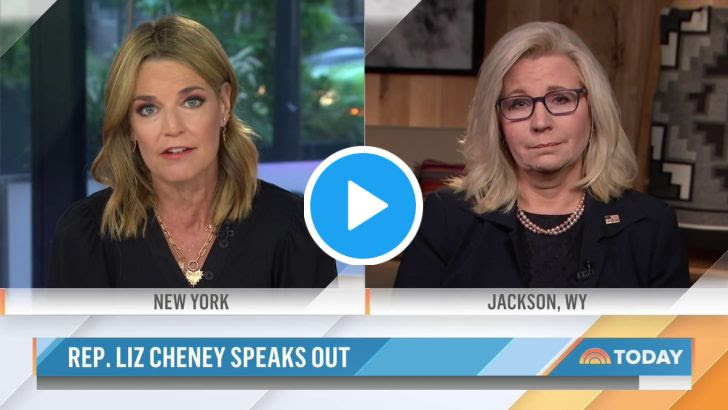
“I’ll make a decision in the coming months.” — Rep. Liz Cheney said about possibly running for President.


Image

August 17th, 2022


The greatest threat to our republic isn’t a roundly-condemned riot at the Capitol or Democrat hyperbole, it’s inflation, recession, a lack of energy independence, over-taxation, weaponization of government agencies against political opposition, ironically helped by the civil liberties-violating, Dick Cheney-backed Patriot Act.

The greatest threat is not political jockeying and tone-deaf ambition from disgruntled candidates.

This is solely about one lone candidate’s political ambition wrapped up as some white-knight fever dream.

This isn’t about the “values” and “principles” Cheney and her surrogates invoke — what values and principles? Are low taxes, life, energy independence, a strong Second Amendment, and a fairly non-interventionist foreign policy not values of the Republican party?

Hating Trump is neither a “value” nor a principle. 

Acknowledging the achievements of the previous administration isn’t a violation of principles, either, nor a pledge of fealty.

Voters watched Cheney sacrifice attention from their values and concerns: inflation, recession, supply chain crisis, and high gas prices, in favor of fighting Trump. Her “fight” doesn’t pay rent, create jobs, or put food on the table. In fact, under the previous administration, those things were more affordable. 

During Trump’s tenure, we received one of the biggest tax cuts in our nation’s history, one of the lowest unemployment rates in half a century, enacted major deregulation, the Abraham Accords, no new wars, and the withdrawal of troops from Afghanistan, with Trump stopping per the advice of military counsel, unlike Biden after him. 

The left is eager to give wings to this flightless fantasy that Cheney “lost the fight but could still win the battle” but what battle, exactly? 

Mean tweets don’t derail a republic but a weak economy will. 

You can disagree with your party without burning down the barn and alienating voters. Politicians are merely avatars for voter sentiment. Blaming Trump for Cheney’s problems ignores the issues with Cheney that pre-date Trump. Her last name alone irked the tea party, who opposed the idea of family dynasties back in 2008. These criticisms laid the foundation not just for Trump, but also for a less interventionist GOP. Candidates time-stamped for the late 90s or early aughts aren’t appealing anymore.

I don’t know what battlefield Cheney thinks she’s on, but it’s not where the rest of America is fighting.  


New Opportunities Are Emerging For Citizens of The World.

Freedom and democracy may appear to be struggling to stay alive in America, but there may be a knock-out punch ready to be released. The evolution of the blockchain-enabled metaverse is going to enable the 'Citizens of the World' to gain their own Freedom by democratizing power and creating a new world with new rules, new players, and new opportunities. For 99.99% of us, the metaverse will improve our real-world lives by democratizing power and opportunity.

Along with the major long-term trend of society towards decentralization and smaller-scale organizations, there are new opportunities developing to help 'Preparers' in the cryptocurrency sector. Businesses are beginning to issue their own Crypto Coins that can be traded on Cryptocoin Exchanges.

Markethive.com will release its HiveCoin (HIV) in the coming weeks. It has tremendous upside potential that is outlined in a Video by Founder Tom Prendergast, "Entrepreneur Advantage…".

Not only that, if you go to their website and register as a FREE Member, you will be given 500 HiveCoins for "FREE" along with access to several Earning Opportunities and online tools to increase your HiveCoin balance.

Be sure to check it out today – Markethive.com

Markethive

Tim Moseley

What are HTML5 and CSS3?

What are HTML5 and CSS3?

by Gary Stevens, contributor, Namecheap Blog

What are HTML5 and CSS3?


Cascading Style Sheets — or CSS —

This is the language web developers and designers use to stylize and format documents that are created in HTML. CSS is what you’d use if you wanted to organize the layout and improve the look and feel of a web page. 

This article will help you learn what HTML5 and CSS3 are and learn about CSS3’s most essential modules and features. We’ll also cover the use and need of CSS3, who is best suited to learning and using CSS3, and how it can accelerate your career growth.

Hedgehog lifting up a website to show CSS code underneath


What Exactly are CSS3 and HTML5?

HTML and CSS are the core language components that are used for the construction of web pages. HTML describes the structure of the pages, primarily in regards to tables, text, headings, and images or graphics. It’s the standard programming language for the overall appearance of web pages. 

CSS, on the other hand, is the language used for describing the presentation of each page, and primarily in regards to the layout, fonts, and colors.   


HTML5

HTML5 is a revision of the HTML standard. It’s a massive improvement over HTML4 because HTML4 did not allow web developers to add features to their sites that were not HTML-supported. To do so required the use of proprietary technologies and the installation of browser plugins. 

Subsequently, if web users did not have a device that supported the use of those proprietary technologies or plugins either, then they could not access the content. An example is how Safari on mobile Apple devices does not support the use of Adobe Flash.

The main purpose behind HTML5 was to remove the need for proprietary technologies and plugins. You can create offline applications, and include multimedia animations, audio, and video into your web pages without needing to download extra plugins to include said applications or multimedia. 


CSS3

Web designers and developers use CSS3 and HTML to build and modify content on a web page. CSS lets you choose from different typographies, images, colors, tables, and much more to stylize a web page in a way that’s intuitive for users and aesthetically pleasing. 

Without CSS, we wouldn’t have any way to position different elements on a web page — CSS lets you use values like ‘fixed’ and ‘absolute’ to position a web page’s visual components.

CSS3 is simply the updated version of an earlier version of CSS (CSS2). It has many important improvements and features that help improve your web presence and are now being utilized in modern browsers, including:

  • Allowing third-party videos to be viewed without the installation of third-party plugins
  • Making it easier to install graphics on a web page 
  • Allowing the presentation of content in multiple columns 
  • Enabling a precise positioning of all navigable elements in a web page 
  • Adjusting the white space of a document 

Hedgehog displaying mobile-friendly website


Why is CSS Important for Web Design and Development?

CSS3 makes it viable to create web pages that are interactive and highly responsive. CSS3 is often lauded for the many options it provides web designers who need to make their online pages enjoyable to use. After all, if a customer is checking out products and services that a web page is advertising, the presentation of those products and services should be visually appealing — that’s where CSS comes in.

Another advantage to using CSS3 on top of HTML is that it lets web designers create web content without a lot of code. A great example of CSS’s low-code benefits comes from the important modules that CSS3 delivers, like box models, backgrounds and borders, and different layouts for columns. 

CSS3 allows designers to add text effects, modify a web page’s layout, or stylize numbers, headers, and footers. Things such as drop shadows, gradients, and rounded corners are practically essential to making any web page appear halfway decent.  Once upon a time, these things would have required a web developer to code them from scratch. These days, designers and developers can use CSS3 to consistently create elements for web pages that are precisely positioned while saving time in the process.

You can’t afford to pass on the enhancements in design that CSS3 provides, especially considering that most of your website’s visitors have short attention spans subject to unending cycles of dopamine.

Designers and developers can use CSS3 to consistently create elements for web pages that are precisely positioned while saving time in the process. It’s also a great time to adopt CSS3 into your web development process if you’re getting ready to launch and host a website. Imagine, for example, that you’re setting up a secure cloud hosting solution for your site — you need a way to expedite the rate at which you bring your web pages to life rather than get bogged down by web design. CSS3 is perfect for new websites that need text effects, ways to modify web page layout, and methods that can add numbers, headers, and footers.

It used to be the case that web developers and designers had to turn to complex methods that involved plenty of HTML coding just to create things like drop shadows or rounded corners — no longer is this the case! CSS3 affords us a nearly endless number of ways to include these designs directly and ultimately make your web pages look cleaner and, well, simply better.


Who Should Be Learning CSS3?

Before you consider learning CSS3, it’s a good idea first to have a solid grasp of HTML5. That’s because HTML is the underlying code that creates a web page’s structure and content, whereas CSS is essential to organizing and stylizing that structure. 

So, if you learn HTML fundamentals, you’ll be able to understand how websites are created. Once you understand how HTML works, CSS lets you add many layers of dynamic functionality to the pages you create. Plus, once you learn CSS3 and understand how it interacts with HTML, you’ll then be able to use JavaScript to add even more dynamic functionality to your website. 

If you’re interested in learning CSS3, take comfort in the fact that it’s not difficult to master. Anyone craving a greater level of control over how their web pages look should take the time to learn CSS3 and HTML. If you master these two languages, there won’t be anything stopping you from building modern and classy websites.

Hedgehog working on CSS on computer


How CSS3 Can Accelerate Your Career

No matter how far along you are in your web development career, it’s a good idea to learn CSS3 to accelerate your growth. Web development is a field that’s hotter than ever and is a profession that’s slated to keep growing well after 2025. 

A little-known fact about web development is that CSS, HTML, and JavaScript have been part of the profession for several decades. These three languages form the foundation of web development, and to this day, they form the basis on which new technologies emerge and prosper. If you’ve mastered CSS, you can leverage your skills to pursue web development in other areas, such as mobile app development. 

If you love creating web pages that are responsive and exciting to use, you can apply your knowledge of CSS to learn the Bootstrap CSS framework. You can take many paths once you become proficient in CSS3 to keep accelerating your web development career and earn more than you ever thought possible.

Good places to learn about HTML and CSS online include the following resources:


Become Proficient With CSS3

If you’re a web designer or developer, you must become as proficient with CSS3 as possible. CSS3 is one of the most powerful tools you have at your disposal when creating web pages, and since its introduction, CSS3 has granted greater control over how you can present web page content. It doesn’t matter which path you take next to keep advancing your web developer capabilities — you’ll always need mastery over technologies like CSS that form the foundation for web development.


New Opportunities Are Emerging For Citizens of The World.

Freedom and democracy may appear to be struggling to stay alive in America, but there may be a knock-out punch ready to be released. The evolution of the blockchain-enabled metaverse is going to enable the 'Citizens of the World' to gain their own Freedom by democratizing power and creating a new world with new rules, new players, and new opportunities. For 99.99% of us, the metaverse will improve our real-world lives by democratizing power and opportunity.

Along with the major long-term trend of society towards decentralization and smaller-scale organizations, there are new opportunities developing to help 'Preparers' in the cryptocurrency sector. Businesses are beginning to issue their own Crypto Coins that can be traded on Cryptocoin Exchanges.

Markethive.com will release its HiveCoin (HIV) in the coming weeks. It has tremendous upside potential that is outlined in a Video by Founder Tom Prendergast, "Entrepreneur Advantage…".

Not only that, if you go to their website and register as a FREE Member, you will be given 500 HiveCoins for "FREE" along with access to several Earning Opportunities and online tools to increase your HiveCoin balance.

Be sure to check it out today – Markethive.com

Markethive

Tim Moseley

Five Institutions Trying To Wipe Out The Crypto Industry

Five Institutions Trying To Wipe Out The Crypto Industry 

As cryptocurrency adoption continues, the opposition from institutions that control and benefit from the corrupt financial system that cryptocurrency is in the process of replacing also continues. These powerful institutions have significantly increased their efforts to bring down the crypto sector specifically. 

Below are five organizations that have been working hard to regulate, restrict, subvert, and tear down the crypto industry for the last few years, and it's time to call them out by name. So, how are they trying to do it? Will they succeed? And what will it mean for cryptocurrency?

1: The Bank for International Settlements

The Bank for International Settlements (BIS) is the first institution trying to destroy crypto. This is the self-described bank for central banks. The BIS is based in Basel, Switzerland, and is owned by the 63 central banks that make up its membership. The BIS was founded way back in 1930 and is technically the oldest International financial institution in existence. 

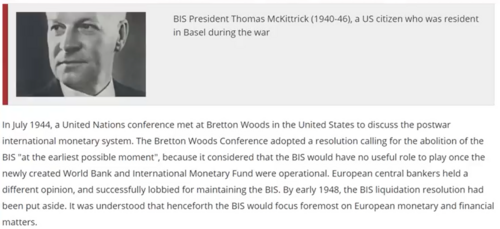
Interestingly, the BIS was supposed to be disbanded in 1944 as part of the Bretton Woods Conference, but it hasn’t happened yet. On its **website, the BIS says this is because the financial elite at Bretton Woods didn't believe the BIS would play a useful role once the IMF and the World Bank had been established. 


**Image source: BIS website

Curiously, however, a memoir by one of the economists present at the Bretton Woods Conference revealed that the institution's intended dissolution was because the BIS had allegedly assisted the Nazis in taking gold and other assets from occupied countries. This was proven true in 2013 when the Bank of England declassified documents about how it helped the BIS and the Nazis take gold from Czechoslovakia. 

Despite this history, the BIS was never disbanded, partly due to influential economists like John Maynard Keynes. Keynes is famous for pioneering so-called demand-side economics; it’s the theory that the demand for goods and services is what causes economic growth and inflation, fundamentally; a view popular with many Central Bankers.

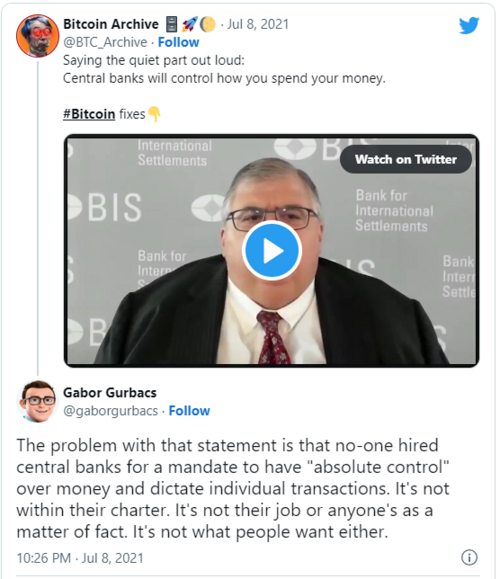
Today, the BIS has undertaken a similarly disturbing role, and that's to assist central banks in developing their respective Central Bank Digital Currencies, or CBDCs. This financial system will give the central banks the power to decide what you can buy, when you can buy it, where you can buy it, how much money you can spend, and even how much you can save. In the words of BIS manager Agustin Carstens, “The central bank will have absolute control…” and “…will have the technology to enforce that control.” 


Image source: Twitter 

Not surprisingly, the BIS is opposed to cryptocurrencies of all kinds, especially stablecoins. This is because cryptocurrency undermines the total control of the currency that its associated central banks are explicitly trying to achieve with their CBDCs, which are essentially direct competitors to stablecoins.

The BIS’s anti-crypto activities have been limited to reports about why cryptocurrencies are bad and why CBDCs are better, as detailed in this article and clearly shows that nobody is buying what they’re selling. Many are skeptical and can see through their agenda; still, the BIS has undoubtedly an incredible amount of influence given its history and the advocacy of central bankers worldwide. 

2: The Financial Action Task Force

The Financial Action Task Force (FATF), an international organization based in Paris, France, is the second institution trying to stymie crypto. It consists of 40 countries and dozens of other international organizations, including the IMF and World Bank. The FATF was founded in 1989 and was initially established to combat money laundering worldwide. 

Its mandate has since expanded to include anything threatening the system's integrity. It achieves this by issuing so-called recommendations about the kinds of financial regulations that countries should implement. The FATF drafted its first set of 40 recommendations one year after it was founded. 

The most infamous of these recommendations is the so-called travel rule, which requires financial institutions to collect detailed information about anyone sending or receiving more than a certain amount of money, usually around $1000. Although the FATF doesn't have the power to write national laws, any countries that fail to comply with its recommendations often find themselves on its grey list or, worse, its black list. 

Being on the former makes it difficult to interact with the Global Financial System, and being on the latter makes it impossible. That's why more than 200 countries have chosen to comply with the FATF's recommendations. 

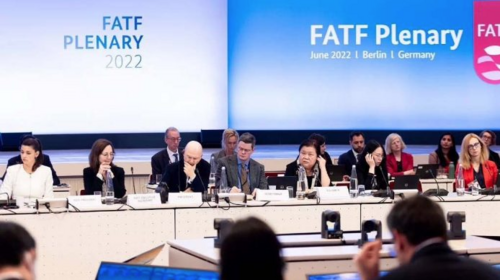
Now, if you're wondering who writes the FATF’s recommendations, the answer is nobody really knows. That's because the FATF consists of unelected officials who hold meetings behind closed doors, where they decide what recommendations to pass and which countries land on which list. 


Image source: Islamabad Post

The FATF officials are also effectively “above the law,” thanks to the Vienna Convention on Diplomatic Intercourse and Immunities passed in 1961. Under the Vienna Convention, folks like FATF officials cannot be arrested or detained, they cannot be charged with a criminal or civil crime, and they do not have to pay taxes. FATF officials are also not subject to pandemic travel restrictions. 

While it's not precisely clear who decides what the FATF does, it's clear that it has strong connections to the United States, specifically, the United States Treasury Department. As recently as 2018-2019, Treasury served as President of the FATF, and two of the three lead authors of the finalized recommendations for cryptocurrency were from the Treasury Department. The document notes that the United States is the primary driver behind compliance with the FATF's recommendations. 
 
This may explain why the United States isn't on the FATF’s grey list or black list even though up to 40% of all money laundering happens in the USA and why the countries that do end up on the FATF's gray and black lists tend to be at odds with the interests of the United States. 

Given these facts, it looks like the FATF is another financial weapon the United States occasionally uses against its enemies, and it's a weapon that's being used against cryptocurrency as well.  

Having said that, the FATF doesn't actually want to ban cryptocurrency; it just wants no more peer-to-peer transactions and no more privacy and hopes to achieve this by labeling any technology or activity related to these two as high risk. In other words, the FATF wants to turn crypto into another arm of the existing financial system, which the United States, of course, controls. 

However, countries and indeed crypto firms are reticent and slow on the uptake of its crypto recommendations, and it looks like there are a few which might not implement the crypto regulations the FATF wants to impose. This might have to do with the fact that its recommendations don't work in combating illicit Finance. 

The FATF's own statistics suggest it hasn't made a dent in dark money in over 30 years. If this non-compliance by countries continues, it will be difficult for the fat F to achieve its goal in time. After all, if crypto adoption reaches a Tipping Point, it will be impossible for politicians to pass the crypto regulations the FATF wants to see because the people will vote against such politicians. 

It's also possible that by the time compliance starts, the financial system will have fragmented to such an extent that the FATF no longer has any influence. The unprecedented sanctions against Russia have accelerated this fragmentation. 

3: The International Monetary Fund – The World Bank

The International Monetary Fund (IMF) and the World Bank are the third institutions trying to cancel out crypto. The IMF was created as part of the Bretton Woods agreement mentioned above in 1944. The Bretton Woods agreement is where the world decided to make the US dollar the world's reserve currency. More accurately, it's where the world decided that the other currencies would be pegged to the US dollar at a fixed exchange rate, and the US dollar would, in turn, be backed by physical gold. 

The IMF's initial job was to ensure the exchange rates between other currencies and the US dollar remained stable. But after the US dollar officially stopped being backed by gold in 1971, the IMF turned its focus to financial stability worldwide. The IMF achieves this financial stability by issuing loans to countries in crisis to ensure that the situation the country is facing doesn't become an international crisis. 

These loans are known for including all sorts of terms and conditions that benefit certain institutions. Whereas the IMF issues loans, the World Bank provides longer-term financial and technical support to developing countries. You can think of the World Bank as the “unofficial” other half of the IMF, as it was also created as part of the Bretton Woods conference. 

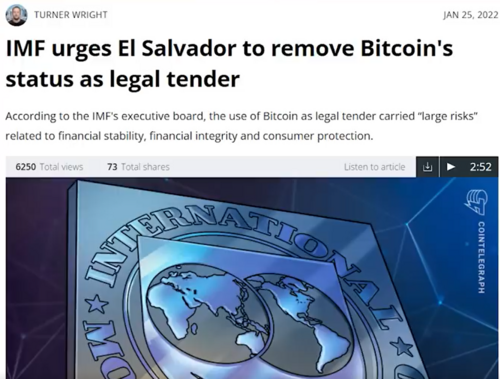
It’s clear that the IMF is firmly aligned with the interests of the United States, simply because the USA has the most voting power of the IMF's 190 member countries. Arguably, the IMF's hatred of cryptocurrency has mostly to do with BTC. That's because Bitcoin is starting to be adopted as legal tender by the kinds of developing countries the IMF is trying to control, notably El Salvador and the Central African Republic. 


Image source: Cointelegraph

This is why the IMF included a clause in its debt deal with Argentina to discourage cryptocurrency adoption. Something that I'm sure is going to become more common as more countries start adopting crypto and BTC in particular. By the way, the clause didn't work, as Argentinians are still adopting BTC and stablecoins to protect themselves from inflation. 

The IMF's report about the decline of the US dollar stated that the IMF knows that central banks around the world are slowly ditching the greenback in favor of alternative currencies and why it's possible other countries could adopt BTC. 

Case in point, the chairman of the Central Bank of Switzerland recently noted that it could hold BTC on its balance sheet once it becomes big enough. At that point, it's only a small step to legal tender status. It's safe to say this is something the IMF doesn't want to see in any developed countries, which is why the institution has seemingly focused its attacks on BTC.

Lately, these attacks have centered around Bitcoin’s energy use, with the IMF claiming CBDCs are superior because they use less energy. What the IMF won't tell you is that Bitcoin’s energy use is negligible in the grand scheme of things. 

4: Wall Street

The fourth institution trying to invalidate crypto is Wall Street, which is more of a collection of established financial institutions rather than a single entity. As almost everyone around the world knows, Wall Street’s power is truly unprecedented, and most of this power resides in a handful of asset managers like BlackRock and Vanguard and mega banks like JPMorgan and Bank of America. 

Notably, the only reason why these asset managers and banks were able to become so prominent is that they're pretty much first in line at the Federal Reserve money printer. They also have unbelievable influence over politics and regulations in the United States and elsewhere.

You may recall that the Securities and Exchange Commission (SEC) allegedly destroyed documents about the 2008 financial crisis when it was supposed to investigate the asset managers and big banks that caused it. 

A 2012 article from The Huffington Post also notes that Wall Street spent more money on lobbying than any other industry between 1998 and 2011. A spending streak that has now been overshadowed by big tech giants like Meta and mega-corporations like Amazon, which are now the biggest lobbyists. 

The IMF even published a paper in 2019 about the regulatory capture of bank lobbying and how it led to the global financial crisis. While the authors argued that regulations resolved these issues, I think it's apparent to the average person that Wall Street has only become more powerful. 

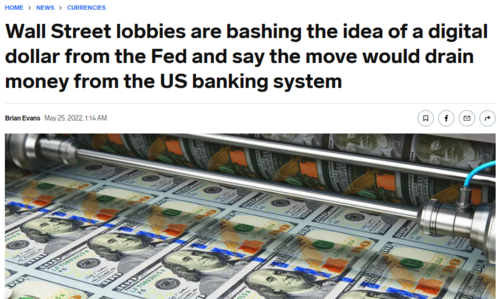
Like the central banks at the BIS, the asset managers and banks on Wall Street do not want to be replaced by cryptocurrency, which is why most of them have historically been anti-crypto. The thing is that the asset managers and banks on Wall Street also don't want to be replaced by Central Bank Digital Currencies either, and these are quickly becoming a more significant threat than crypto. 


Image source: Markets Insider

It’s already been determined that they would effectively cut commercial banks out of the equation. Even though the CBDC Systems proposed by central banks often include commercial banks at the front end, the BIS and its central banks have admitted in multiple reports that it would be next to impossible for commercial banks to remain profitable under such a system. 

Furthermore, the roles asset managers and banks play could easily be filled by companies in the financial technology sector, such as Revolut and PayPal. It's even possible that crypto companies like ConsenSys could play this role. 

Now this leaves only one option for the asset managers and banks: to take control of the crypto industry and leverage its technology to ensure they remain profitable and ideally leverage it to the point that they can continue to compete with fintech companies. So, how can asset managers and banks take control of the crypto industry?

Well, besides investing heavily in centralized projects with close ties to their constituents, asset managers and banks are also trying to control crypto by forcing it to comply with their ESG agenda, which stands for Environmental, Social, and Governance; in other words, total control. 

The inability to control Bitcoin under this framework is ultimately why Wall Street dislikes Proof-of-work. On the other hand, the Proof-of-stake protocol allows them to procure a controlling stake in any crypto project since they have the capital. 

A scary scenario is that they will be able to implement whatever rules they see fit. If everyone ends up using Proof-of-stake cryptocurrencies, the asset managers and mega banks would finally have total control of the financial system, eliminating governance, politicians, and their accountability. 

I think it’s fair to say many crypto companies would oppose such a takeover from the privileged few, but it's essential to be aware of the game being played and the influential people sitting at the table.

5: The World Economic Forum

The World Economic Forum (WEF) is the fifth institution trying to eradicate crypto. A non-governmental organization or NGO based in Geneva, Switzerland. Klaus Schwab founded the WEF in 1971, and he has served as its executive chairman ever since. 

 As its website states, the WEF’s purpose is to “ shape global, regional and industry agendas. The WEF has the power to do this because it consists of over 4,000 of the world's most influential individuals and institutions, including all the ones mentioned in this article. 

In a previous article, I explain its plans for the world, and they are intensely at odds with the average person. It has astonishing ideas such as “you’ll own nothing and be happy,” which comes directly from the technocratic brain of Klaus Schwab himself. 

The WEF is where ESG standards were established. The recent annual meeting in Davos included a few crypto companies and personnel and a series of panel discussions about crypto-related topics. Seemingly, the WEF had cryptocurrency on its radar since 2013, when crypto bull runs started to occur. However, the WEF isn't all that interested in cryptocurrency per se. Its interest is in the powerful technology that cryptocurrencies use. 

A historical example is the WEF’s Tipping Points Report from 2015, highlighting Smart contracts as a point of interest. Note that this report was published not long after Ethereum was created. A more recent example is this year's Davos meeting, where the Metaverse was almost as big a topic as ESG, with multiple discussions and articles produced by the WEF. 

What the WEF wants is to use technology, like Blockchain, Smart contracts, and the Metaverse, to create the dystopia its constituents want. Regarding the Blockchain, the WEF wants to use it for digital ID, social credit scores, and tracking everything and everyone. Also, tokenizing real-world assets so that their ownership can be controlled and engaging in “stakeholder capitalism via proof of stake consensus mechanisms.” 

If you're wondering who the stakeholders will be, Klaus has stated in many interviews and speeches that he created the WEF so that stakeholders could gather. Let that sink in. 


Image Source: World Economic Forum

Now, when it comes to Smart contracts, the WEF wants to use them for things like automated censorship to prevent the purchase of specific goods and services and to create the kinds of incentive structures the WEF wants to see—for example, artificially increasing meat prices to decrease meat consumption.  

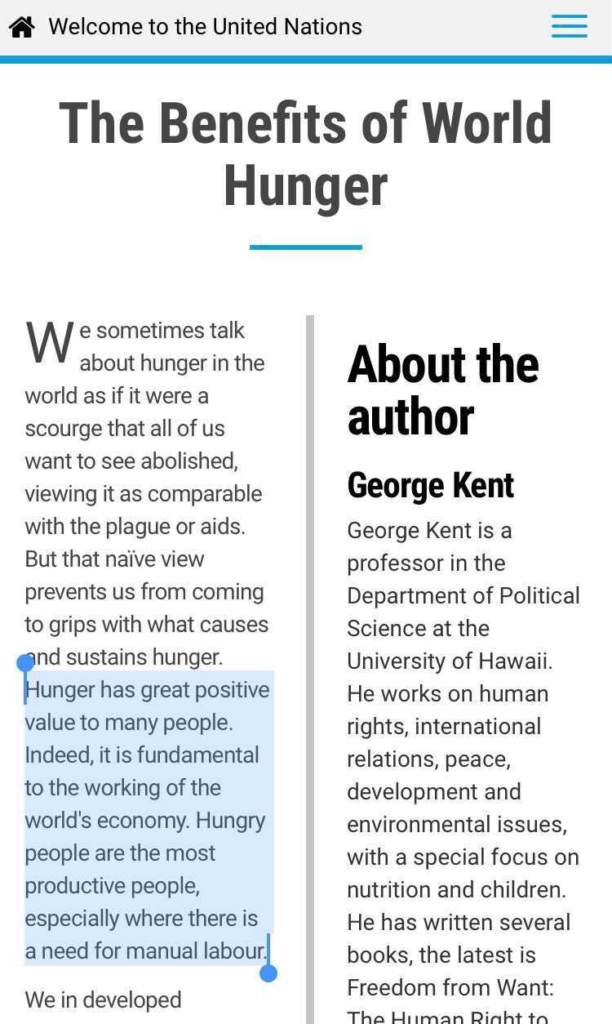
When it comes to the Metaverse, the WEF wants to use it to limit population growth, pacify people in developing countries, and in the words of Schwab's closest advisor, Yuval Noah Harari, “…to give all the useless people something to do.” 


Image source: Mind Matters

The 99% Wake Up And Withstand

Fortunately, the world is starting to wake up to what the WEF is trying to do with cryptocurrency and other technologies intended to free rather than enslave the average person. There's no shortage of individuals and institutions starting to push back, including from the world of crypto and the next giants in social and market media, where freedom, liberty, financial sovereignty, and the entrepreneurial spirit are paramount. 

The few that think they have the right to control every living soul are trying their best to extinguish the entrepreneur and oppress their spirit.  A path to self-sovereignty is here with Markethive and brings a whole new level to empower people. Entrepreneurs are the lifeblood of liberty and freedom; liberty and freedom are a gift from God. In today’s world, Markethive is a blessing and unrivaled by any other platform out there today.


Reference: Coinbureau.com


Editor and Chief Markethive: Deb Williams. (Australia) I thrive on progress and champion freedom of speech. I embrace "Change" with a passion, and my purpose in life is to enlighten people to accept and move forward with enthusiasm. Find me at my Markethive Profile Page | My Twitter Account | and my LinkedIn Profile.


Tim Moseley

Is the Food Crisis Over or Just Getting Started?

Is the Food Crisis Over or Just Getting Started?

by Chris MacIntosh, contributor, International Man Communique

Is the Food Crisis Over or Just Getting Started?


Are You Hungry?

Good, according to the central planners. The folks over at the UN stopped destroying the world for a brief few minutes to publish a piece (snapshot below) justifying their behavior and explaining the "benefits" of the famine they’ve engineered.

Not making this up.

1.png

The article remained on the UN website for a day or so before being deleted after it went viral on social media, with people horrified at the truly unbelievable evil. The good thing about this is that as they continue with their predictive programming and NLP (seriously, look into both and it promises to blow your mind), more and more people wake from their trance. Once woken, they realize the incredible danger they are all in. And that is a good thing because you can’t fight an enemy until you understand one exists.

The "great reset" requires a populace beholden to the government and nobody else. As the central planners pursue their agenda of getting there, this is bound to be fraught with an awakening and a lot of angst.


The Great Awakening of the Average Joe

While Joe Sixpack doesn’t understand most of these, he doesn’t actually need to.

What Joe does care about is when he can’t afford groceries and when his electricity bill now suddenly wipes out his entire annual disposable income.

And that is enough to provide both pushback and an increasing ability to awaken to the horrors of what comes for him if this communist agenda masquerading as a plan to "save us from climate change" is NOT stopped in its tracks.

And with this realization will come politicians — many who themselves are parasites but doing what comes naturally to them: sensing a shift in the winds and rushing to get in front of it, champion it, and gain support.

Here, take a look. According to France24, Giuseppe Conte, the head of Five Star, said:

I have a strong fear that September will be a time when many families will face the terrible choice of paying their electricity bills or buying food. We are absolutely willing to dialogue, to make our constructive contribution to the government, to Draghi, (but) we are not willing to write a blank cheque.

He’s not wrong, of course, but this is a thug who was a massive contributor to the problems our proverbial "Joe" now faces.

Take a look at this.

2.png

And as we’ve been continuously saying: energy underpins EVERYTHING, which is why Eurozone CPI looks like it just mainlined viagra.

3.png


And this is saying something because as you know the way they measure CPI is, of course, complete hogwash and roughly half the real rate. Check out John Williams’ Shadowstats, where inflation in the US is calculated based on the methodology used back in the ’80s (pre-fraud). It just hit 17.3%. That’s a tad more than the 9.1% print they just tried to trick you with.

4.jpg

The other thing "Joe" cares about is when the government — under the guise of "saving the planet" — begins the process of stealing up to 50% of the farms in the Netherlands.


Reducing Nitrogen Emissions

Under a ridiculous narrative of "reducing nitrogen omissions," the Dutch government is proceeding with a blatant land grab of 30% of the Farmland. It is worth pointing out that air is 78% nitrogen. These morons have literally decided that air is dangerous.

Anyway, the farmers are having none of it and have blockaded roads, airports, and distribution centers. The fishermen have joined in and blocked the ports.

Domestically the Dutch farmers have massive support. Gratefully, people seem to intuitively understand that without them there will be no food. The propaganda is no longer having the desired effect on the populace. What a shame!

Every day a few more people wake to reality, and once you wake, you can’t unsee what you’ve seen. The existing political parties’ credibility is severely damaged. I’ve thought for some years now that if there is to be a shift, it will likely come from third parties. This is true across the Western world, and not uniquely a Dutch thing.

The Farmer–Citizen Movement in the Netherlands is now gaining momentum and size faster than any other.

5.png


Over in France, the Marxist agenda gathers momentum.

France plans full nationalization of power utility EDF

France will fully nationalize EDF (EDF.PA), Prime Minister Elisabeth Borne said on Wednesday, in a move that would give the government more control over a restructuring of the debt-laden group while contending with a European energy crisis.


6.jpg


It is at this point that we should review a little history.

The last head of a European government to be killed and eaten by a mob was Dutch Johan de Witt in 1672, who was mutilated, hung, and had his liver roasted and digested by Orangists in the Hague.

7.jpg

Davos man deserves at least as much.

In the meantime, Europeans are going to be cold and hungry. Winter is just a few short months away now which brings us to investment implications. The stampede will begin in earnest for food and all those banned products like fertilizer.


New Opportunities Are Emerging For Citizens of The World.

Freedom and democracy may appear to be struggling to stay alive in America, but there may be a knock-out punch ready to be released. The evolution of the blockchain-enabled metaverse is going to enable the 'Citizens of the World' to gain their own Freedom by democratizing power and creating a new world with new rules, new players, and new opportunities. For 99.99% of us, the metaverse will improve our real-world lives by democratizing power and opportunity.

Along with the major long-term trend of society towards decentralization and smaller-scale organizations, there are new opportunities developing to help 'Preparers' in the cryptocurrency sector. Businesses are beginning to issue their own Crypto Coins that can be traded on Cryptocoin Exchanges.

Markethive.com will release its HiveCoin (HIV) in the coming weeks. It has tremendous upside potential that is outlined in a Video by Founder Tom Prendergast, "Entrepreneur Advantage…".

Not only that, if you go to their website and register as a FREE Member, you will be given 500 HiveCoins for "FREE" along with access to several Earning Opportunities and online tools to increase your HiveCoin balance.

Be sure to check it out today – Markethive.com

Markethive

Tim Moseley

Tornado Cash Whirlwind: Fed Prohibits US Citizens From Using the Service

Tornado Cash Whirlwind: Fed Prohibits U.S. Citizens From Using the Service.

Cryptocurrency mixing service Tornado Cash has been blacklisted in the U.S. Now, this has created a whirlwind in the crypto community. It is essential to understand exactly what's happening here as it will have important implications for the industry. However, this is not the first time the U.S. government has imposed a ban on crypto-related companies.

Tornado Cash's blacklisting sparks outrage in the crypto community as the U.S. Treasury sanctions the Ethereum hybrid protocol. The developers working on Tornado Cash and the log itself have been removed from the popular code hosting site Github. Vitalik Buterin has publicly admitted that he used the protocol in good faith, and his supporters have condemned censorship as unconstitutional. At the same time, someone started sending illicit Ethereum from Tornado Cash to a range of celebrities, from Jimmy Fallon to Jake Paul.

Tornado Cash is a firm that allows customers to conceal the origin of their cryptocurrency transactions. The U.S. Treasury Department has banned all Americans from using the website because it played a crucial role in laundering billions of dollars worth of cryptocurrencies. It is one of the main tools hackers use, most notably the $625 million breach of Axie Infinity's Ronin network by North Korea's Lazarus Group in March.

Before I go further, let's dive into the ecosystem of Tornado Cash to understand what the network is about and its functionalities.

Image source: Moralis Academy

What is Tornado Cash?

The blockchain transactions of Ethereum and Bitcoin, the two largest cryptocurrencies in the world today, are fully public and visible. Thanks to this high level of transparency, almost anyone can use their public address to track users' spending behavior. If they wish to disclose their transaction history, they only need user data for a single transaction that occurred.

Of course, the anonymous nature of public addresses doesn't necessarily mean they know users' personal information. Still, this leaves a lot to be desired for more privacy-conscious crypto users. Various privacy-conscious solutions and protocols have been developed to address the "problem" of transparent pseudonyms, but arguably none have been more successful than transaction mixers.

Transaction mixers essentially pool the funds of multiple users with their transactions: before each transaction reaches its intended destination, it is "shuffled." Once this shuffling process happens, it's complicated for anyone to track whose money went where and how much.

In practical use of transaction mixers, the developed protocol increases transaction anonymity by sending numerous random transactions across multiple addresses. However, these transactions can still be tracked in the public ledger, so this is not an entirely successful solution.

Tornado Cash aims to solve the privacy issues of transparent blockchains through private transactions. A fully decentralized, custody-free protocol increases transaction privacy by breaking the chain connection between sender and receiver addresses. To improve privacy, Tornado Cash uses smart contracts to accept ETH and other tokens from one address and allow them to be withdrawn at another.

These smart contracts work as a package, mixing all the deposited funds and generating a private key to prove that you have completed the deposit process. The sender can then use this private key to withdraw the deposited funds to any address at their chosen time. Tornado Cash has grown in popularity due to the rise of cryptocurrency events. It has also become a place to store stolen funds and a haven for many hackers.

Feds Blacklist Tornado Cash

The U.S. Treasury has added Ethereum mixing service to its list of Specially Designated Nationals. In a Press Release published by the U.S. Department of the Treasury, the body added the Tornado Cash website and a long list of Ethereum addresses to its list of Specially Designated Nationals and banned U.S. citizens from using the tool or doing business with the firm.

The announcement added that the state-backed North Korean hacking group Lazarus Group used Tornado Cash to launder more than $96 million after it hacked Harmony Bridge in June. It also said criminals used Tornado Cash to launder money, with $7.8 million stolen in the Nomad Bridge hack.

The Treasury Department's announcement lists some Ethereum addresses related to the Tornado Cash community, including addresses where people can donate money. According to Nansen researcher Andrew Thurman, the list of blocked addresses includes addresses that received funds from Gitcoin, an Ethereum-based platform used to fund open-source projects.

The Treasury Department said the measure was taken because criminals used Tornado Cash to launder money. In April, Tornado Cash said it used a tool from blockchain tracking firm Chainalysis to block U.S. government-approved addresses from using privacy apps. This is not good enough for the U.S. authorities. Brian E. Nelson, Treasury Undersecretary for Terrorism and Financial Intelligence, added:

"Despite public assurances otherwise, Tornado Cash has repeatedly failed to impose effective controls designed to stop it from laundering funds for malicious cyber actors on a regular basis and without basic measures to address its risks."

Ethereum is the network behind the second-largest cryptocurrency by market capitalization, with thousands of tokens running on its blockchain. The native token ETH is trading at just under $1,897 and has a market cap of over $219 billion at the time of this writing.

As a result of this ban, all U.S. individuals and entities are prohibited from interacting with Tornado Cash or any Ethereum wallet addresses associated with the protocol. Anyone who does so faces criminal penalties.

Tornado Cash announced in July that it had fully open-sourced its user interface code as part of its goal of complete decentralization and transparency. Mixer's website includes a compliance tool that allows users to view the source of each transaction.

Image source: Coindesk

Sanctions may not prevent the operation of Tornado Cash itself. Co-founder Roman Semenov explained that the privacy service is designed to work without central control. When he and his team write and release code, the Decentralized Autonomous Organization (DAO) must approve any changes.

He told CoinDesk:

"If the DAO doesn't like what we are doing, then we will be forced to change our approach, and we cannot do it in a way that would satisfy the DAO's demands or expectations… The DAO has no way of forcing us to make those changes because our code base runs on a decentralized network where we don't have to talk to anyone else or ask for permission."

Is the U.S. Government in a Crypto War?

Given the ensuing avalanche of blacklists, does that mean Tornado Cash will only be used by criminals to launder money? Due to the transparency inherent in the blockchain, Tornado Cash offers many other less "illegal" use cases that are common when using traditional fiat currencies.

Recently, defenders of Tornado Cash have launched their offensive against the decision in various ways. First, they drew attention to a glaring logical flaw in the decision: anyone interacting with the Tornado Cash contract was illegal. Individual users cannot reject incoming transactions. Small amounts of cryptocurrency have been sent to well-known public wallet addresses – including those associated with Jimmy Fallon and Shaquille O'Neal – a concern that challenges the Treasury to take action to seize the entire Community.

Congress is deliberating a measure that permits the U.S. Treasury broad authority to prohibit or freeze certain digital assets, particularly if they relate to foreign banking institutions, transactions or if one or more types of accounts are of primary money laundering concern.

But the decision has drawn backlash from many in the crypto community, who see it as a government offense that runs counter to its core values ​​of privacy and autonomy. Crypto attorney Collins Belton tweeted:

"arguably the most significant legal action that has occurred in crypto" and warned that it could produce "absolutely gargantuan ripple effects."

However, this action also suggests that OFAC sanctions, which are intended to more broadly push the introduction of cryptocurrencies into the world's financial system as a way to make payments without going through a trusted third-party financial institution should ultimately bypass it.

A bigger fight may be on the horizon: some prominent crypto lawyers have already begun to float the idea of ​​challenging the decision on constitutional grounds. "Banning software publication is banning speech," said Peter Van Valkenburgh, director of research at Coin Center, at a cryptocurrency conference in Las Vegas.

He also said:

"Even laws that unreasonably chill speech are constitutionally suspect and can be challenged even before enforcement."

The sanctions were particularly notable because they were placed not on a person or particular digital wallet address but on the use of a smart contract protocol, which in the most basic form is just information. The precedent set by these actions is not favorable for open source software development in the sector.

Bottom Line

The Feds’ actions shocked the crypto community just as it was starting to relax and enjoy a summer rally led by Ethereum and the promise of its coming upgrade, The Merge.

The news that the U.S. Treasury Department has banned all Americans from using Tornado Cash crypto-mixing service or any Ethereum wallet addresses tied to the protocol after North Korean hackers allegedly used it to launder stolen crypto funds has once again heightened doubts on the stability of the whole sector.

This news highlights the cryptocurrency market's fragility and the regulators' ability to crack down on service providers for various reasons, particularly national security. While general market conditions appear to be slightly improving, despite contrasting economic data, this news casts a shadow over the cryptocurrency market. It may discourage further investments from people fearing their coin may be the next one to be targeted.


About: Prince Chinwendu. (Nigeria) Rapid and sustainable human growth is my passion, and getting a life-changing opportunity into the hands of people is my calling. Empowering entrepreneurs provides me with enormous gratification. Find me at my Markethive Profile Page | My Twitter Account | and my LinkedIn Profile.


Tim Moseley