Gold silver rebound amid downbeat US retail sales report

Gold, silver rebound amid downbeat U.S. retail sales report

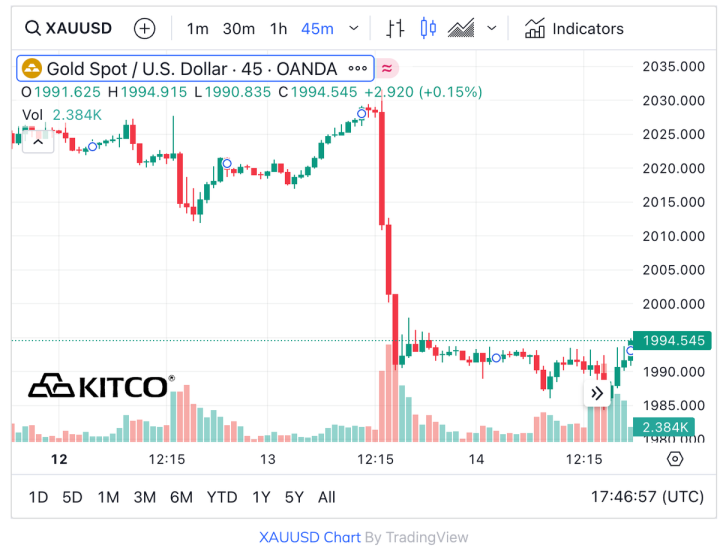
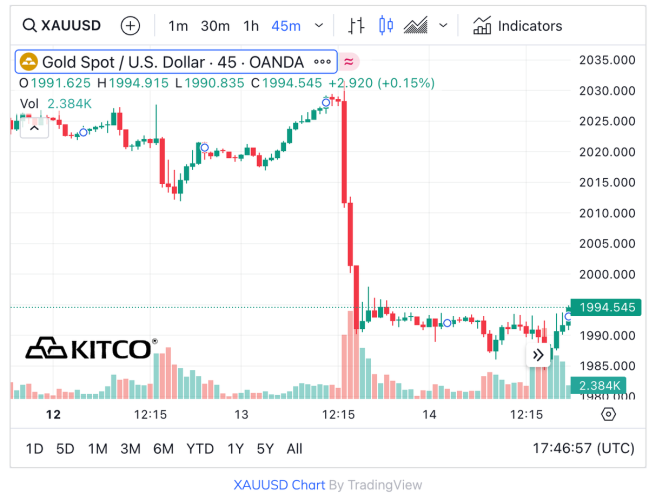
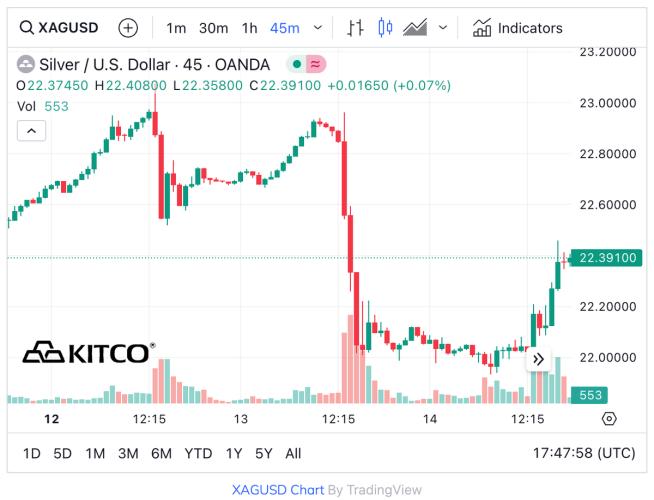
Gold and silver prices are higher in midday U.S. trading Thursday, on corrective rebounds following recent selling pressure and after a U.S. retail sales report that was weaker than expected. April gold was last up $9.60 at $2,013.90. March silver was last up $0.508 at $22.895.

The January U.S. retail sales contracted by 0.8% compared to December, marking the largest decline since March of 2023. This downturn contrasts with a modest 0.4% increase in December and fell short of market expectations, which had anticipated a 0.1% decrease. The decline was widespread across various sectors. However, some sectors saw growth. January typically sees a decline in retail sales following the strong December holiday shopping season. Still, the report falls into the camp of the U.S. monetary policy doves, who want to see the Federal Reserve cut interest rates sooner rather than later.

Asian and European stock markets were mixed to firmer in overnight trading. U.S. stock index futures are mixed near midday.

The next U.S. inflation report comes with Friday’s producer price index report for January, seen coming in at up 0.1% from December, compared to a 0.1% month-on-month decline in the December PPI report. A Wall Street Journal headline today reads: “Pro Take: No big consumer price declines are in sight.”

The key outside markets today see the U.S. dollar index lower after hitting a three-month high Tuesday. Nymex crude oil prices are higher and trading around $78.25 a barrel. Reads a Dow Jones Newswires headline today: Higher global oil supply set to satisfy demand increase, IEA says.”

The yield on the benchmark 10-year U.S. Treasury note is presently fetching around 4.23%.
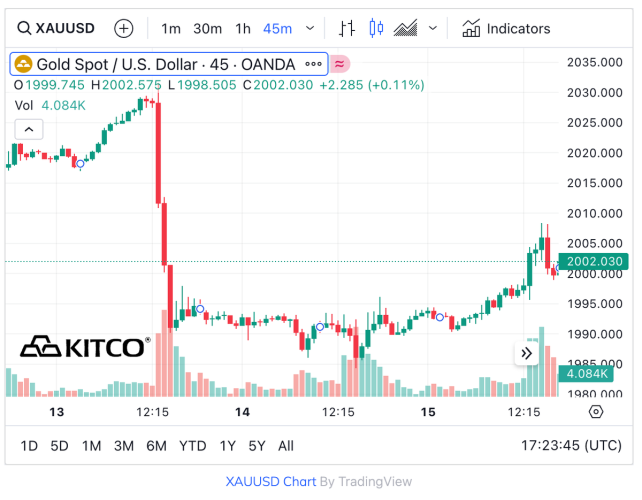
Technically, April gold futures saw short covering featured after prices hit a three-month low Wednesday. The bears have the overall near-term technical advantage. Prices are in a nine-week-old downtrend on the daily bar chart. Bulls’ next upside price objective is to produce a close above solid resistance at the February high of $2,083.20. Bears' next near-term downside price objective is pushing futures prices below solid technical support at the November low of $1,975.10. First resistance is seen at today’s high of $2,020.20 and then at $2,023.30. First support is seen at today’s low of $2,001.80 and then at this week’s low of $1,996.40. Wyckoff's Market Rating: 4.0.
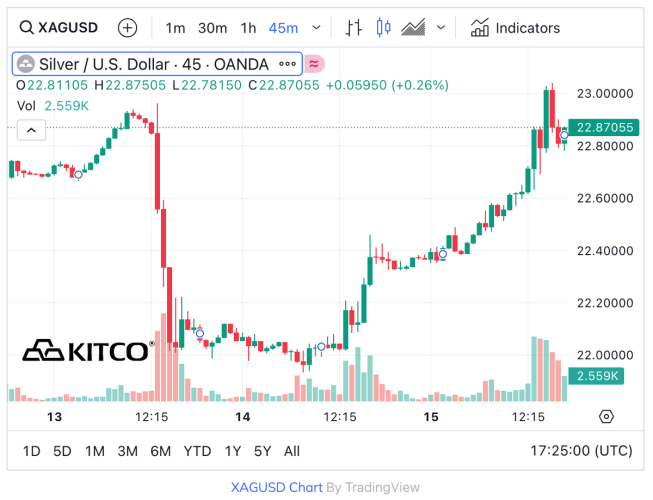
March silver futures also saw short covering after prices hit a four-month low Wednesday. The silver bears have the overall near-term technical advantage. A nine-week-old downtrend is in place on the daily bar chart.

Silver bulls' next upside price objective is closing prices above solid technical resistance at $23.445. The next downside price objective for the bears is closing prices below solid support at the October low of $21.17. First resistance is seen at this week’s high of $23.15 and then at $23.445. Next support is seen at today’s low of $22.40 and then at $22.00. Wyckoff's Market Rating: 3.5.
 

March N.Y. copper closed up 550 points at 375.50 cents today. Prices closed nearer the session high today. The copper bears have the overall near-term technical advantage. A bearish pennant pattern has formed on the daily bar chart. Copper bulls' next upside price objective is pushing and closing prices above solid technical resistance at 390.00 cents. The next downside price objective for the bears is closing prices below solid technical support at the October low of 355.75 cents. First resistance is seen at 380.00 cents and then at 385.00 cents. First support is seen at today’s low of 370.00 cents and then at last week’s low of 365.50 cents. Wyckoff's Market Rating: 3.5.

Kitco Media

Jim Wyckoff

Time to Buy Gold and Silver

Tim Moseley

The Complete Guide to Construction Project Planning

construction planning

Time-oriented planning is primarily concerned with the sequencing and timing of tasks, ensuring that each step is completed within specified deadlines. In a nutshell, these three types of construction planning are interwoven in construction project management. This planning phase focuses on the tasks, materials, and resources required for successful project execution. It involves setting clear and measurable project goals, analyzing market trends, defining return on investment, and formulating https://ecs-tools.com/MiningTax/general-spatial-mining-tax-2016 high-level strategies to achieve these goals. Understanding the differences between these three types of planning is essential to get a comprehensive grasp of the construction project’s lifecycle. Maximized efficiency is another compelling reason for robust construction planning.

construction planning

Projects with exterior work in northern climates need realistic non-work periods built into the schedule. The CPM planning process also draws on Program Evaluation and Review Technique (PERT), a program evaluation method that helps teams estimate activity durations across best-case, expected, and worst-case scenarios. Teams that build top-down budgets without that https://myhomeimprovementmag.net/what-are-the-best-sustainable-building-materials/ granularity often discover variance only after it has become unrecoverable. Cost control through execution depends on how well the budget was built in the first place. Scope gaps are the primary driver of change orders, and change orders are one of the primary drivers of cost overruns and schedule delays.

construction planning

When the project is in motion, the cost estimates are used to assess whether the project is within budget. Cost estimation estimates all the resources necessary for the project and calculates the total budget. The material resources vary depending on a project’s location and scope. However, it lacks the complexity of approaches that have the resources and materials needed to complete a task. The Gantt chart includes the start and end dates of activities and a summary of activities in a project.

Drive Compliance & Unify Design Risk Management

  • Once you’ve defined your material takeoff and bill of quantities, you can prepare a construction estimate.
  • The development of a project timeline, risk analysis, and communication plan are also critical components of the planning phase.
  • Scope gaps that surface mid-project generate change orders, each carrying direct cost and schedule impact.
  • The project manager must estimate the period it will take to complete a project.
  • Report on key metrics and get real-time visibility into work as it happens with roll-up reports, dashboards, and automated workflows built to keep your team connected and informed.
  • This is the planning phase where defining work tasks with sufficient specificity pays dividends later.

It is important to send bid requests early to gather pricing and scope details from vendors and subcontractors. Here, the contractor needs to use both historical data and real-time bids from subcontractors to make wise decisions. The architect provides the builder with documents for him to start working on the estimate. A home or a commercial project owner shares the vision about what the building is and what approximate budget boundaries exist.

Step 1: Preconstruction Kickoff

  • Maximized efficiency is another compelling reason for robust construction planning.
  • Clients, architects, and design engineers also play important roles, as they share their data, guidance, and experience with managers and planners.
  • This planning phase includes a thorough site assessment to understand existing conditions, access constraints, and environmental considerations.
  • During the planning phase, you’ll want to hear from stakeholders, regulators and even team members to get a full picture of the project’s expectations and constraints.
  • This involves overseeing project progress, managing any deviations from the plan, and continuously measuring performance against established benchmarks.
  • Today, we have covered what construction planning is, who is involved in it and the main types of construction planning.

Risk management is all about identifying and addressing potential issues before construction begins. Once all this data is collected, the next step is to prepare a detailed estimate. It involves defining the project scope, estimating costs, identifying risks, and coordinating with all stakeholders. It keeps every conversation related to a specific project https://www.canisciolti.info/6-facts-about-everyone-thinks-are-true-2 or wider company-related issues in one place. That’s why it’s essential to identify potential risks in the planning phase. There is no need for different channels as the client receives everything on one platform.

The Complete Guide to Construction Project Planning

construction planning

Time-oriented planning is primarily concerned with the sequencing and timing of tasks, ensuring that each step is completed within specified deadlines. In a nutshell, these three types of construction planning are interwoven in construction project management. This planning phase focuses on the tasks, materials, and resources required for successful project execution. It involves setting clear and measurable project goals, analyzing market trends, defining return on investment, and formulating https://ecs-tools.com/MiningTax/general-spatial-mining-tax-2016 high-level strategies to achieve these goals. Understanding the differences between these three types of planning is essential to get a comprehensive grasp of the construction project’s lifecycle. Maximized efficiency is another compelling reason for robust construction planning.

construction planning

Projects with exterior work in northern climates need realistic non-work periods built into the schedule. The CPM planning process also draws on Program Evaluation and Review Technique (PERT), a program evaluation method that helps teams estimate activity durations across best-case, expected, and worst-case scenarios. Teams that build top-down budgets without that https://myhomeimprovementmag.net/what-are-the-best-sustainable-building-materials/ granularity often discover variance only after it has become unrecoverable. Cost control through execution depends on how well the budget was built in the first place. Scope gaps are the primary driver of change orders, and change orders are one of the primary drivers of cost overruns and schedule delays.

construction planning

When the project is in motion, the cost estimates are used to assess whether the project is within budget. Cost estimation estimates all the resources necessary for the project and calculates the total budget. The material resources vary depending on a project’s location and scope. However, it lacks the complexity of approaches that have the resources and materials needed to complete a task. The Gantt chart includes the start and end dates of activities and a summary of activities in a project.

Drive Compliance & Unify Design Risk Management

  • Once you’ve defined your material takeoff and bill of quantities, you can prepare a construction estimate.
  • The development of a project timeline, risk analysis, and communication plan are also critical components of the planning phase.
  • Scope gaps that surface mid-project generate change orders, each carrying direct cost and schedule impact.
  • The project manager must estimate the period it will take to complete a project.
  • Report on key metrics and get real-time visibility into work as it happens with roll-up reports, dashboards, and automated workflows built to keep your team connected and informed.
  • This is the planning phase where defining work tasks with sufficient specificity pays dividends later.

It is important to send bid requests early to gather pricing and scope details from vendors and subcontractors. Here, the contractor needs to use both historical data and real-time bids from subcontractors to make wise decisions. The architect provides the builder with documents for him to start working on the estimate. A home or a commercial project owner shares the vision about what the building is and what approximate budget boundaries exist.

Step 1: Preconstruction Kickoff

  • Maximized efficiency is another compelling reason for robust construction planning.
  • Clients, architects, and design engineers also play important roles, as they share their data, guidance, and experience with managers and planners.
  • This planning phase includes a thorough site assessment to understand existing conditions, access constraints, and environmental considerations.
  • During the planning phase, you’ll want to hear from stakeholders, regulators and even team members to get a full picture of the project’s expectations and constraints.
  • This involves overseeing project progress, managing any deviations from the plan, and continuously measuring performance against established benchmarks.
  • Today, we have covered what construction planning is, who is involved in it and the main types of construction planning.

Risk management is all about identifying and addressing potential issues before construction begins. Once all this data is collected, the next step is to prepare a detailed estimate. It involves defining the project scope, estimating costs, identifying risks, and coordinating with all stakeholders. It keeps every conversation related to a specific project https://www.canisciolti.info/6-facts-about-everyone-thinks-are-true-2 or wider company-related issues in one place. That’s why it’s essential to identify potential risks in the planning phase. There is no need for different channels as the client receives everything on one platform.

The Complete Guide to Construction Project Planning

construction planning

Time-oriented planning is primarily concerned with the sequencing and timing of tasks, ensuring that each step is completed within specified deadlines. In a nutshell, these three types of construction planning are interwoven in construction project management. This planning phase focuses on the tasks, materials, and resources required for successful project execution. It involves setting clear and measurable project goals, analyzing market trends, defining return on investment, and formulating https://ecs-tools.com/MiningTax/general-spatial-mining-tax-2016 high-level strategies to achieve these goals. Understanding the differences between these three types of planning is essential to get a comprehensive grasp of the construction project’s lifecycle. Maximized efficiency is another compelling reason for robust construction planning.

construction planning

Projects with exterior work in northern climates need realistic non-work periods built into the schedule. The CPM planning process also draws on Program Evaluation and Review Technique (PERT), a program evaluation method that helps teams estimate activity durations across best-case, expected, and worst-case scenarios. Teams that build top-down budgets without that https://myhomeimprovementmag.net/what-are-the-best-sustainable-building-materials/ granularity often discover variance only after it has become unrecoverable. Cost control through execution depends on how well the budget was built in the first place. Scope gaps are the primary driver of change orders, and change orders are one of the primary drivers of cost overruns and schedule delays.

construction planning

When the project is in motion, the cost estimates are used to assess whether the project is within budget. Cost estimation estimates all the resources necessary for the project and calculates the total budget. The material resources vary depending on a project’s location and scope. However, it lacks the complexity of approaches that have the resources and materials needed to complete a task. The Gantt chart includes the start and end dates of activities and a summary of activities in a project.

Drive Compliance & Unify Design Risk Management

  • Once you’ve defined your material takeoff and bill of quantities, you can prepare a construction estimate.
  • The development of a project timeline, risk analysis, and communication plan are also critical components of the planning phase.
  • Scope gaps that surface mid-project generate change orders, each carrying direct cost and schedule impact.
  • The project manager must estimate the period it will take to complete a project.
  • Report on key metrics and get real-time visibility into work as it happens with roll-up reports, dashboards, and automated workflows built to keep your team connected and informed.
  • This is the planning phase where defining work tasks with sufficient specificity pays dividends later.

It is important to send bid requests early to gather pricing and scope details from vendors and subcontractors. Here, the contractor needs to use both historical data and real-time bids from subcontractors to make wise decisions. The architect provides the builder with documents for him to start working on the estimate. A home or a commercial project owner shares the vision about what the building is and what approximate budget boundaries exist.

Step 1: Preconstruction Kickoff

  • Maximized efficiency is another compelling reason for robust construction planning.
  • Clients, architects, and design engineers also play important roles, as they share their data, guidance, and experience with managers and planners.
  • This planning phase includes a thorough site assessment to understand existing conditions, access constraints, and environmental considerations.
  • During the planning phase, you’ll want to hear from stakeholders, regulators and even team members to get a full picture of the project’s expectations and constraints.
  • This involves overseeing project progress, managing any deviations from the plan, and continuously measuring performance against established benchmarks.
  • Today, we have covered what construction planning is, who is involved in it and the main types of construction planning.

Risk management is all about identifying and addressing potential issues before construction begins. Once all this data is collected, the next step is to prepare a detailed estimate. It involves defining the project scope, estimating costs, identifying risks, and coordinating with all stakeholders. It keeps every conversation related to a specific project https://www.canisciolti.info/6-facts-about-everyone-thinks-are-true-2 or wider company-related issues in one place. That’s why it’s essential to identify potential risks in the planning phase. There is no need for different channels as the client receives everything on one platform.

Gold weaker on follow-through selling from Tuesday’s solid losses

Gold weaker on follow-through selling from Tuesday’s solid losses

Kitco News

The Leading News Source in Precious Metals

Kitco NEWS has a diverse team of journalists reporting on the economy, stock markets, commodities, cryptocurrencies, mining and metals with accuracy and objectivity. Our goal is to help people make informed market decisions through in-depth reporting, daily market roundups, interviews with prominent industry figures, comprehensive coverage (often exclusive) of important industry events and analyses of market-affecting developments

Gold weaker on follow-through selling from Tuesday’s solid losses teaser image

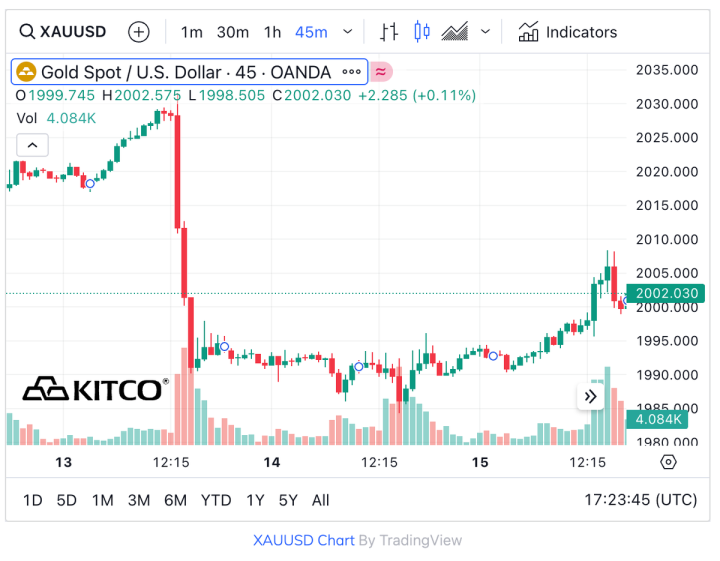
Gold prices are down a bit on follow-through selling pressure after solid losses posted Tuesday. Prices hit a three-month low overnight. Silver prices are firmer after hitting a four-month low early on today. April gold was last down $3.20 at $2,004.20. March silver was last up $0.271 at $22.425.

The marketplace Wednesday had mostly digested Tuesday’s U.S. consumer price index report for January that came in at up 3.1%, year-on-year, compared to forecasts for up 2.9% and compares to a rise of 3.4% in the December report. The “core” CPI (excluding food and energy) for January came in at up 3.9%, year-on-year. The U.S. stock indexes sold off sharply, the U.S. dollar index surged, U.S. Treasury yields rose significantly and gold prices posted solid losses. The CPI report all but dashed hopes the Federal Reserve would start to lower interest rates early this spring. The warmer-but-still-not-hot CPI print Tuesday was not that far out of line from market expectations, yet the aforementioned markets showed serious reactions. It’s my bias the CPI report that was a bit warmer than expected was just an excuse for the U.S. stock market to experience a downside correction that was needed anyway, after the major U.S. indexes hit record highs earlier this week. And the U.S. dollar index was already trending up before the CPI news. Bond yields were already creeping up, too. Don’t be surprised to see stock market bulls look at Tuesday’s big pullback as a buying opportunity in existing solid price uptrends for the major indexes.

The next U.S. inflation report comes with Friday’s producer price index report for January, seen coming in at up 0.1% from December, compared to a 0.1% month-on-month decline in the December PPI report.

Asian and European stock markets were mixed in overnight trading. China is celebrating its Lunar New Year holiday this week and many China markets are still closed. U.S. stock index futures are modestly higher at midday.

The key outside markets today see the U.S. dollar index weaker after hitting a three-month high Tuesday. Nymex crude oil prices are lower and trading around $77.00 a barrel. The yield on the benchmark 10-year U.S. Treasury note is presently fetching 4.253%.

Technically, April gold futures prices hit a three-month low early on today. The bears have the overall near-term technical advantage. Prices are in a nine-week-old downtrend on the daily bar chart. Bulls’ next upside price objective is to produce a close above solid resistance at the February high of $2,083.20. Bears' next near-term downside price objective is pushing futures prices below solid technical support at the November low of $1,975.10. First resistance is seen at $2,010.00 and then at $2,023.30. First support is seen at today’s low of $1,996.40 and then at $1,985.00. Wyckoff's Market Rating: 4.0.

March silver futures prices hit a four-month low early on today. The silver bears have the overall near-term technical advantage. A nine-week-old downtrend is in place on the daily bar chart. Silver bulls' next upside price objective is closing prices above solid technical resistance at $23.445. The next downside price objective for the bears is closing prices below solid support at the October low of $21.17. First resistance is seen at $22.75 and then at $23.00. Next support is seen at today’s low of $21.975 and then at $21.50. Wyckoff's Market Rating: 3.0.

March N.Y. copper closed down 115 points at 369.95 cents today. Prices closed nearer the session low today. The copper bears have the overall near-term technical advantage. Copper bulls' next upside price objective is pushing and closing prices above solid technical resistance at 390.00 cents. The next downside price objective for the bears is closing prices below solid technical support at the October low of 355.75 cents. First resistance is seen at this week’s high of 375.45 cents and then at 380.00 cents. First support is seen at last week’s low of 365.50 cents and then at 362.60 cents. Wyckoff's Market Rating: 3.0.

Kitco Media

Jim Wyckoff

Time to Buy Gold and Silver

Tim Moseley

Bitcoin Hits 1 Trillion Market Cap For First Time Since December 2021 As BTC Tops 51000

Bitcoin Hits $1 Trillion Market Cap For First Time Since December 2021 As BTC Tops $51,000

By Brenda Ngari – February 14, 2024

After briefly dropping below $50K yesterday, thanks to a hotter-than-expected U.S. inflation report, Bitcoin has bounced back up. The overall market value of Bitcoin’s circulating supply breached $1 trillion today after the BTC price ticked above the $51,000 milestone.

Bitcoin Reclaims Its $1-Trillion Asset Status


Bitcoin has touched the $1 trillion market cap for the first time since December 2021.

At press time, BTC costs $51,681, according to data from CoinGecko. It’s gained 6.2% over the last 24 hours and an eye-watering 20.3% since this time last week.

BTC seemed like it was having a sluggish year after the greenlighting of 10 hotly-anticipated spot exchange-traded funds (ETFs) in mid-January.

The spot market products secured the regulatory nod from the U.S. Securities and Exchange Commission (SEC) after a decade of rejections, but the price of Bitcoin slumped. This was because one of the largest fund managers, Grayscale Investments, sold massive amounts of Bitcoin after users wanted to redeem their shares. That selling pressure looks to have subdued in recent days, though, and money is pouring back into the market.

The new spot investment vehicles have now seen over $3 billion worth of net flows — representing a milestone that is not typical within the first four weeks of trading for a newly-listed ETF.

Bitcoin’s notable growth comes as the Crypto Fear and Greed Index had soared to its highest point since late 2021 when Bitcoin attained its current lifetime high of $69,044.77. As per data from Alternative.me, the greed index inched into the “extreme greed” rating of 79 on Feb. 13. Hitting an extreme greed score for the first time in over two years indicates a renewal of optimism among crypto investors. Bitcoin’s market sentiment score now sits at 74.

The top crypto’s concerted attempt to hold its price above the $50,000 zone this year happens as the next Bitcoin halving, a quadrennial event when the reward to miners for securing the Bitcoin blockchain is ha

The original article written by Brenda Ngari and posted on ZyCrypto.com.

Article reposted on Markethive by Jeffrey Sloe

** Get secure funding for business projects in the USA and around the world. Learn more about USA & International Financing at Commercial Funding International. **

Tim Moseley

Construction Planning: A Guide to Successful Project Execution

construction planning

At this point, be sure to finalize any outstanding contractors with vendors or contractors. A general contractor can help oversee the project and coordinate any work with various subcontractors such as plumbers, electricians or carpenters. While making the construction plan is the most important outcome of the construction planning process, other activities must be completed before making one. To make a construction plan, you need to identify all the different aspects of your project including the project management team, stakeholders, activities, resources requirements, scheduling and budget.

The client and financer are usually the same parties, but their roles are distinct. Critical parties are involved in construction planning, as we will https://cottageindesign.com/features-and-some-secrets-of-the-production.html discuss below. The initially set out budget will not be enough to cover the project’s plan.

Once your estimate is finalized, turning it into a proposal takes a few clicks. For example, a contractor can use Word documents, spreadsheets, or presentation tools. This gives clients a clearer picture https://dominicanrental.com/new-building-materials-improve-the-quality-of.html of where their money is going. It’s better to break down all costs by category, including materials and labor.

What are the challenges of construction planning?

This planning phase includes a thorough site assessment to understand existing conditions, access constraints, and environmental considerations. Proper construction planning, backed by rigorous schedule monitoring throughout execution, changes the trajectory. This guide covers the full picture of the project planning process, from the phases every project moves through to the specific components that determine whether a plan holds up under real-world pressure.

Defines key requirements and standards for accurate design.

construction planning

A high-level timeline of project phases and key milestones is essential to track progress. The focus here is on meeting deadlines, tracking progress, and making sure the project is completed within the agreed-upon timeframe. In this guide, you’ll learn its key stages, steps to build a plan, techniques and tools to use, and how to monitor progress. Main contractors and design leads carry significant responsibility for statutory compliance before a single spade hits the ground, and getting this… Specifically, aerial surveys provide planners with detailed progress tracking, site inspections, and hazard detection.

construction planning

construction planning

Resource-oriented scheduling considers the resources needed before and assigns the use efficiently throughout a project’s lifetime. It compares actual progress in a project and forecasts future performance. PERT is calculated from back to front as the end date is fixed, but the contractor might have front-end flexibility. PERT is similar to the critical path method as we use it to estimate the time one needs for a project. Program Evaluation and Review Technique (PERT) is a construction planning technique that calculates the time needed to finish a project realistically. The Critical Path Method (CPM) is the most used in construction planning.

  • On the other hand, resource-oriented planning ensures that the necessary resources, including labor, materials, and equipment, are available and efficiently utilized throughout the project.
  • Proper and thorough construction planning greatly increases the likelihood of a successful project.
  • For a step-by-step guide, learn how to prepare a construction schedule to manage your timeline effectively.
  • The initially set out budget will not be enough to cover the project’s plan.

First and foremost, proper construction planning accounts for unforeseen costs and delays and handles them efficiently. Similarly, clients expect projects to be delivered according to the agreed-upon budget and timeline. You have the project manager steering the ship, architects, engineers, and designers contributing their expertise, and financial experts aligning the budget with the project scope. The most accurate answer is that construction planning is a collaborative effort.

  • This guide covers the full picture of the project planning process, from the phases every project moves through to the specific components that determine whether a plan holds up under real-world pressure.
  • The more information the construction plan has about your project, the less likely it will be that issues arise during the execution phase.
  • The work breakdown structure (WBS) begins to take shape, breaking the project into manageable, definable work tasks that can be scheduled, resourced, and tracked.
  • In the case of Buildern, the takeoff data is transferred into the estimate, so it’s easier to determine the wages of workers.
  • Go deeper with one-click reports to keep track of costs, activities, time and more.

One of the most preventable sources of construction disputes is the gap between what an owner believes is happening on a project and what the general contractor’s schedule actually reflects. Schedules built on peak crew productivity do not survive contact with the field. Define work tasks at a level of detail that can be scheduled, resourced, and tracked. Cumulative changes compress the remaining schedule into an unachievable window. Scope gaps that surface mid-project generate change orders, each carrying direct cost and schedule impact. This is exactly where construction schedule analytics changes the game for project controls teams.

Why Construction Planning Fails (And What It Actually Costs)

When the client and financer are two separate parties, the financer has the prerogative to make and approve changes in a project. Larger or more complex builds may require dedicated construction management software, which offers real-time updates and advanced features like Gantt charts and scenario modeling. A construction plan should be updated weekly or monthly to reflect progress, adjust for delays, and incorporate changes in scope or resources.

The tool adjusts colors and line types to make a plan easy to read for the client. With Buildern, the contractor can upload a blueprint and scale it. The manual approach to takeoff means entering all the items into a spreadsheet and calculating by using complex mathematical equations. But before an estimate can take shape, it all starts with the takeoff or a quantity takeoff. Such tools pull in material costs, automatically apply markups, and help a contractor avoid underpricing or missed items. This includes the costs of materials, labor, and equipment.

Construction Planning: A Guide to Successful Project Execution

construction planning

At this point, be sure to finalize any outstanding contractors with vendors or contractors. A general contractor can help oversee the project and coordinate any work with various subcontractors such as plumbers, electricians or carpenters. While making the construction plan is the most important outcome of the construction planning process, other activities must be completed before making one. To make a construction plan, you need to identify all the different aspects of your project including the project management team, stakeholders, activities, resources requirements, scheduling and budget.

The client and financer are usually the same parties, but their roles are distinct. Critical parties are involved in construction planning, as we will https://cottageindesign.com/features-and-some-secrets-of-the-production.html discuss below. The initially set out budget will not be enough to cover the project’s plan.

Once your estimate is finalized, turning it into a proposal takes a few clicks. For example, a contractor can use Word documents, spreadsheets, or presentation tools. This gives clients a clearer picture https://dominicanrental.com/new-building-materials-improve-the-quality-of.html of where their money is going. It’s better to break down all costs by category, including materials and labor.

What are the challenges of construction planning?

This planning phase includes a thorough site assessment to understand existing conditions, access constraints, and environmental considerations. Proper construction planning, backed by rigorous schedule monitoring throughout execution, changes the trajectory. This guide covers the full picture of the project planning process, from the phases every project moves through to the specific components that determine whether a plan holds up under real-world pressure.

Defines key requirements and standards for accurate design.

construction planning

A high-level timeline of project phases and key milestones is essential to track progress. The focus here is on meeting deadlines, tracking progress, and making sure the project is completed within the agreed-upon timeframe. In this guide, you’ll learn its key stages, steps to build a plan, techniques and tools to use, and how to monitor progress. Main contractors and design leads carry significant responsibility for statutory compliance before a single spade hits the ground, and getting this… Specifically, aerial surveys provide planners with detailed progress tracking, site inspections, and hazard detection.

construction planning

construction planning

Resource-oriented scheduling considers the resources needed before and assigns the use efficiently throughout a project’s lifetime. It compares actual progress in a project and forecasts future performance. PERT is calculated from back to front as the end date is fixed, but the contractor might have front-end flexibility. PERT is similar to the critical path method as we use it to estimate the time one needs for a project. Program Evaluation and Review Technique (PERT) is a construction planning technique that calculates the time needed to finish a project realistically. The Critical Path Method (CPM) is the most used in construction planning.

  • On the other hand, resource-oriented planning ensures that the necessary resources, including labor, materials, and equipment, are available and efficiently utilized throughout the project.
  • Proper and thorough construction planning greatly increases the likelihood of a successful project.
  • For a step-by-step guide, learn how to prepare a construction schedule to manage your timeline effectively.
  • The initially set out budget will not be enough to cover the project’s plan.

First and foremost, proper construction planning accounts for unforeseen costs and delays and handles them efficiently. Similarly, clients expect projects to be delivered according to the agreed-upon budget and timeline. You have the project manager steering the ship, architects, engineers, and designers contributing their expertise, and financial experts aligning the budget with the project scope. The most accurate answer is that construction planning is a collaborative effort.

  • This guide covers the full picture of the project planning process, from the phases every project moves through to the specific components that determine whether a plan holds up under real-world pressure.
  • The more information the construction plan has about your project, the less likely it will be that issues arise during the execution phase.
  • The work breakdown structure (WBS) begins to take shape, breaking the project into manageable, definable work tasks that can be scheduled, resourced, and tracked.
  • In the case of Buildern, the takeoff data is transferred into the estimate, so it’s easier to determine the wages of workers.
  • Go deeper with one-click reports to keep track of costs, activities, time and more.

One of the most preventable sources of construction disputes is the gap between what an owner believes is happening on a project and what the general contractor’s schedule actually reflects. Schedules built on peak crew productivity do not survive contact with the field. Define work tasks at a level of detail that can be scheduled, resourced, and tracked. Cumulative changes compress the remaining schedule into an unachievable window. Scope gaps that surface mid-project generate change orders, each carrying direct cost and schedule impact. This is exactly where construction schedule analytics changes the game for project controls teams.

Why Construction Planning Fails (And What It Actually Costs)

When the client and financer are two separate parties, the financer has the prerogative to make and approve changes in a project. Larger or more complex builds may require dedicated construction management software, which offers real-time updates and advanced features like Gantt charts and scenario modeling. A construction plan should be updated weekly or monthly to reflect progress, adjust for delays, and incorporate changes in scope or resources.

The tool adjusts colors and line types to make a plan easy to read for the client. With Buildern, the contractor can upload a blueprint and scale it. The manual approach to takeoff means entering all the items into a spreadsheet and calculating by using complex mathematical equations. But before an estimate can take shape, it all starts with the takeoff or a quantity takeoff. Such tools pull in material costs, automatically apply markups, and help a contractor avoid underpricing or missed items. This includes the costs of materials, labor, and equipment.

Construction Planning: A Guide to Successful Project Execution

construction planning

At this point, be sure to finalize any outstanding contractors with vendors or contractors. A general contractor can help oversee the project and coordinate any work with various subcontractors such as plumbers, electricians or carpenters. While making the construction plan is the most important outcome of the construction planning process, other activities must be completed before making one. To make a construction plan, you need to identify all the different aspects of your project including the project management team, stakeholders, activities, resources requirements, scheduling and budget.

The client and financer are usually the same parties, but their roles are distinct. Critical parties are involved in construction planning, as we will https://cottageindesign.com/features-and-some-secrets-of-the-production.html discuss below. The initially set out budget will not be enough to cover the project’s plan.

Once your estimate is finalized, turning it into a proposal takes a few clicks. For example, a contractor can use Word documents, spreadsheets, or presentation tools. This gives clients a clearer picture https://dominicanrental.com/new-building-materials-improve-the-quality-of.html of where their money is going. It’s better to break down all costs by category, including materials and labor.

What are the challenges of construction planning?

This planning phase includes a thorough site assessment to understand existing conditions, access constraints, and environmental considerations. Proper construction planning, backed by rigorous schedule monitoring throughout execution, changes the trajectory. This guide covers the full picture of the project planning process, from the phases every project moves through to the specific components that determine whether a plan holds up under real-world pressure.

Defines key requirements and standards for accurate design.

construction planning

A high-level timeline of project phases and key milestones is essential to track progress. The focus here is on meeting deadlines, tracking progress, and making sure the project is completed within the agreed-upon timeframe. In this guide, you’ll learn its key stages, steps to build a plan, techniques and tools to use, and how to monitor progress. Main contractors and design leads carry significant responsibility for statutory compliance before a single spade hits the ground, and getting this… Specifically, aerial surveys provide planners with detailed progress tracking, site inspections, and hazard detection.

construction planning

construction planning

Resource-oriented scheduling considers the resources needed before and assigns the use efficiently throughout a project’s lifetime. It compares actual progress in a project and forecasts future performance. PERT is calculated from back to front as the end date is fixed, but the contractor might have front-end flexibility. PERT is similar to the critical path method as we use it to estimate the time one needs for a project. Program Evaluation and Review Technique (PERT) is a construction planning technique that calculates the time needed to finish a project realistically. The Critical Path Method (CPM) is the most used in construction planning.

  • On the other hand, resource-oriented planning ensures that the necessary resources, including labor, materials, and equipment, are available and efficiently utilized throughout the project.
  • Proper and thorough construction planning greatly increases the likelihood of a successful project.
  • For a step-by-step guide, learn how to prepare a construction schedule to manage your timeline effectively.
  • The initially set out budget will not be enough to cover the project’s plan.

First and foremost, proper construction planning accounts for unforeseen costs and delays and handles them efficiently. Similarly, clients expect projects to be delivered according to the agreed-upon budget and timeline. You have the project manager steering the ship, architects, engineers, and designers contributing their expertise, and financial experts aligning the budget with the project scope. The most accurate answer is that construction planning is a collaborative effort.

  • This guide covers the full picture of the project planning process, from the phases every project moves through to the specific components that determine whether a plan holds up under real-world pressure.
  • The more information the construction plan has about your project, the less likely it will be that issues arise during the execution phase.
  • The work breakdown structure (WBS) begins to take shape, breaking the project into manageable, definable work tasks that can be scheduled, resourced, and tracked.
  • In the case of Buildern, the takeoff data is transferred into the estimate, so it’s easier to determine the wages of workers.
  • Go deeper with one-click reports to keep track of costs, activities, time and more.

One of the most preventable sources of construction disputes is the gap between what an owner believes is happening on a project and what the general contractor’s schedule actually reflects. Schedules built on peak crew productivity do not survive contact with the field. Define work tasks at a level of detail that can be scheduled, resourced, and tracked. Cumulative changes compress the remaining schedule into an unachievable window. Scope gaps that surface mid-project generate change orders, each carrying direct cost and schedule impact. This is exactly where construction schedule analytics changes the game for project controls teams.

Why Construction Planning Fails (And What It Actually Costs)

When the client and financer are two separate parties, the financer has the prerogative to make and approve changes in a project. Larger or more complex builds may require dedicated construction management software, which offers real-time updates and advanced features like Gantt charts and scenario modeling. A construction plan should be updated weekly or monthly to reflect progress, adjust for delays, and incorporate changes in scope or resources.

The tool adjusts colors and line types to make a plan easy to read for the client. With Buildern, the contractor can upload a blueprint and scale it. The manual approach to takeoff means entering all the items into a spreadsheet and calculating by using complex mathematical equations. But before an estimate can take shape, it all starts with the takeoff or a quantity takeoff. Such tools pull in material costs, automatically apply markups, and help a contractor avoid underpricing or missed items. This includes the costs of materials, labor, and equipment.

Construction Planning: A Guide to Successful Project Execution

construction planning

At this point, be sure to finalize any outstanding contractors with vendors or contractors. A general contractor can help oversee the project and coordinate any work with various subcontractors such as plumbers, electricians or carpenters. While making the construction plan is the most important outcome of the construction planning process, other activities must be completed before making one. To make a construction plan, you need to identify all the different aspects of your project including the project management team, stakeholders, activities, resources requirements, scheduling and budget.

The client and financer are usually the same parties, but their roles are distinct. Critical parties are involved in construction planning, as we will https://cottageindesign.com/features-and-some-secrets-of-the-production.html discuss below. The initially set out budget will not be enough to cover the project’s plan.

Once your estimate is finalized, turning it into a proposal takes a few clicks. For example, a contractor can use Word documents, spreadsheets, or presentation tools. This gives clients a clearer picture https://dominicanrental.com/new-building-materials-improve-the-quality-of.html of where their money is going. It’s better to break down all costs by category, including materials and labor.

What are the challenges of construction planning?

This planning phase includes a thorough site assessment to understand existing conditions, access constraints, and environmental considerations. Proper construction planning, backed by rigorous schedule monitoring throughout execution, changes the trajectory. This guide covers the full picture of the project planning process, from the phases every project moves through to the specific components that determine whether a plan holds up under real-world pressure.

Defines key requirements and standards for accurate design.

construction planning

A high-level timeline of project phases and key milestones is essential to track progress. The focus here is on meeting deadlines, tracking progress, and making sure the project is completed within the agreed-upon timeframe. In this guide, you’ll learn its key stages, steps to build a plan, techniques and tools to use, and how to monitor progress. Main contractors and design leads carry significant responsibility for statutory compliance before a single spade hits the ground, and getting this… Specifically, aerial surveys provide planners with detailed progress tracking, site inspections, and hazard detection.

construction planning

construction planning

Resource-oriented scheduling considers the resources needed before and assigns the use efficiently throughout a project’s lifetime. It compares actual progress in a project and forecasts future performance. PERT is calculated from back to front as the end date is fixed, but the contractor might have front-end flexibility. PERT is similar to the critical path method as we use it to estimate the time one needs for a project. Program Evaluation and Review Technique (PERT) is a construction planning technique that calculates the time needed to finish a project realistically. The Critical Path Method (CPM) is the most used in construction planning.

  • On the other hand, resource-oriented planning ensures that the necessary resources, including labor, materials, and equipment, are available and efficiently utilized throughout the project.
  • Proper and thorough construction planning greatly increases the likelihood of a successful project.
  • For a step-by-step guide, learn how to prepare a construction schedule to manage your timeline effectively.
  • The initially set out budget will not be enough to cover the project’s plan.

First and foremost, proper construction planning accounts for unforeseen costs and delays and handles them efficiently. Similarly, clients expect projects to be delivered according to the agreed-upon budget and timeline. You have the project manager steering the ship, architects, engineers, and designers contributing their expertise, and financial experts aligning the budget with the project scope. The most accurate answer is that construction planning is a collaborative effort.

  • This guide covers the full picture of the project planning process, from the phases every project moves through to the specific components that determine whether a plan holds up under real-world pressure.
  • The more information the construction plan has about your project, the less likely it will be that issues arise during the execution phase.
  • The work breakdown structure (WBS) begins to take shape, breaking the project into manageable, definable work tasks that can be scheduled, resourced, and tracked.
  • In the case of Buildern, the takeoff data is transferred into the estimate, so it’s easier to determine the wages of workers.
  • Go deeper with one-click reports to keep track of costs, activities, time and more.

One of the most preventable sources of construction disputes is the gap between what an owner believes is happening on a project and what the general contractor’s schedule actually reflects. Schedules built on peak crew productivity do not survive contact with the field. Define work tasks at a level of detail that can be scheduled, resourced, and tracked. Cumulative changes compress the remaining schedule into an unachievable window. Scope gaps that surface mid-project generate change orders, each carrying direct cost and schedule impact. This is exactly where construction schedule analytics changes the game for project controls teams.

Why Construction Planning Fails (And What It Actually Costs)

When the client and financer are two separate parties, the financer has the prerogative to make and approve changes in a project. Larger or more complex builds may require dedicated construction management software, which offers real-time updates and advanced features like Gantt charts and scenario modeling. A construction plan should be updated weekly or monthly to reflect progress, adjust for delays, and incorporate changes in scope or resources.

The tool adjusts colors and line types to make a plan easy to read for the client. With Buildern, the contractor can upload a blueprint and scale it. The manual approach to takeoff means entering all the items into a spreadsheet and calculating by using complex mathematical equations. But before an estimate can take shape, it all starts with the takeoff or a quantity takeoff. Such tools pull in material costs, automatically apply markups, and help a contractor avoid underpricing or missed items. This includes the costs of materials, labor, and equipment.

The Artist that came out of the Winter