
Celebrate Friendship with These Cute Magnetic Socks
Celebrate Friendship with These Cute Magnetic Socks

When it comes to adding a touch of whimsy and fun to your wardrobe, there’s nothing quite like a pair of cute magnetic socks. These aren’t just any socks; they have a playful twist that will make you and your partner smile every time you wear them.

Why Choose Cute Magnetic Socks?
Cute magnetic socks are not only charming but also highly functional. The Magnetic Attraction Cartoon Eye Couple Socks are designed with couples in mind, featuring delightful cartoon eyes and magnets that keep the socks together. This unique feature ensures that you never lose a sock again. They are perfect for couples who want to add a fun element to their everyday attire.
A Perfect Match for Couples
Finding matching socks in the laundry can be a hassle, but with these Magnetic Attraction Cartoon Eye Couple Socks, that problem is a thing of the past. The embedded magnets keep each pair together, making laundry day a breeze. Plus, the cute cartoon eyes add a playful touch that’s sure to delight both you and your partner.

The Benefits of Cute Magnetic Socks
These socks offer more than just a cute appearance. Here are some benefits:
- Convenience: The magnets help keep pairs together, making it easier to organize your socks.
- Durability: Made from high-quality materials, they are designed to last.
- Comfort: Soft and comfortable, these socks are perfect for daily wear.
- Style: The adorable cartoon eyes add a fun and unique element to your wardrobe.
Stylish Magnetic Socks: A Trendy Addition
If you’re looking for a way to make a fashion statement, cute magnetic socks are the way to go. They are not just for kids but are perfect for adults who love to express their playful side. These socks are also great conversation starters, and you’ll find that people will be intrigued by the unique design.

Magnetic Socks for Friends: Share the Fun
These socks aren’t just for couples; they make great gifts for friends too. Imagine the joy on your friend’s face when they receive a pair of these fun magnetic socks. It’s a perfect way to show your appreciation and share a laugh.
To get a firsthand account of how these socks can enhance friendships, we spoke with Alex, a dedicated fan of the brand. “I bought these socks for my best friends and me, and we absolutely love them!” Alex shared. “It’s such a fun way to feel connected, even when we’re apart. They make a great conversation starter.”

A Unique Way to Bond
Wearing matching socks is a small but meaningful way to feel connected to your partner. These Magnetic Attraction Cartoon Eye Couple Socks add an extra layer of connection with their magnetic feature. Every time you put them on, you’ll be reminded of your special bond.
Whether it’s a birthday, anniversary, or just because, cute magnetic socks are an excellent gift choice. They are both practical and fun, making them a gift that will be used and cherished.
How to Care for Your Socks
Caring for your magnetic socks is simple:
- Wash: Machine wash cold with like colors.
- Dry: Tumble dry low or lay flat to dry.
- Store: Use the magnetic feature to keep pairs together.
Following these steps will ensure that your Magnetic Attraction Cartoon Eye Couple Socks last a long time and remain in good condition.

A Joyful Addition to Any Sock Drawer
These socks are a delightful addition to any sock drawer. They bring joy, fun, and practicality all in one package. Whether you’re wearing them yourself or gifting them to someone special, they are sure to bring a smile to anyone’s face.
Their high-quality material ensures comfort and durability, making them a cherished item that can be enjoyed for a long time. Each time you open your sock drawer and see these adorable socks, you’ll be reminded of the simple pleasures and the joy they bring.
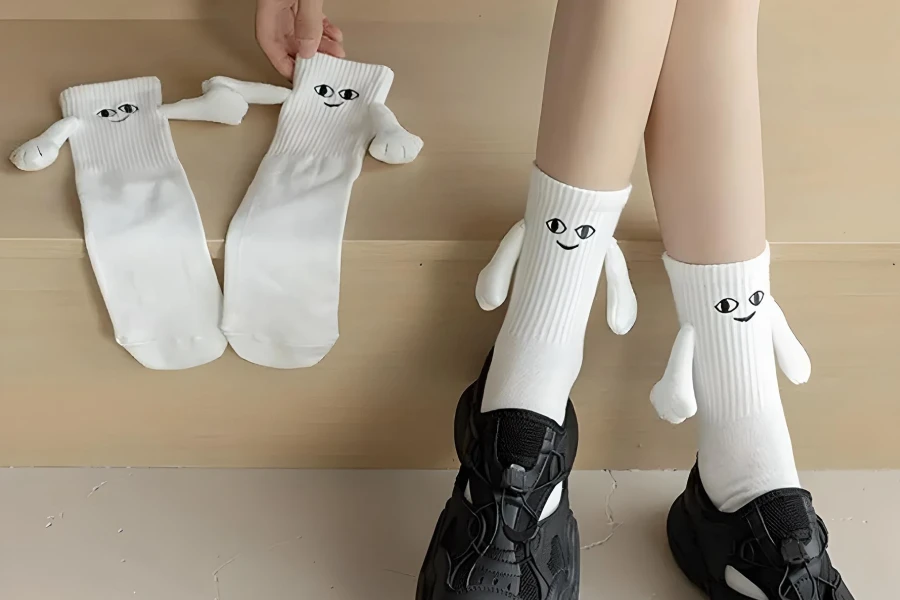
You’ll Love These Cute Couple’s Socks
Incorporating cute magnetic socks into your wardrobe is a fun and practical way to add some joy to your daily routine. The Magnetic Attraction Cartoon Eye Couple Socks offer a unique blend of style, convenience, and comfort that makes them a standout choice. Whether you’re looking to treat yourself or find the perfect gift for a friend or partner, these socks are sure to impress.
Tim Moseley
How to Choose the Correct Currency for a Casino Account
Deciding how to choose the correct currency for a casino account involves comparing several distinct financial factors before making a permanent selection, and you can learn more about these foundational requirements through comparative guides. For a related account reference, mostbet giriş 2026 can add useful context. Some players prefer sticking to their local fiat money to eliminate exchange confusion completely, while others opt for foreign denominations or alternative units to match specific payment processors. Each approach carries distinct advantages and drawbacks. If you use your home currency, you avoid conversion charges entirely on deposits, but you might face restrictions if the casino operator primarily settles balances in US dollars or euros. Conversely, choosing a universally accepted foreign denomination broadens your access across multiple casino options, yet it exposes every transfer to fluctuating exchange rates and conversion commissions levied by intermediary banks.
Account Access and Use: Part 2
A major point of comparison lies in how payment methods interact with your chosen unit of exchange. Certain electronic wallets and credit cards apply steep fees whenever the transaction denomination differs from the underlying funding source. Therefore, aligning your casino account denomination with your primary payment method forms a practical strategy for minimizing transaction overhead. If your preferred funding card operates solely in British pounds, forcing your casino profile into a different denomination creates an automatic conversion trigger on every single deposit and payout. Comparing payment rails side by side reveals that matching these elements preserves your bankroll, whereas mismatched setups gradually erode your available funds through recurring conversion margins.
- Therefore, aligning your casino account denomination with your primary payment method forms a practical strategy for minimizing transaction overhead
- Certain operators structure welcome offers and wagering requirements around a primary baseline currency, which can complicate matters if your casino balance is denominated differently
- Another angle of comparison involves weighing the stability of traditional fiat money against alternative options like cryptocurrency
- Your personal risk appetite should dictate which direction you lean when configuring your casino parameters
Bonus structures and promotional terms also demand careful consideration when evaluating which denomination to select. Certain operators structure welcome offers and wagering requirements around a primary baseline currency, which can complicate matters if your casino balance is denominated differently. When a promotion converts funds automatically, the math behind wagering requirements becomes obscured by variable rates. Players who choose the correct currency matching the promotional baseline often experience clearer tracking of their playthrough progress. Failing to check these operational details can result in unexpected bonus forfeitures or unfavorable calculation rates during promotional clearance inside the casino.
Account Access and Use: Part 3
Another angle of comparison involves weighing the stability of traditional fiat money against alternative options like cryptocurrency. Traditional fiat money offers predictable value over short periods, making it straightforward to track wins and losses inside your casino profile without mental math. On the other hand, digital assets fluctuate rapidly, which introduces an extra layer of financial volatility to your casino sessions. While crypto units offer rapid settlement speeds and broader cross-border availability, they require a high tolerance for market swings that fiat alternatives simply do not present. Your personal risk appetite should dictate which direction you lean when configuring your casino parameters.
Account Access and Use
Withdrawal mechanics ultimately test the wisdom of your initial choice. Processing times and intermediary banking fees vary wildly depending on whether the destination account matches the currency of the casino payout. Requesting funds in a denomination that differs from your local bank account often triggers a mandatory currency exchange by receiving institutions, resulting in delayed transfers and diminished payouts. By anticipating these final steps during registration, you prevent unnecessary friction. Evaluating every variable from initial deposit to final cashout ensures that your currency selection supports long-term financial efficiency across the casino environment.
How Casino Slot RTP Is Tested
The core of every digital slot machine is an algorithm designed to yield a specific Return to Player percentage, a figure that dictates the long-term redistribution of wagers back to the player pool. This mathematical architecture is finalized during the design phase, where developers map out the frequency of symbol combinations, the activation of bonus rounds, and the probability of specific payouts. Before a game reaches any public catalog, the underlying math must undergo rigorous verification to ensure that the theoretical model aligns with the actual code deployed within the game server. This verification process is less about monitoring individual spins and more about validating that the entire logic sequence functions exactly as intended over millions of hypothetical cycles.
Testing laboratories operate by subjecting game source code to massive automated simulations. These systems simulate billions of spins in a matter of seconds, aggregating the data to see if the cumulative payouts converge toward the pre-programmed RTP value. If the simulation results deviate from the mathematical model by more than an acceptable statistical margin, the game fails the audit and must be returned to the developer for recalibration. This process helps ensure that a game marketed as having a 96 percent return does not inadvertently function at 94 percent or 98 percent due to a programming error or a logic flaw in the reel mapping. Independent entities, which you can read more about at , are typically responsible for this oversight to maintain impartiality between the software provider and the end user.
Beyond the raw math, auditors also inspect the Random Number Generator to ensure that every spin is truly independent and unpredictable. A game with a perfect theoretical RTP would be useless if the generator showed patterns or predictable tendencies. For additional context, https://siteleri-casinos-bet.ink/ lisanslı casino siteleri can be considered alongside this overview. Testing labs use sophisticated statistical tests to confirm that the output of the generator passes industry-standard randomness requirements. This involves checking for uniform distribution, where each symbol has an equal chance of appearing in its designated stop position, and ensuring that no sequence of outcomes can be anticipated or influenced by external conditions or prior spin history.
The final phase of testing focuses on integration. Once the math and the random generator are confirmed, the game is installed in a live-like environment to observe how it interacts with the broader platform software. This checks for bugs that might prevent bonus triggers, miscalculate total wins, or fail to record wagers properly. Such technical failures could distort the actual return seen by a user, even if the underlying game math is flawless. By verifying the entire software stack, auditors ensure the game provides a stable and consistent experience across different hardware, browsers, and mobile devices.
It is common for players to look at these percentages and attempt to apply them to a single session of play, but the testing methodology is intentionally designed for the long haul. Because individual slots are inherently volatile, the difference between the theoretical RTP and an actual session result can be vast. You might play for thirty minutes and lose your entire stake, or hit a significant multiplier within a few seconds. Neither scenario invalidates the testing process; they are simply the expected side effects of variance acting upon a controlled mathematical model. Understanding that these audits focus on the structural integrity of the software, rather than the outcomes of any specific user visit, is necessary for maintaining a clear view of how these games operate in a commercial setting.
The Rise of Live Dealer Games in Online Casinos
Live dealer games have established themselves as a major trend in the online casino industry, offering players with an engaging experience that replicates the ambiance of a brick-and-mortar casino. According to a 2023 report by Statista, the live dealer sector is forecasted to grow by 25% per year, driven by advancements in streaming platforms and player interest for live interaction.
One notable company in this field is Evolution Gaming, a leader in live casino solutions. Founded in 2006, Evolution has revolutionized the online gaming environment by providing a wide range of live dealer games, including blackjack, roulette, and chemmy. You can discover more about their innovative offerings on their official website.
In 2022, the Venetian Resort in Las Vegas teamed up with Evolution to enhance its online gaming platform, enabling players to savor live dealer interactions from the convenience of their homes. This alliance underscores the growing significance of live dealer games in attracting a wider audience. For more insights into the effect of live dealer games, visit The New York Times.
Live dealer games employ high-definition video transmission and interactive elements, enabling players to connect with dealers and other members. This interactive aspect enhances the gaming experience, making it more captivating and fun. Discover a platform presenting these thrilling games at australia online casino.
As the demand of live dealer games continues to rise, players should consider factors such as game diversity, dealer competence, and platform trustworthiness when selecting where to play. By comprehending these aspects, players can enhance their satisfaction and ensure a safe gaming experience.